Jul 8, 2026
How SaaS Misconfiguration Detection Works


SaaS Misconfiguration Detection: How It Works | Grip Security

Jul 8, 2026
SaaS Misconfiguration Detection: How It Works | Grip Security
SaaS misconfiguration detection is changing.
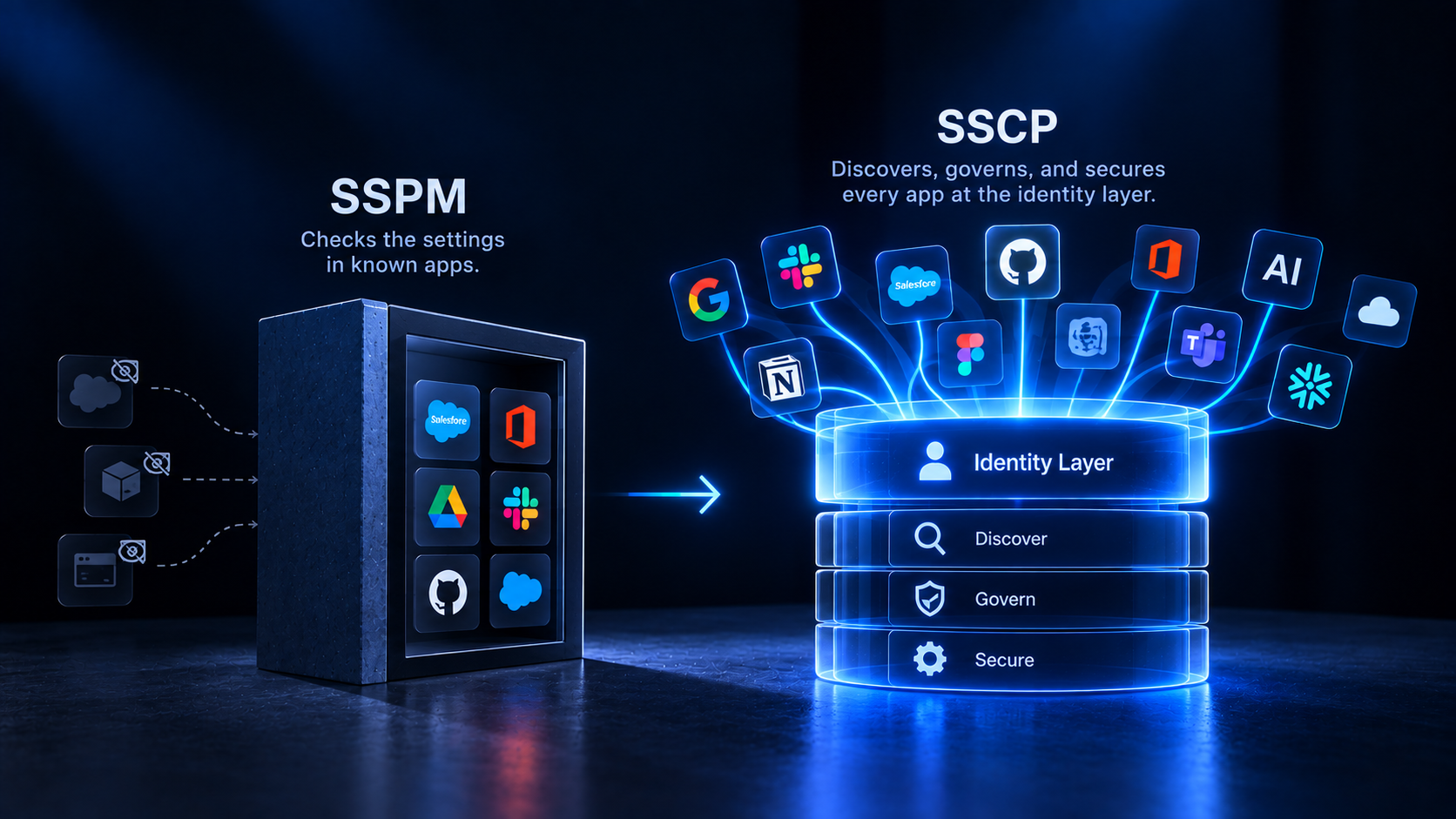
For years, security teams treated SaaS misconfigurations primarily as settings problems: an application was configured incorrectly, a security control was disabled, or a sharing policy was too permissive.
Those risks still matter. But the modern SaaS environment introduces a much larger configuration surface.
Every user identity, OAuth grant, service account, SaaS integration, AI-enabled application, and AI agent creates another relationship that determines who—or what—can access enterprise systems and data.
As a result, SaaS misconfigurations are increasingly identity-driven rather than configuration-driven.
Modern SaaS misconfiguration detection must continuously identify not only insecure application settings, but also risky identities, excessive permissions, dangerous OAuth grants, unmanaged applications, non-human identities, and access relationships that can change without security teams realizing it.
SaaS misconfiguration detection is the continuous process of identifying insecure settings, permissions, identities, integrations, and access relationships across an organization's SaaS environment.
Traditional approaches focused heavily on application configuration: public sharing settings, weak authentication policies, disabled security controls, or excessive administrator privileges.
Modern SaaS environments require a broader approach.
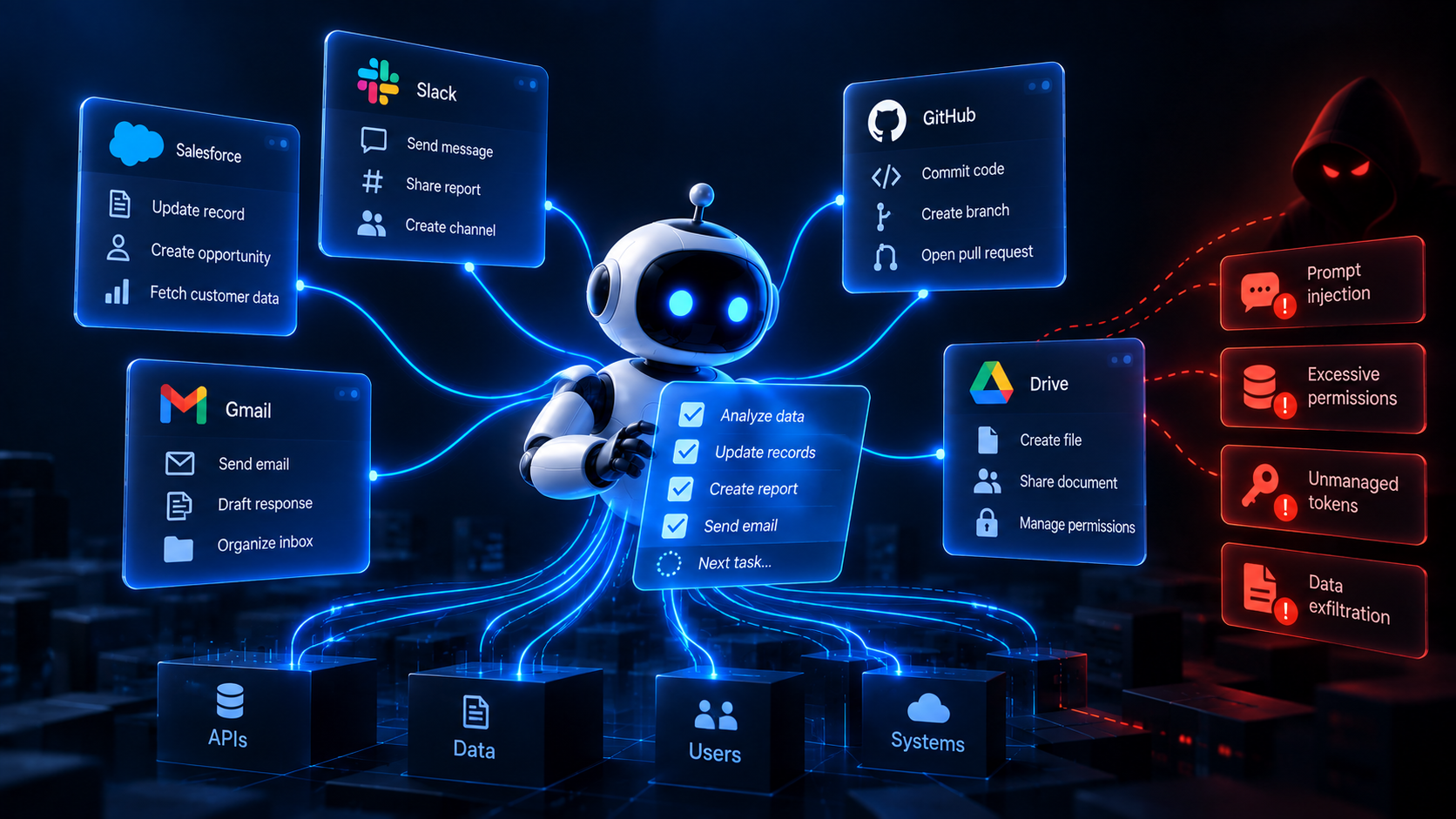
AI-enabled applications, OAuth integrations, non-human identities (NHIs), service accounts, and AI agents can all inherit permissions and interact with sensitive data. A SaaS environment can therefore be technically configured according to policy while still exposing the organization through excessive or unmanaged access.
Grip's research illustrates how quickly that attack surface is expanding. According to Grip's Mid-Year AI Exposure Update, 54% of enterprise applications now contain AI functionality, the average identity is exposed to 33.5 AI-enabled applications, and the average Grip customer has 1,017 AI-enabled applications in its environment.
Grip also identified the Rule of 17: organizations now have approximately one AI agent for every 17 identities.
At this scale, detecting SaaS misconfigurations cannot depend on periodic configuration reviews.
It requires continuous visibility into applications, identities, permissions, integrations, and the relationships connecting them.
SaaS misconfiguration detection is the process of continuously identifying insecure settings, excessive permissions, risky identities, dangerous integrations, and other conditions that could expose SaaS applications or data.
It is an important component of SaaS posture management and SaaS security monitoring.
Examples of SaaS misconfigurations include:
The last several examples demonstrate why the definition of "misconfiguration" needs to evolve.
An OAuth integration may be configured exactly as designed while still possessing unnecessary access to sensitive enterprise data. An AI agent may be operating normally while retaining permissions inherited from the employee or system that authorized it.
Neither necessarily represents a traditional configuration error.
Both can create significant security exposure.
Quotable insight: A modern SaaS misconfiguration is not always a setting that is wrong. Increasingly, it is a trust relationship that grants more access than the business requires.
Traditional SaaS security posture management has focused heavily on whether applications conform to recommended security configurations.
That remains necessary, but it captures only part of the modern attack surface.
The distinction matters because configuration settings are generally finite and relatively predictable.
Identity relationships are not.
Every new employee, SaaS application, OAuth authorization, API integration, service account, and AI agent can change the effective security posture of the environment.
This creates a fundamental shift in SaaS security:
The largest source of SaaS misconfiguration risk is increasingly the gap between the access an identity has and the access it actually needs.
That is why identity visibility has become essential to modern SaaS posture management.
Understanding What Are Non-Human Identities?, OAuth Risk Explained, and why SaaS Identity Is the New Security Perimeter provides critical context for evaluating this new class of exposure.
SaaS environments were already highly distributed before generative AI adoption accelerated.
Employees could independently adopt applications, authorize OAuth integrations, and create service accounts outside traditional IT provisioning processes.
AI magnifies that challenge.
Grip's Mid-Year AI Exposure Update found that 54% of enterprise applications contain AI functionality. The average identity is exposed to 33.5 AI-enabled applications, while the average Grip customer has 1,017 AI-enabled applications across its environment.
And applications are no longer the only concern.
The Rule of 17, a framework developed by Grip Security, describes another shift: organizations now have approximately one AI agent for every 17 identities.
These agents can act on behalf of users, interact with applications, invoke APIs, and access enterprise data.
The result is an increasingly interconnected environment of human and non-human identities.
Grip's 2026 SaaS + AI Security Report further found that AI-related attacks increased approximately 490% year over year, while roughly 80% of incidents involved sensitive or regulated data.
These figures underscore why AI Risk Management in SaaS increasingly depends on understanding identity and access.
The challenge is not simply discovering which AI tools exist.
Security teams must understand:
This is why AI Sprawl Is the New SaaS Sprawl. Every new AI capability can introduce another layer of permissions, identities, integrations, and data relationships that security teams need to understand.
Quotable insight: AI does not simply increase the number of applications security teams must monitor. It increases the number of identities and trust relationships they must govern.
Modern SaaS misconfiguration detection should operate as a continuous lifecycle rather than a periodic audit.
A practical model is the Discover → Contextualize → Prioritize → Remediate → Monitor framework.
Start by identifying the complete SaaS and AI environment.
This includes sanctioned and unsanctioned applications, OAuth integrations, human identities, service accounts, AI agents, and other non-human identities.
Discovery is foundational because security teams cannot evaluate risks they cannot see.
Next, connect applications with identities, permissions, and data access.
Instead of seeing an OAuth application in isolation, security teams should be able to determine which users authorized it, which scopes it holds, what resources those scopes expose, and whether the integration remains active.
This turns inventory into security context.
Not every misconfiguration creates equal risk.
A dormant user with access to a low-risk collaboration tool should not necessarily receive the same priority as an unmanaged service account with administrative access to sensitive customer data.
Risk prioritization should account for factors such as:
Once risk is understood, organizations can take action.
Remediation might include revoking an OAuth grant, reducing privileges, disabling a dormant account, correcting an application setting, removing an unused integration, or requiring an application owner to validate access.
Automation becomes increasingly important as SaaS environments scale.
SaaS posture is never static.
A user can authorize an application tomorrow. An administrator can change a setting next week. An AI agent can receive additional permissions. A new integration can connect two previously separate systems.
Continuous monitoring identifies those changes as they occur rather than waiting for the next audit cycle.
Quotable insight: In SaaS security, a secure configuration is a moment in time. Continuous control is what turns that moment into an ongoing security posture.
Effective SaaS security monitoring requires organizations to expand their definition of posture.
Build a complete SaaS and AI inventory. Identify applications regardless of whether they entered the organization through IT procurement, employee adoption, OAuth authorization, or AI functionality embedded inside existing software.
Monitor identities alongside applications. Human identities are only one part of the environment. Service accounts, integrations, OAuth tokens, and AI agents must also be continuously inventoried and governed.
Prioritize access, not simply settings. Configuration checks should be combined with identity and permission context. Ask what an identity can actually reach if compromised.
Continuously evaluate OAuth permissions. OAuth grants can provide persistent access long after a user has stopped actively using an application. Monitoring scopes, usage, ownership, and privilege is therefore critical.
Apply governance to AI adoption. Effective AI Governance requires more than a list of approved AI tools. Organizations need visibility into the applications employees actually use and the identities, permissions, and data connected to them. This is why [AI Governance Fails Without Visibility Into Access].
Connect detection to remediation. Finding risk without a practical way to reduce it creates another security backlog. Detection should feed workflows for access reduction, account cleanup, integration removal, and policy enforcement.
Ultimately, the objective is continuous control.
Organizations need a way to move from AI Risk → Identity → Governance → Continuous Control, connecting discovery and posture management with the ability to reduce risk across the SaaS environment.
Grip's [AI Security] capabilities are designed around this identity-centric approach, helping organizations understand AI and SaaS applications in the context of the identities, permissions, and access relationships behind them.
SaaS misconfiguration detection is the process of identifying insecure settings, excessive permissions, risky identities, OAuth grants, integrations, and other conditions that could expose SaaS applications or data. Modern approaches continuously monitor both application configurations and identity-driven access relationships.
Common SaaS misconfigurations include public sharing, weak authentication policies, excessive administrator privileges, dormant accounts, overprivileged OAuth integrations, unnecessary service-account permissions, unmanaged non-human identities, and AI agents with excessive access.
SaaS Security Posture Management (SSPM) solutions monitor SaaS applications for security posture issues such as unsafe configurations, excessive permissions, compliance gaps, and identity risks. Modern SSPM increasingly incorporates identity, OAuth, AI, and non-human identity context alongside traditional configuration monitoring.
SaaS environments change continuously. Employees adopt applications, authorize OAuth integrations, change permissions, create service accounts, and increasingly interact with AI agents. Point-in-time audits therefore provide only a snapshot of a constantly changing attack surface.
AI increases SaaS misconfiguration risk by expanding the number of applications, identities, integrations, and permissions organizations must govern. AI agents can also act as non-human identities and inherit access to enterprise systems and data, creating additional trust relationships that security teams need to monitor.
An identity-driven SaaS misconfiguration occurs when a human or non-human identity has inappropriate, unnecessary, or poorly governed access. Examples include excessive OAuth scopes, dormant accounts retaining privileges, overprivileged service accounts, and AI agents with access beyond their operational requirements.
Continuous monitoring helps organizations identify security posture changes as they happen. Because SaaS applications, identities, integrations, and permissions change constantly, periodic assessments can quickly become outdated. Continuous detection enables security teams to identify and remediate new exposure before it becomes persistent risk.