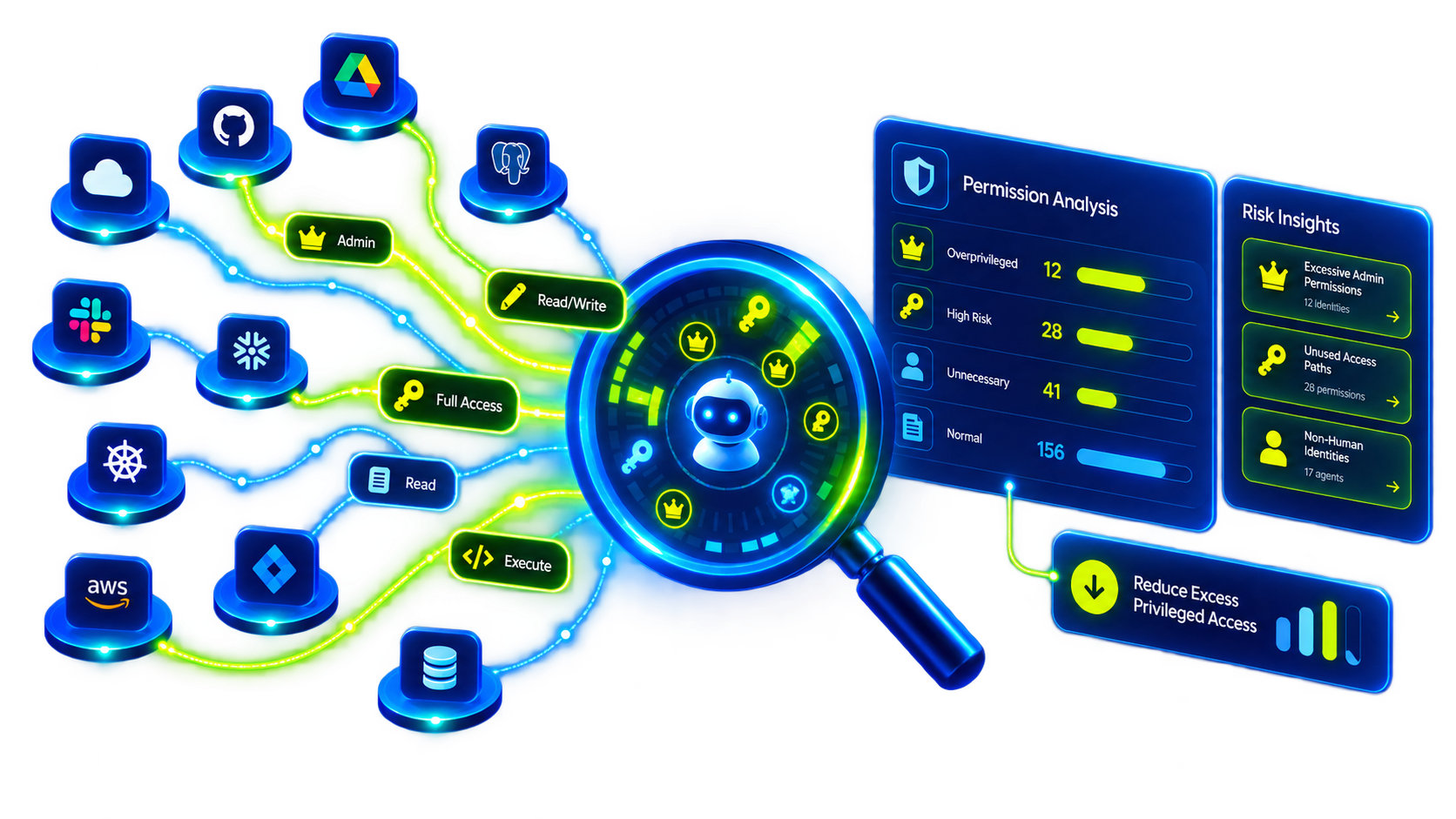
Identify overprivileged AI agents and non-human identities, understand what they can access, and reduce permissions before they become a security risk.
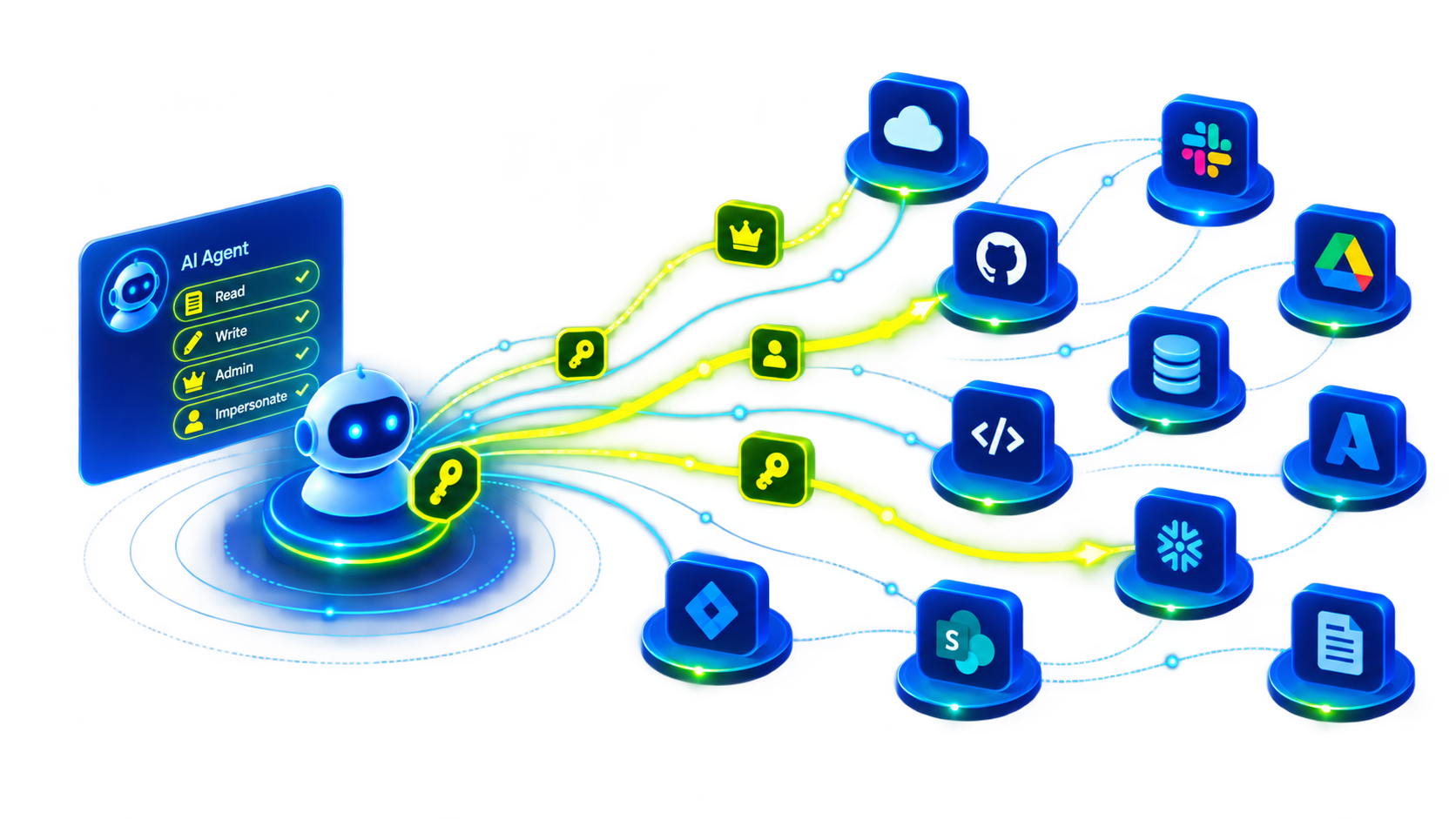
Security teams need visibility into AI and non-human identities, including who owns them, what permissions they hold, and which applications and data they can reach.
They also need the context to identify unnecessary access, prioritize high-risk identities, and continuously enforce least-privilege principles as environments change.
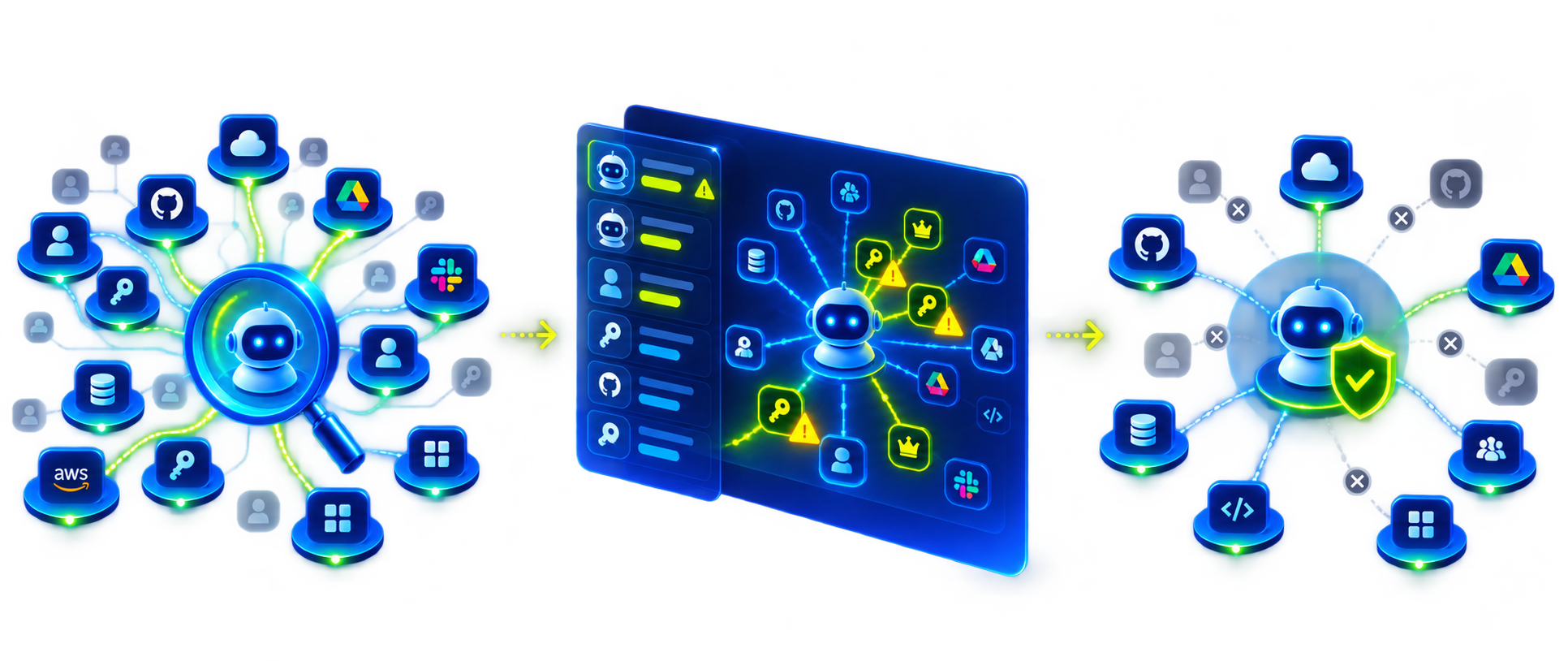

A non-human identity is an identity used by an application, service, agent, integration, or automated process rather than a person. Examples include service accounts, API credentials, machine identities, and AI agents acting on behalf of users or systems. These identities often require significant access, making visibility and governance critical.
AI agents may be able to access data, connect applications, or execute actions autonomously. When they have more permissions than necessary, a mistake, misuse, or compromise can affect a much larger portion of the environment. Reducing privileges limits the potential blast radius and keeps agent access aligned with its intended purpose.
Non-human identities are often created across many applications, owned by different teams, and managed outside traditional identity processes. Ownership can become unclear, and permissions may remain long after they are needed. Continuous inventory and access context help security teams identify these gaps.
Teams should review ownership, business purpose, assigned permissions, connected applications, accessible data, and whether the identity is still actively needed. They should also consider the consequences if the identity were compromised or misused. This helps prioritize the identities where excessive access creates the greatest risk.
Grip discovers AI agents and non-human identities and connects them to permissions, applications, integrations, and enterprise resources. Security teams can use this context to identify overprivileged identities and understand their potential blast radius. Grip then helps teams prioritize remediation and continuously monitor access as the environment changes.