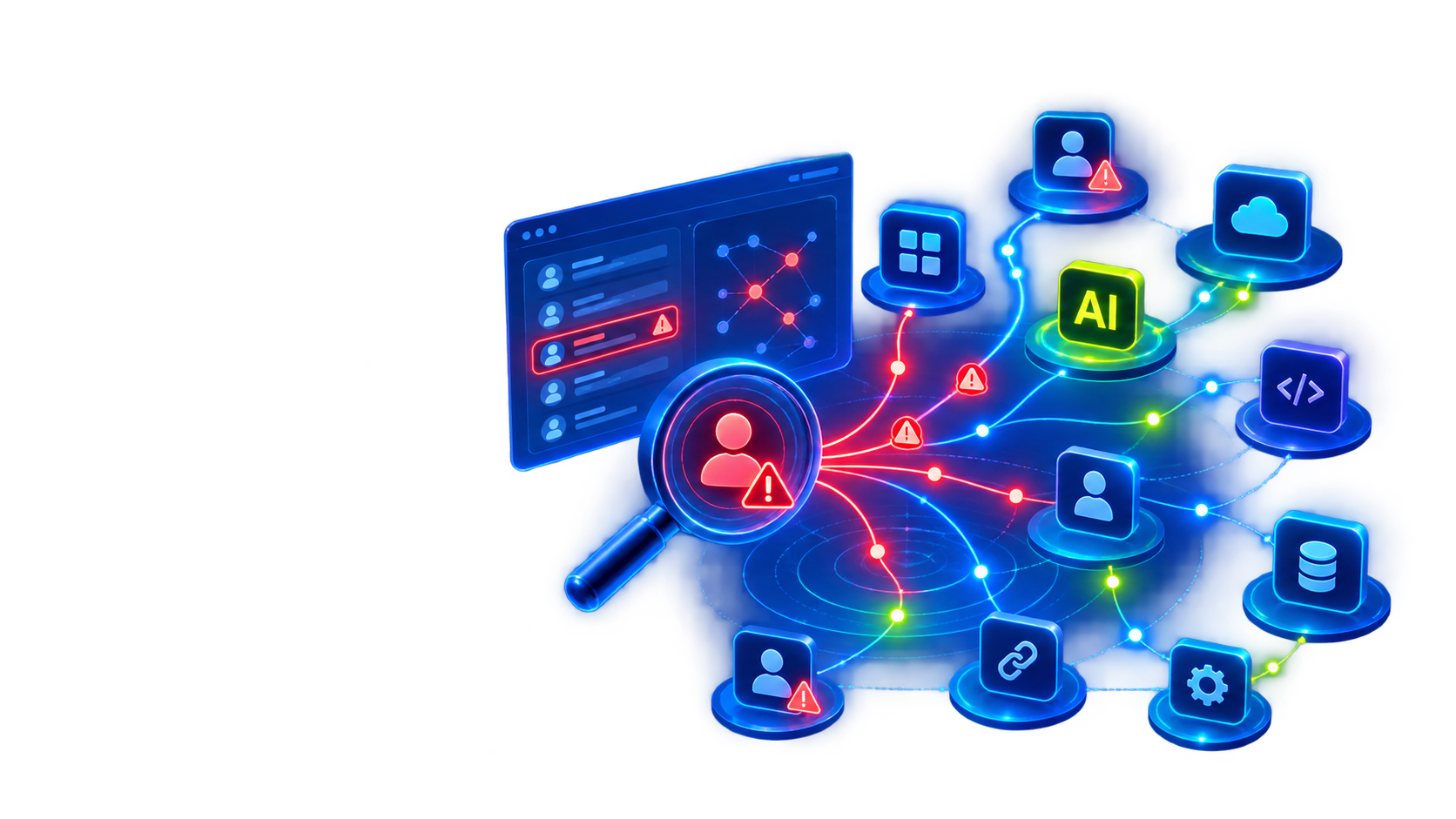
Identify suspicious activity across AI, SaaS, users, and non-human identities, then respond before compromised access spreads across the environment.
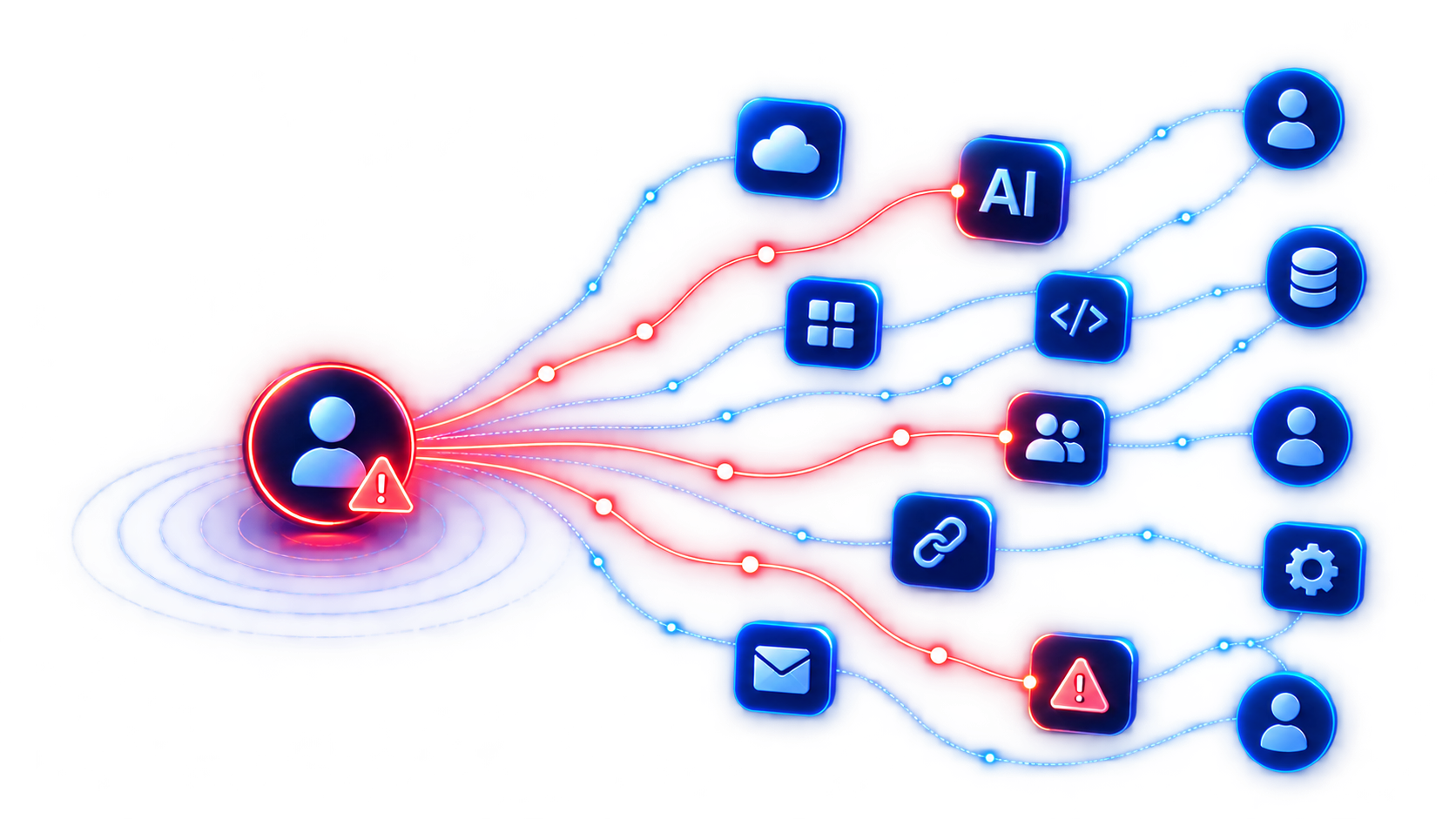
Security teams need continuous monitoring across AI and SaaS identities, accounts, applications, integrations, and activity to identify suspicious behavior quickly.
They also need enough context to understand blast radius, prioritize alerts, investigate affected resources, and take action before threats spread.
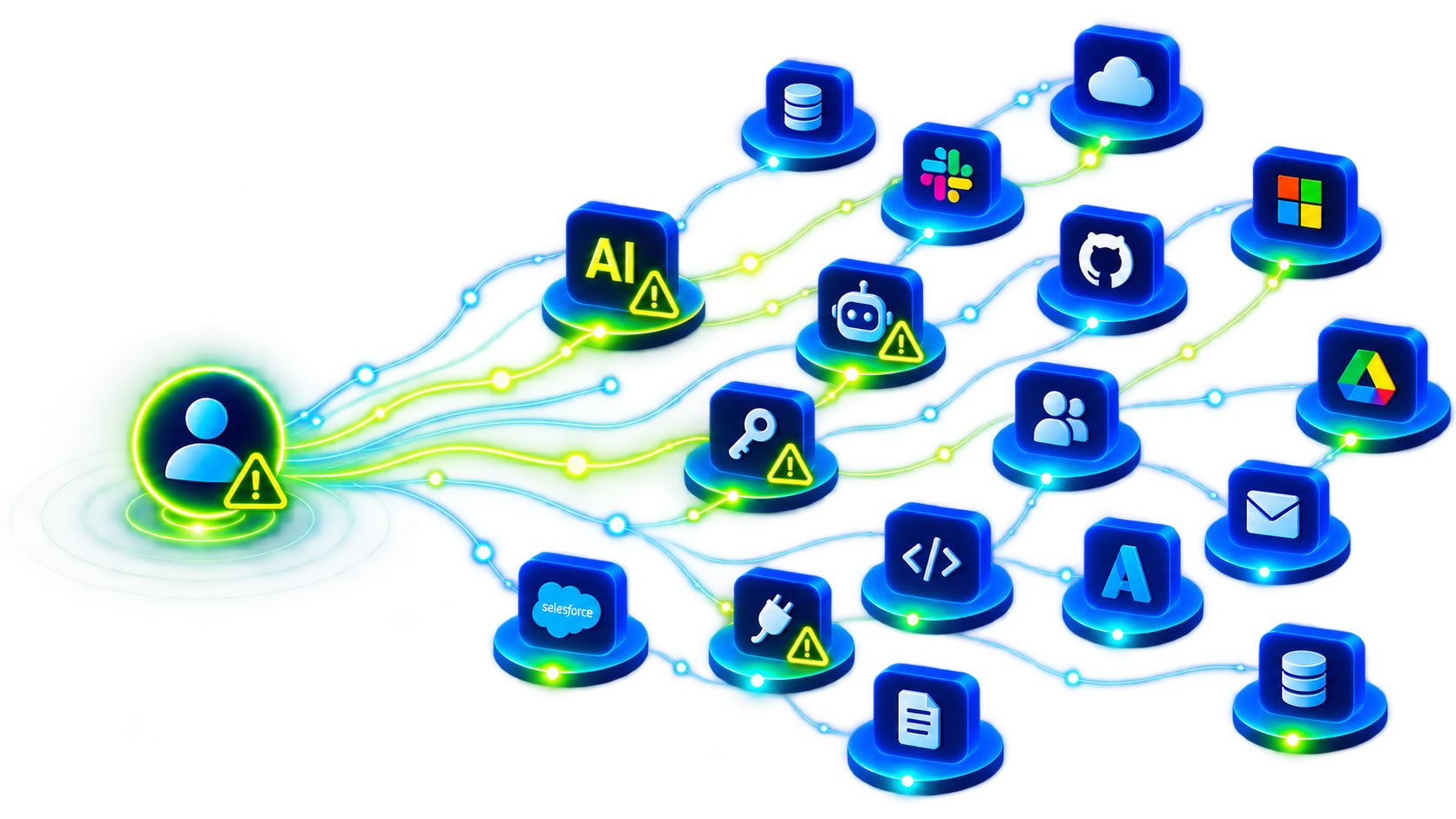

Identity-driven threats occur when attackers abuse legitimate users, accounts, agents, integrations, or non-human identities to access applications and data. Because the activity may use valid credentials or permissions, it can appear legitimate to traditional security tools. Effective detection requires understanding both identity behavior and the applications and resources those identities can access.
AI and SaaS environments are highly distributed, with identities, permissions, integrations, and activity spread across many applications. Attackers can move through these connections without touching traditional infrastructure or endpoints. Security teams therefore need visibility across the full identity and application layer to detect unusual or risky behavior.
Teams should monitor suspicious logins, brute-force attempts, unusual access patterns, risky OAuth grants, privilege changes, compromised accounts, and activity involving AI agents or non-human identities. The significance of each signal depends on the identity, permissions, application, and data involved. Adding this context helps teams separate meaningful threats from low-risk noise.
Identity context shows who or what is involved in an incident, what permissions they hold, and which applications or data they can access. This helps analysts understand potential blast radius and prioritize the most important alerts. It also makes containment more targeted by showing which accounts, integrations, or permissions need to be restricted.
Grip continuously monitors identities and activity across AI and SaaS environments and connects detections to applications, permissions, integrations, and access. This gives security teams a clearer view of the affected identity and its potential blast radius. Grip also supports remediation and automated response actions that help contain threats before they spread.