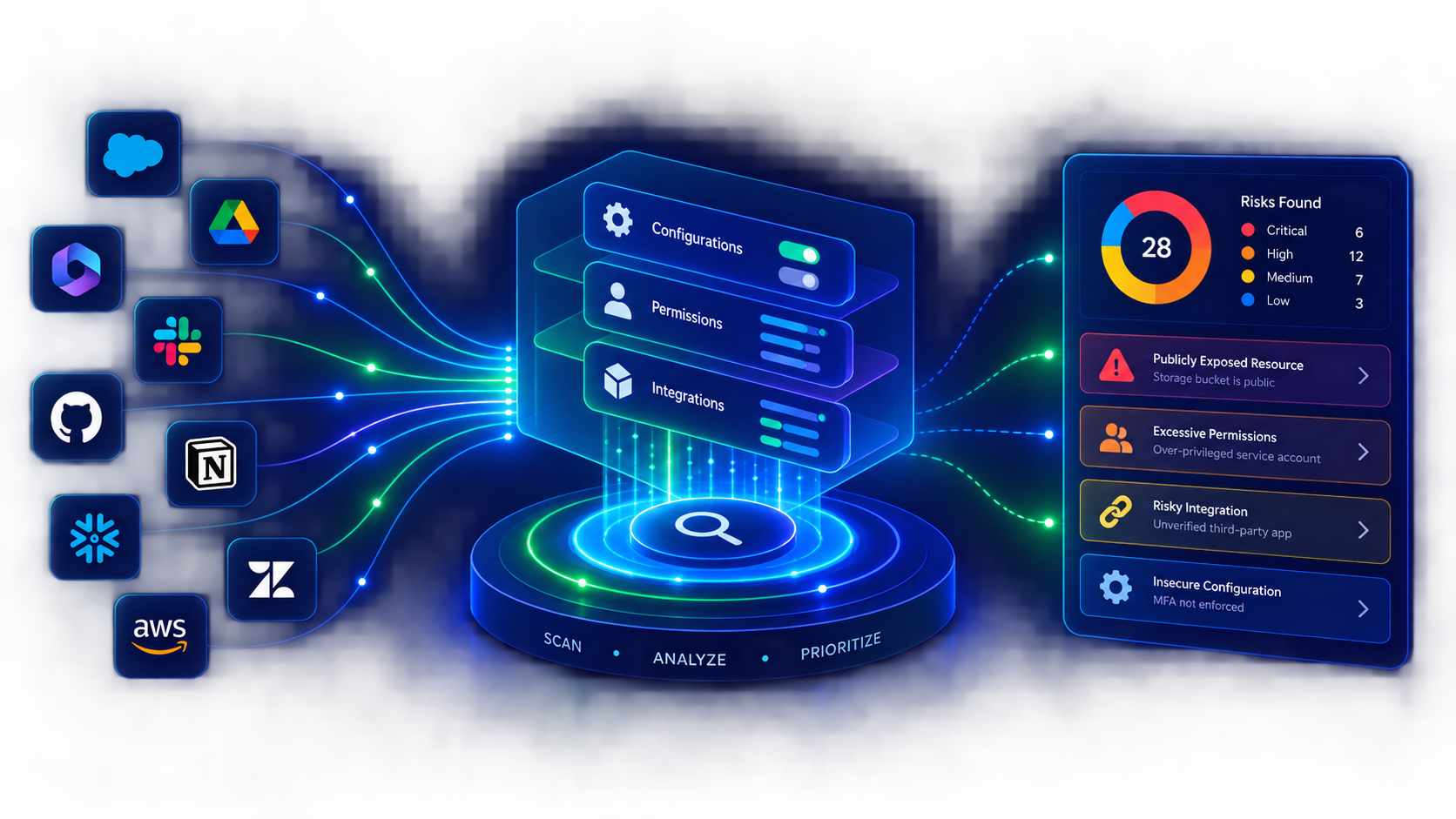
Identify misconfigurations, excessive access, and risky settings across AI and SaaS applications, then continuously improve posture as environments change.
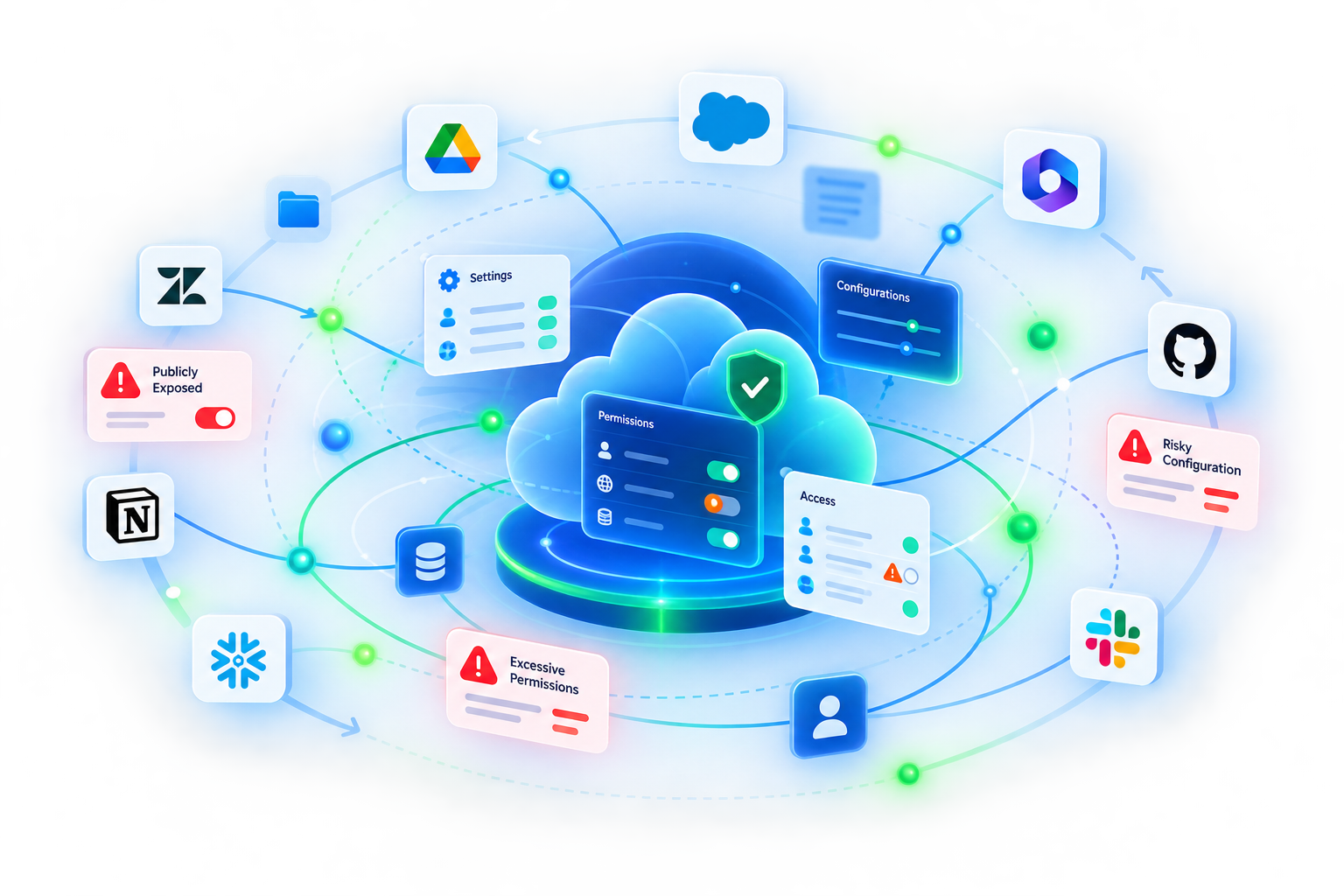
Security teams need continuous visibility into security configurations, permissions, and risky conditions across both AI and SaaS applications.
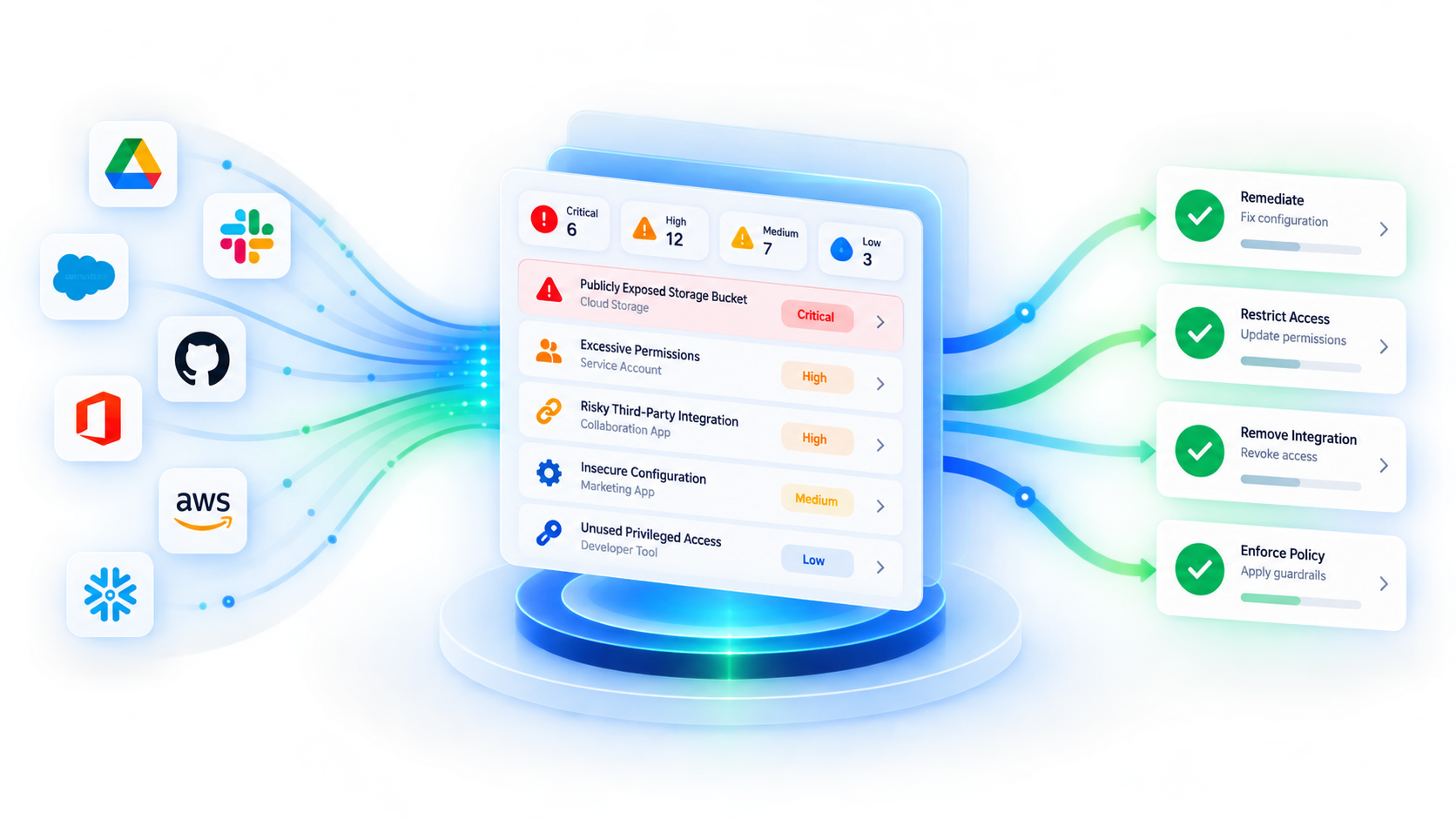
They also need prioritized findings and actionable remediation so teams can focus on the exposures that matter most instead of chasing every configuration change.

AI Security Posture Management, or AI-SPM, helps organizations continuously identify and reduce security risks within AI applications and services. It examines areas such as configurations, permissions, identities, integrations, and access to enterprise data. The goal is to ensure AI remains securely configured as usage and capabilities evolve.
Traditional SSPM focuses primarily on the configuration and security posture of SaaS applications. AI-SPM extends that approach to AI-specific risks, including AI features, agents, identities, integrations, and the ways AI can access or act on enterprise data. As AI becomes embedded within SaaS, organizations increasingly need to evaluate both together.
Application environments change constantly as administrators update settings, employees grant permissions, vendors release new features, and AI capabilities are introduced. A configuration that is secure today may become risky tomorrow without anyone intentionally changing security policy. Continuous monitoring helps teams detect these changes before they create meaningful exposure.
Common risks include insecure configurations, excessive permissions, weak authentication settings, unmanaged accounts, risky integrations, and unnecessary access to sensitive data. For AI, teams should also consider agent permissions, AI-specific controls, and new capabilities introduced into existing SaaS platforms. Prioritization should account for both the technical finding and the identities and data potentially affected.
Grip continuously assesses security posture across AI and SaaS applications while connecting findings to identities, permissions, integrations, and usage. This allows teams to understand both the configuration weakness and its potential business impact. Security teams can then prioritize remediation, monitor configuration drift, and strengthen posture from a unified platform.