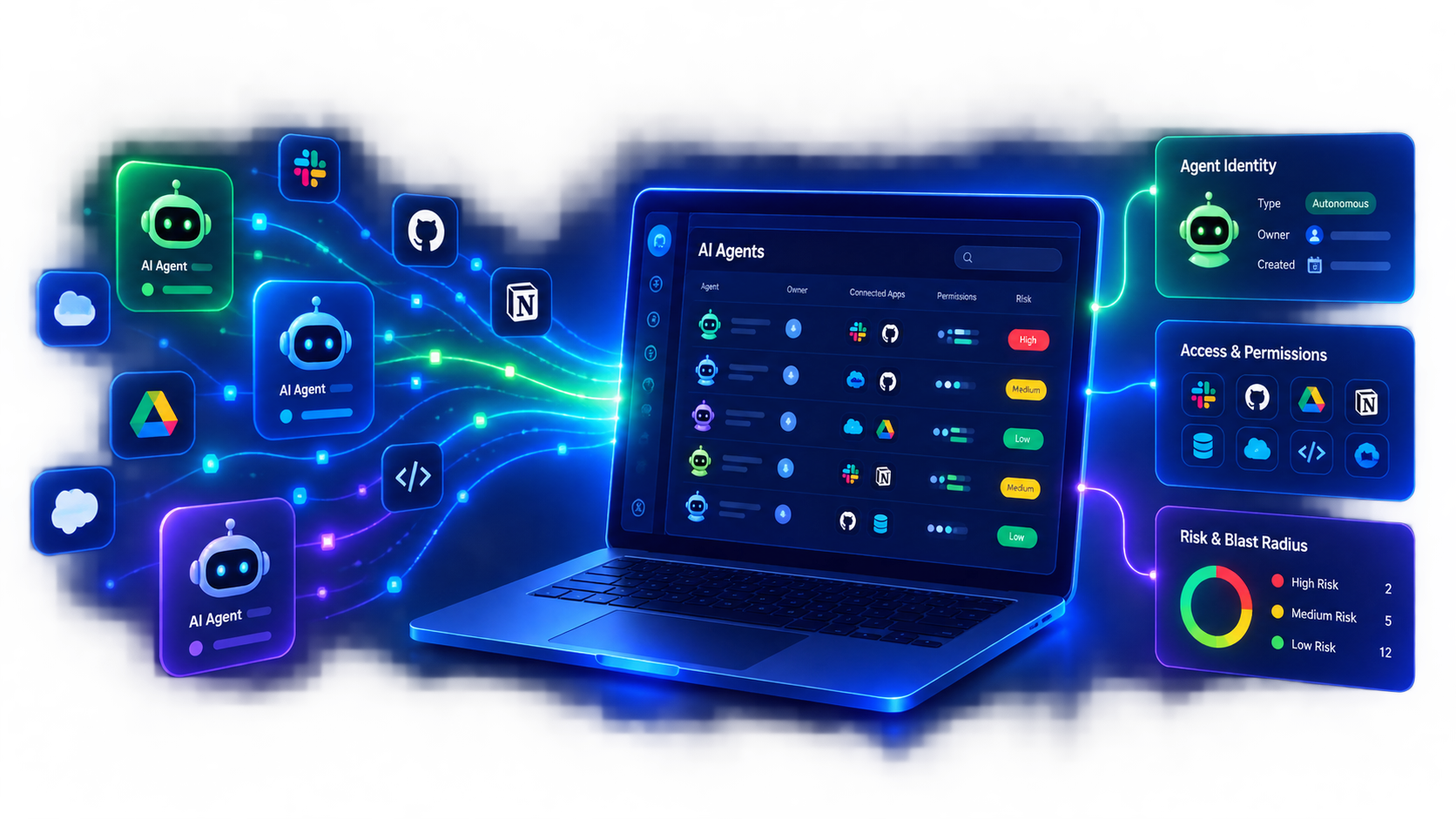
Discover AI agents, understand who owns them and what they can access, and apply governance before unmanaged autonomy becomes a security risk.
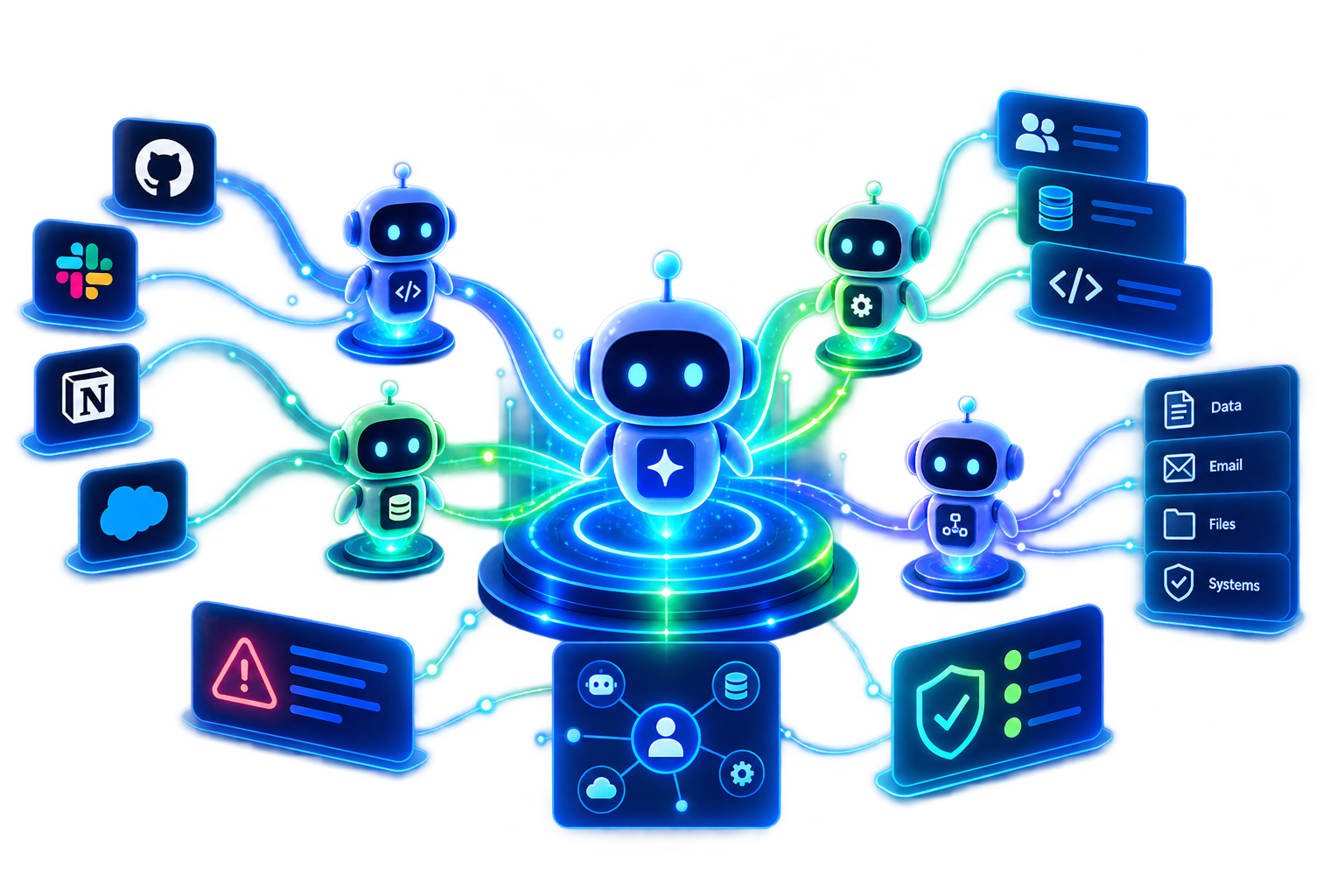
Security teams need a continuously updated inventory of AI agents connected to their users, accounts, applications, identities, permissions, and integrations.
They also need governance based on ownership, purpose, access, and activity so they can identify excessive permissions, orphaned agents, and other risky conditions.
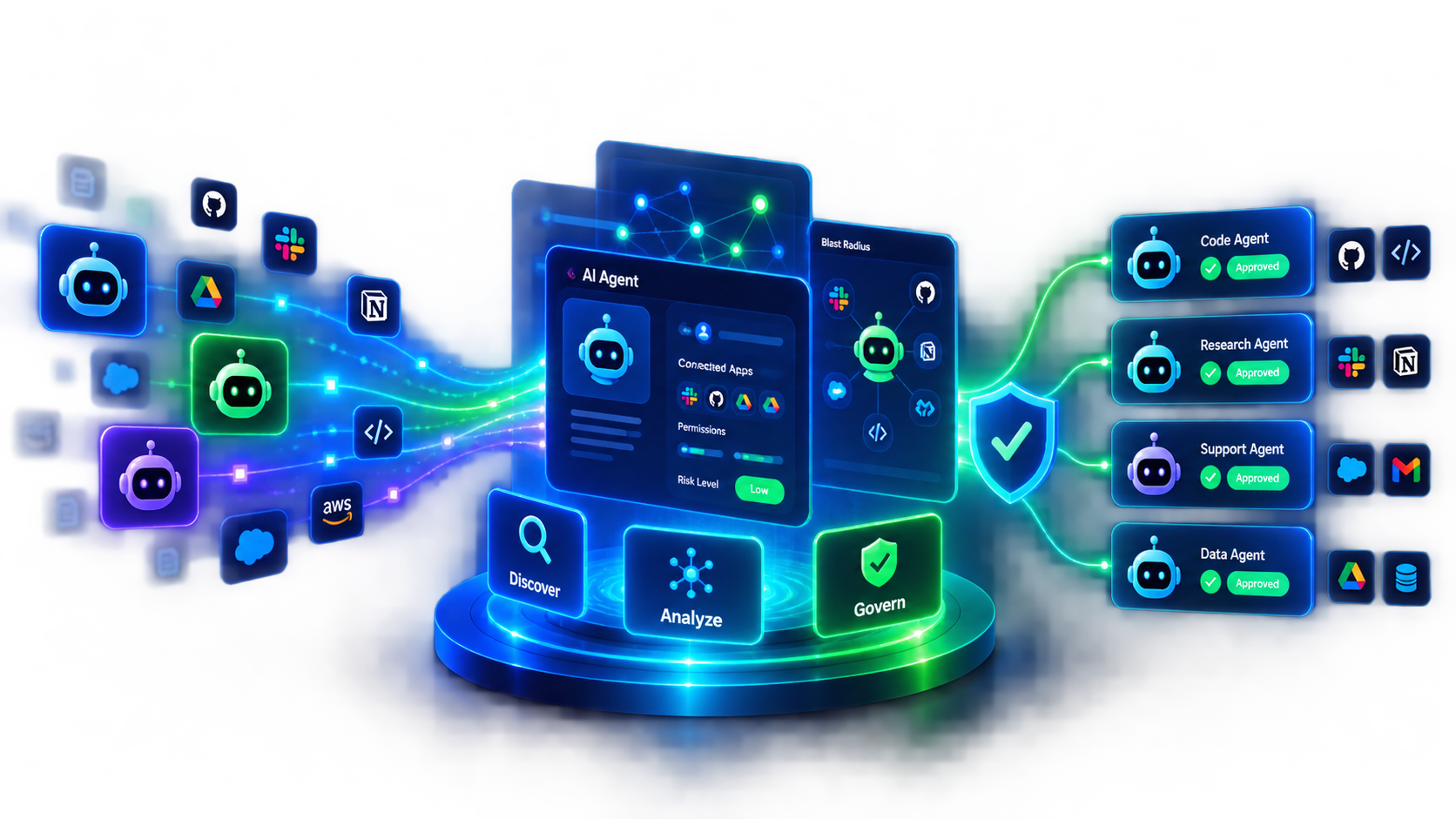

An AI agent inventory is a centralized record of the agents operating across an organization, including who owns them, where they were created, and what systems they can access. Unlike a basic application inventory, it should also capture the identities, permissions, integrations, and accounts associated with each agent. This gives security teams the context needed to determine which agents are approved, unmanaged, or potentially risky.
AI agents can access data, connect applications, trigger workflows, and perform actions on behalf of users or the business. That autonomy can create significant risk when agents have excessive permissions, unclear ownership, or access that extends beyond their intended purpose. Governance helps organizations establish accountability and ensure agent access remains aligned with business and security requirements.
Agent discovery requires visibility beyond centrally approved AI platforms. Employees may create agents through personal accounts, SaaS applications, AI builders, integrations, or emerging tools that security teams have never reviewed. Continuous discovery helps organizations identify these agents as adoption changes rather than relying on periodic surveys or manually maintained inventories.
Teams should consider who owns the agent, what business purpose it serves, which identity it operates under, what applications and data it can access, and what permissions or integrations it has been granted. They should also evaluate whether those privileges remain necessary over time. Combining these factors provides a more accurate view of risk than evaluating the AI platform alone.
Grip provides visibility into AI agents and connects them to identities, applications, permissions, integrations, and activity across the enterprise. Security teams can use that context to understand agent ownership and blast radius, identify risky or unmanaged agents, and prioritize remediation. This allows organizations to govern AI agents as part of the broader AI, SaaS, and identity environment.