Sep 23, 2026
SSPM vs. SSCP: Architectural Comparison


Compare SaaS Security Posture Management (SSPM) vs SaaS Security Control Plane (SSCP) architecture, posture limitations, and identity controls.

Grip Security

Sep 23, 2026
Compare SaaS Security Posture Management (SSPM) vs SaaS Security Control Plane (SSCP) architecture, posture limitations, and identity controls.
As enterprise cloud adoption shifts from centrally administered IT suites to distributed, business-led SaaS and autonomous AI agents, security leaders face a fundamental architectural choice. SaaS Security Posture Management (SSPM) emerged to scan configurations across major platforms like Salesforce, Microsoft 365, and ServiceNow. However, with hundreds of unmanaged apps and non-human identities entering the enterprise, static configuration checks leave massive blind spots.
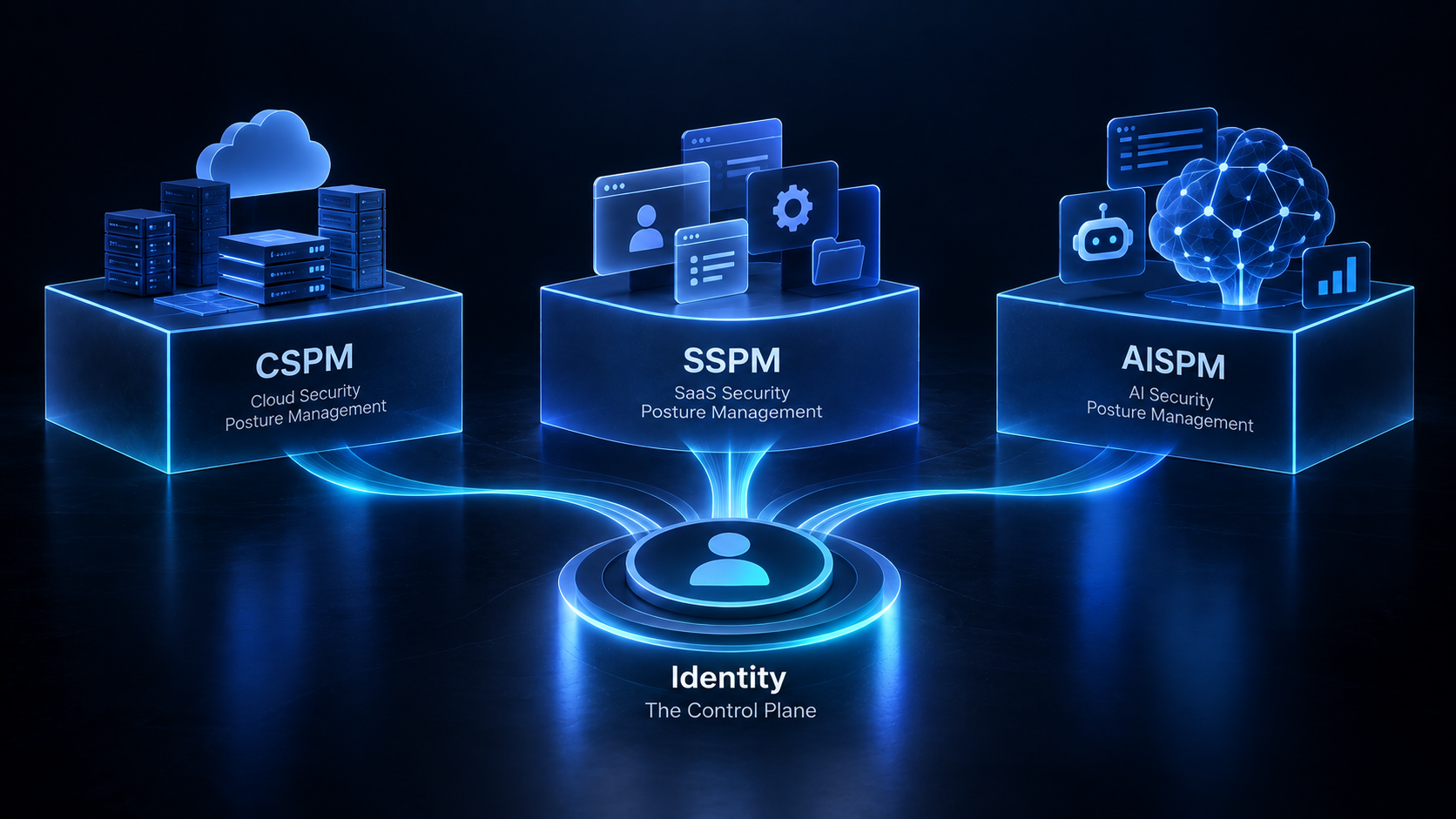
A SaaS Security Control Plane (SSCP) represents the evolution from passive configuration monitoring to continuous, identity-centric discovery, governance, and automated remediation. While SSPM audits settings within sanctioned boundaries via API connectors, SSCP operates at the authentication layer to govern all user access, third-party integrations, and shadow AI usage without requiring app-by-app configuration.
• The Architectural Paradigm Shift: SSPM operates as an auditor of static application settings via APIs, whereas SSCP functions as an active control plane governing user identities, machine tokens, and data access.
• Discovery vs. Inspection: SSPM requires pre-existing admin API credentials and cannot detect unmanaged applications; SSCP discovers 100% of shadow SaaS and AI adoption at the moment of authentication.
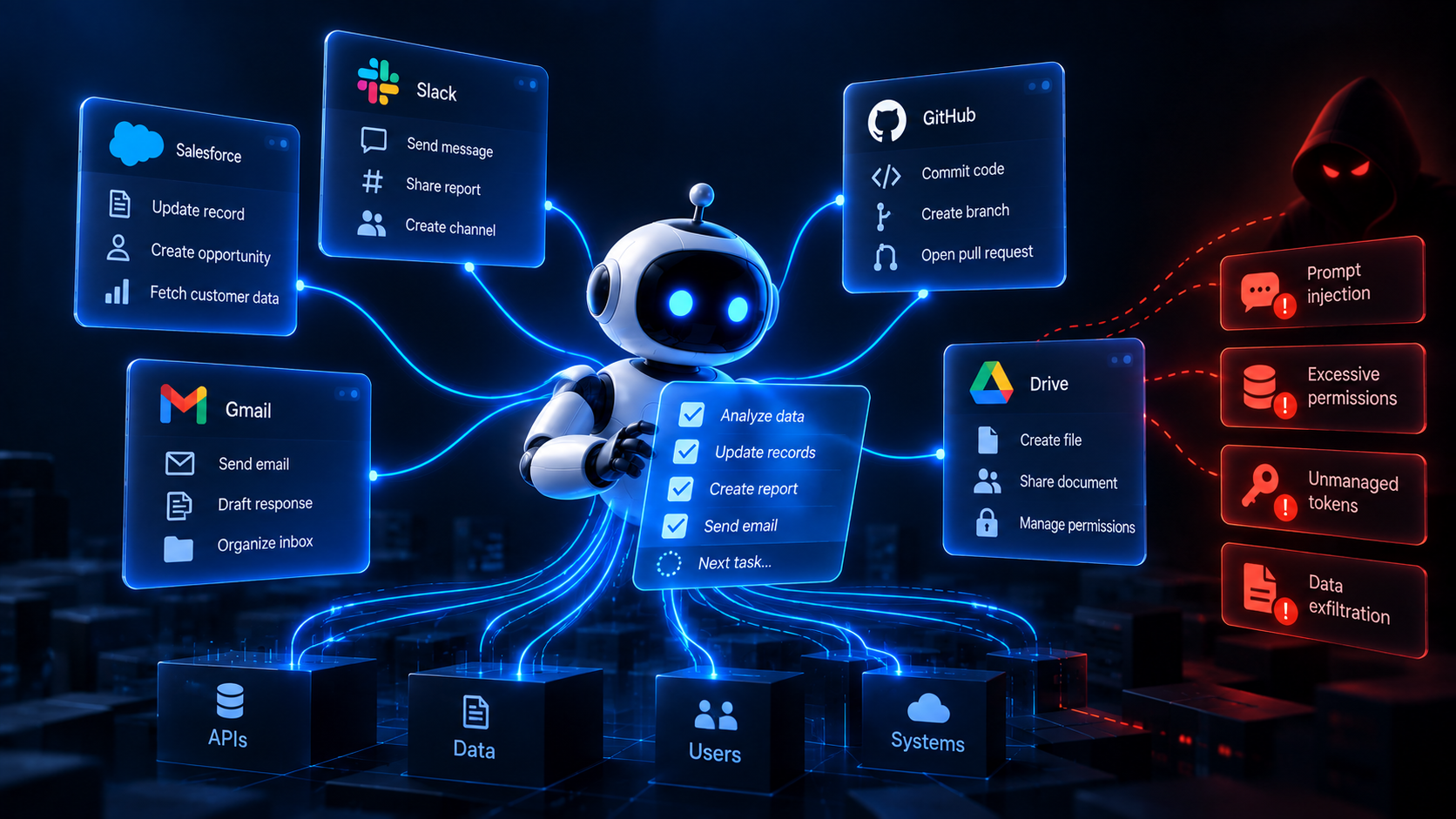
• Non-Human Identity (NHI) Sprawl: Attackers target delegated OAuth tokens, service accounts, and AI agent permissions rather than misconfigured toggles, demanding continuous token governance.
• Alert Fatigue vs. Automated Control: Traditional SSPM overwhelms security teams with compliance tickets; SSCP automates user-in-the-loop verification, access offboarding, and token revocation.
SSPM tools connect directly to administrative APIs of core enterprise applications to evaluate configuration settings against compliance benchmarks (such as CIS and NIST). For organizations seeking granular security baseline checks across sanctioned environments, SSPM provides deep visibility into tenant-specific permissions, encryption settings, and administrative roles.
• Granular Tenant Hardening: Audits hundreds of specific configuration parameters within complex platforms like Salesforce, Google Workspace, and Microsoft 365.
• Compliance Mapping: Maps configuration drift directly to regulatory frameworks including SOC 2, ISO 27001, and HIPAA.
• Privilege Auditing: Identifies excessive administrative privileges and misconfigured role assignments inside connected applications.
• Total Dependency on API Connectors: If security engineers lack administrative credentials to an app, SSPM cannot inspect it. This leaves shadow SaaS and employee-led tools unmonitored.
• Passive Alerting Bottlenecks: Generates tickets for application owners rather than orchestrating real-time remediation, slowing incident resolution.
• Blindness to Autonomous AI & OAuth Sprawl: Lacks continuous runtime context over machine-to-machine integrations, browser extensions, and rogue AI agents.
Evaluating modern alternatives to passive posture checks? Discover how Grip's identity-first control plane delivers complete SaaS discovery, non-human identity security, and automated remediation.
A SaaS Security Control Plane (SSCP) anchors security at the identity layer rather than inside individual application consoles. By observing authentication events, SSO federation, and browser-mediated identity interactions, an SSCP establishes continuous visibility and governance across every application employees access—whether sanctioned, unsanctioned, or autonomous.
• 100% Zero-Connector Discovery: Captures SaaS and AI tools from the point of initial login, eliminating shadow SaaS blind spots without waiting for IT setup.
• Continuous NHI & OAuth Governance: Audits the complete OAuth supply chain, evaluating third-party scopes, machine tokens, and agent authorizations.
• Identity Threat Detection and Response (ITDR): Detects anomalous session activity, credential stuffing, and session hijacking in real time via continuous ITDR architecture.
• Automated Orchestration & Offboarding: Triggers automated workflows to revoke dormant access, offboard former employee accounts, and isolate compromised integrations.
The following matrix highlights the critical architectural differences between traditional posture management and a modern SaaS security control plane:
| Capability Dimension | SaaS Security Control Plane (SSCP) | SaaS Security Posture Management (SSPM) |
|---|---|---|
| Discovery Mechanism | Identity-first observation across SSO, IdP, and browser interactions | Pre-authenticated API connectors requiring admin credentials |
| Shadow SaaS & AI Coverage | 100% discovery of unmanaged applications, extensions, and AI agents | Zero visibility into unmanaged or unsanctioned tools |
| Non-Human Identity Governance | Complete tracking and revocation of OAuth tokens and service accounts | Static API privilege audit within connected tenants only |
| Threat Detection (ITDR) | Active detection of compromised credentials, session hijacking, and anomalous logins | Limited to static posture drift and configuration changes |
| Remediation Model | Automated end-user validation, self-service offboarding, and token revocation | Manual ticket generation and administrative alerts |
| Deployment Time | Minutes via central identity integration | Weeks or months configuring individual application connectors |
Enterprise security teams do not necessarily need to rip and replace existing investments. Instead, progressive security roadmaps follow a clear progression:
• Step 1: Unify Visibility Across All SaaS & AI: Deploy an SSCP to establish an authoritative inventory of all managed, shadow, and AI applications actively used across the workforce.
• Step 2: Secure Non-Human Identities and OAuth Integrations: Identify over-permissioned third-party app connections and establish continuous monitoring to reduce shadow AI risks.
• Step 3: Automate User-in-the-Loop Remediation: Implement self-healing workflows that engage employees directly to verify app ownership, clean up stale accounts, and rotate compromised credentials.
• Step 4: Maintain Targeted Posture Audits on Crown Jewels: Complement identity controls with deep configuration hardening on primary sanctioned suites where compliance mandates require it.
No. SSPM tools are specialized for configuration auditing on pre-connected sanctioned applications. They cannot discover shadow SaaS, govern machine identities across unmanaged tools, or execute automated access remediation without administrative APIs.
In decentralized cloud environments, the network perimeter no longer exists. Identity is the only common denominator across every cloud service, API integration, and AI agent. Securing authentication and token relationships provides comprehensive control across all software assets.
An SSCP observes identity transactions, authentication events, and federated directory signals at the identity provider (IdP) layer and via lightweight browser sensors, cataloging application access without requiring cumbersome inline proxy infrastructure.
SSPM focuses on static posture—evaluating whether security settings comply with predefined baselines. ITDR (Identity Threat Detection and Response) monitors dynamic behavioral activity—identifying active credential misuse, token theft, and anomalous authentications.
Because an SSCP connects directly into existing identity infrastructure, organizations achieve complete SaaS and AI inventory visibility within minutes, delivering immediate time-to-value compared to connector-by-connector implementations.
To eliminate enterprise blind spots and govern SaaS and AI identities with continuous control, explore how Grip's AI security and SaaS control plane unifies visibility, posture, and remediation.