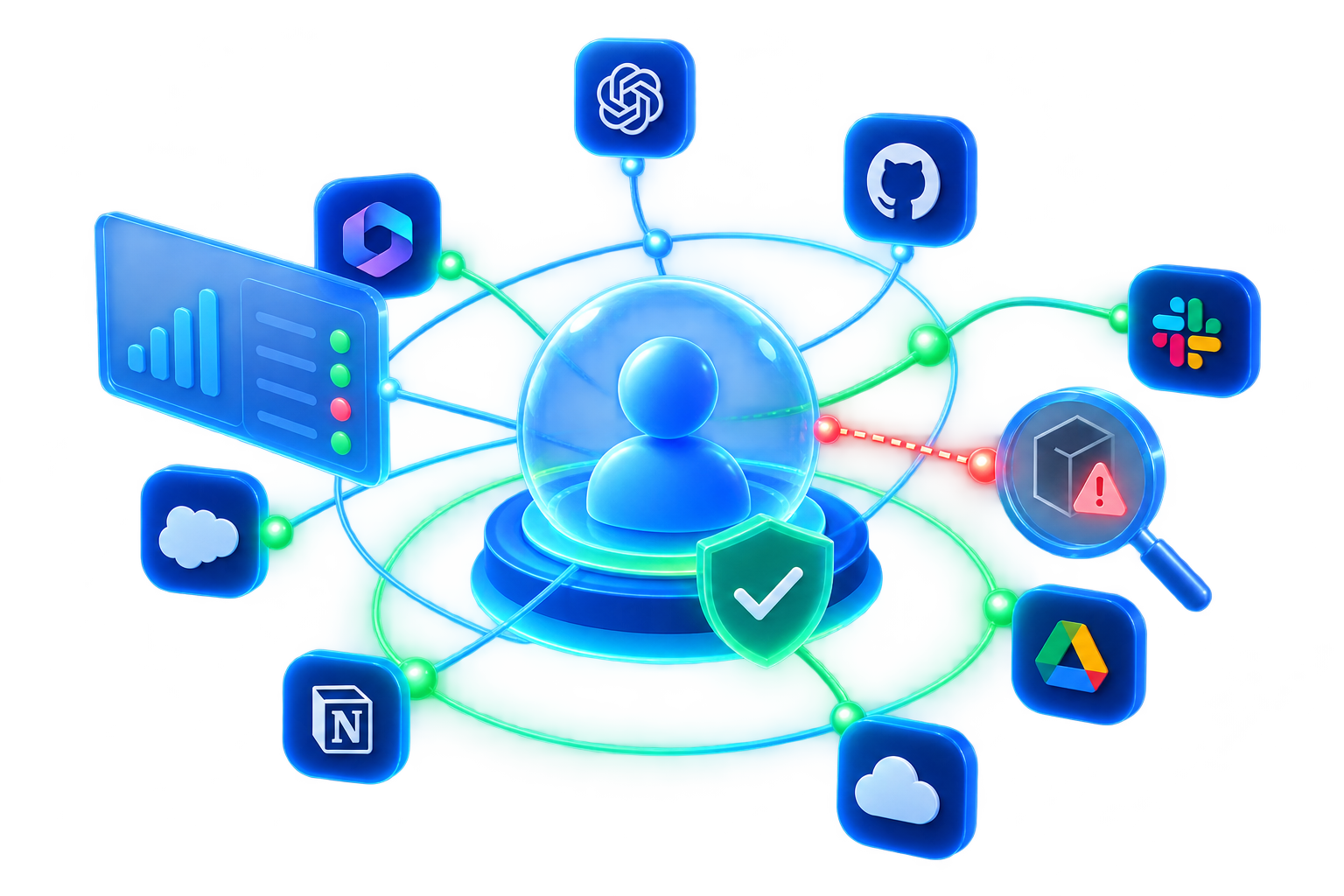
Secure onboarding, role changes, and offboarding by continuously identifying outdated access, dormant accounts, and identity risk across AI and SaaS.
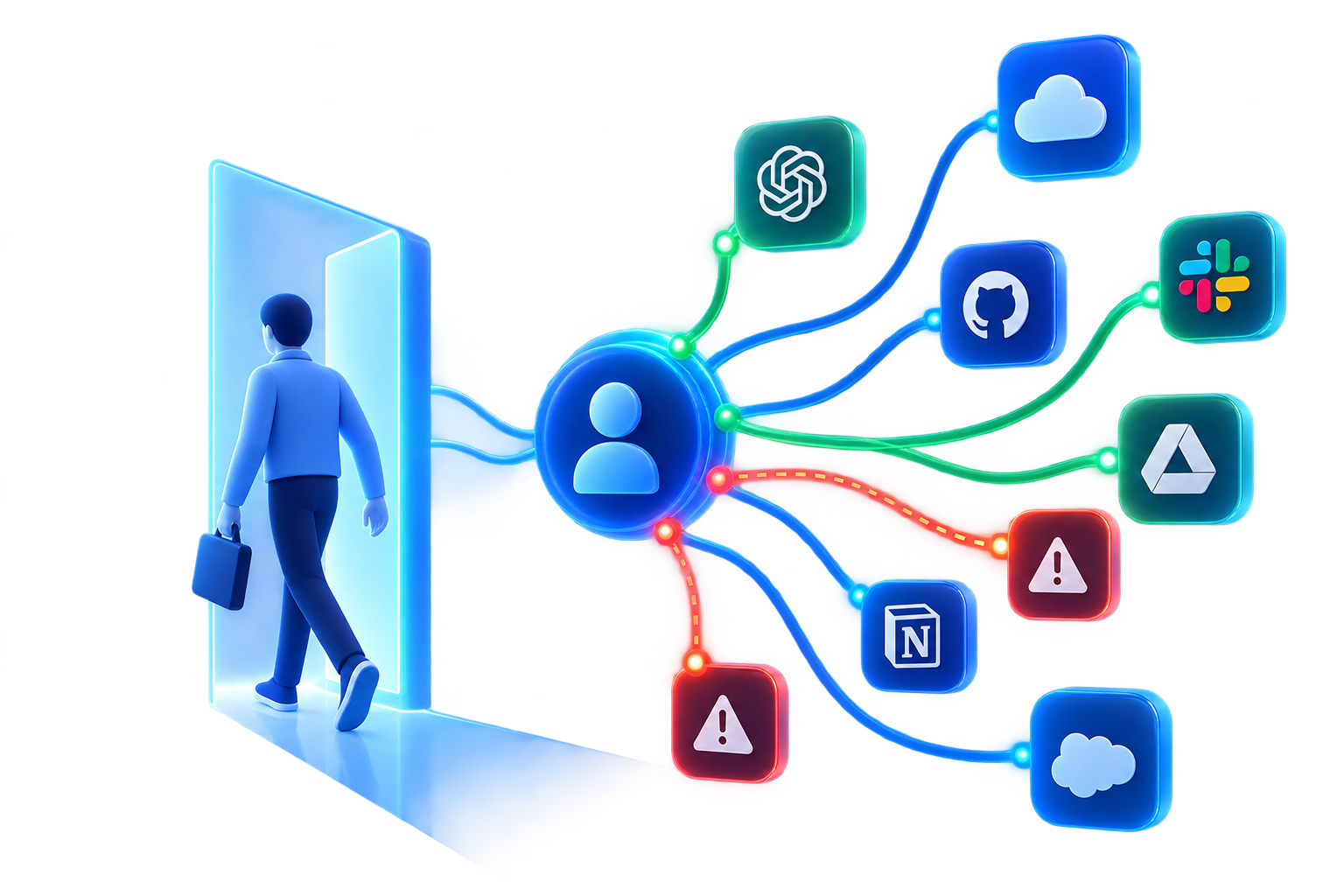
Security teams need continuous visibility into the applications, accounts, permissions, integrations, and identities connected to each employee throughout the identity lifecycle.
They also need automated workflows that remove unnecessary access, identify dormant accounts, and ensure onboarding, role changes, and offboarding consistently follow security policy.
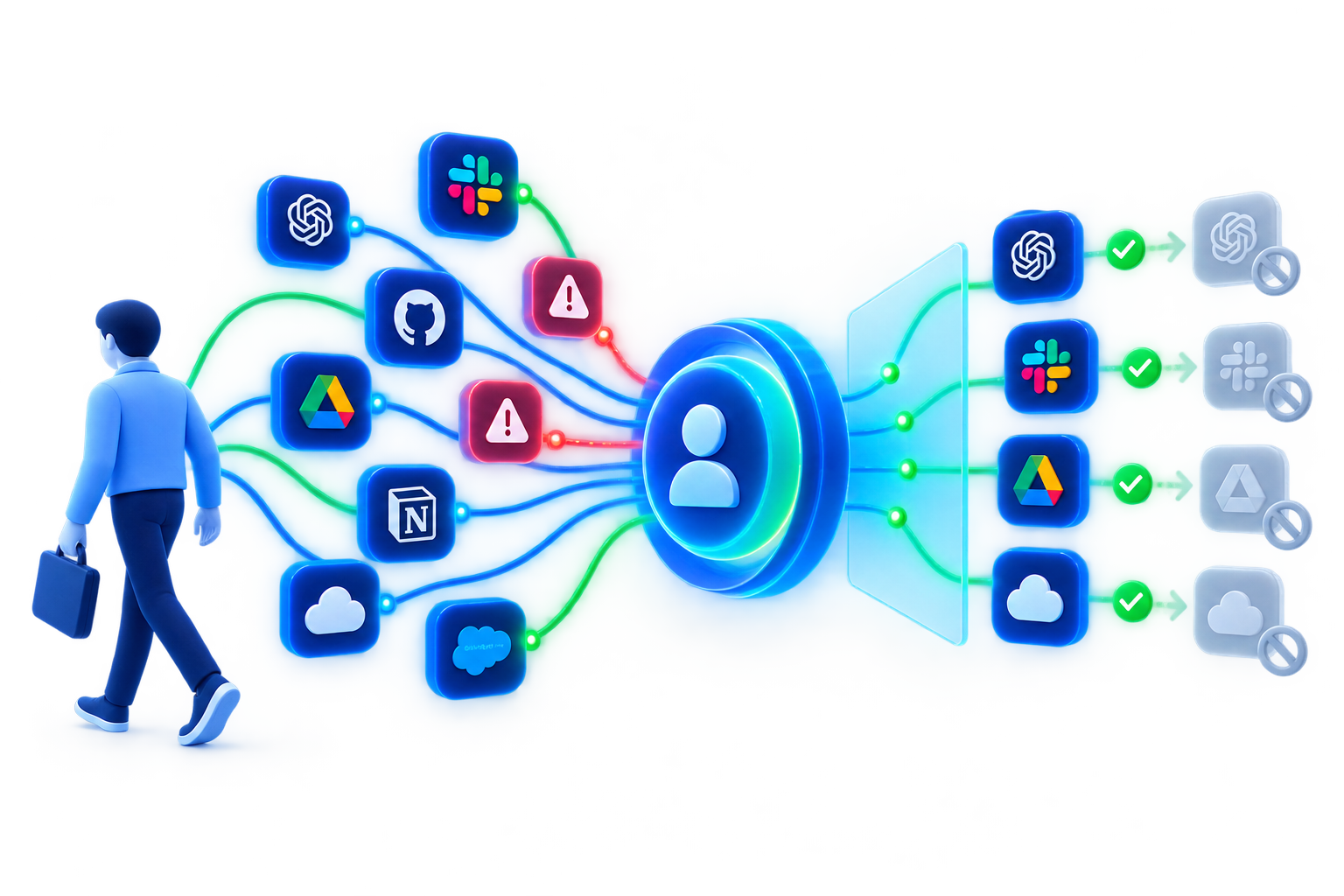

Employees often accumulate access to applications, AI tools, integrations, and data throughout their time at an organization. When they change roles or leave, some of that access can remain active if it is not centrally tracked. These forgotten accounts and permissions can become long-term security exposures.
Dormant identity threats include inactive accounts, stale permissions, unused integrations, and other access that remains available even though it is no longer needed. Because these identities may receive little attention, they can become attractive targets for attackers. Identifying and removing dormant access reduces unnecessary attack surface.
Many SaaS and AI applications are adopted directly by employees without going through centralized provisioning processes. As a result, IAM or HR-driven offboarding may not know every account that needs to be disabled. Continuous application and account discovery helps identify access that traditional offboarding workflows can miss.
Organizations should reassess application access, permissions, integrations, and business need whenever an employee changes responsibilities. Access that was appropriate for a previous role may become excessive after a transfer or promotion. Continuous visibility makes it easier to identify and remove privileges that no longer align with the user's job.
Grip connects employees and identities to their AI and SaaS applications, accounts, permissions, and integrations throughout the lifecycle. Security teams can identify stale or unnecessary access and use automated workflows to trigger remediation during onboarding, role changes, and offboarding. This helps reduce dormant identity risk and keeps access aligned with current business needs.