Sep 29, 2026
AI Governance Is Becoming Infrastructure


The evolution of Claude's Compliance API shows how quickly enterprise AI is moving from adoption to accountability

Sep 29, 2026
The evolution of Claude's Compliance API shows how quickly enterprise AI is moving from adoption to accountability
Enterprise AI adoption moved faster than most governance programs.
Employees started using new tools. Developers connected AI to internal workflows. Business teams embedded AI into everyday processes. Agents introduced a new class of nonhuman activity that crossed application, identity, and data boundaries.
That pace created value, but it also created a harder security problem.
As AI becomes more embedded in the enterprise, organizations need stronger visibility into how it is used, who and what has access, what activity is taking place, and whether actual usage aligns with internal policy. The rapid evolution of capabilities such as Claude's Compliance API shows that AI governance is becoming part of the operating infrastructure around enterprise AI.
The first phase of AI adoption focused on possibility.
Organizations wanted to know where AI could improve productivity, accelerate development, and create competitive advantage. Security teams were often left trying to discover which tools were already in use after adoption had started.
The questions are more demanding now.
Security leaders need to understand which identities have access, which agents and integrations exist, how those environments are configured, and what activity is occurring over time. They also need enough evidence to determine whether AI usage matches enterprise policy and risk requirements.
That shift is significant because it changes AI governance from a planning exercise into an operational discipline.
A policy that says which AI systems are approved is useful. A security team also needs to know whether the environment reflects that policy in practice.
The growth of compliance focused interfaces around AI platforms says a lot about where the market is heading.
Claude's Compliance API gives eligible organizations programmatic access to data that supports audit, oversight, and governance. Claude Enterprise provides broader access to organizational content and activity, while Claude Platform access through the Compliance API is limited to activity data.
Those distinctions matter.
Enterprise governance depends on a precise understanding of what data is available, what it represents, and where the boundaries of that visibility sit. The same applies to deployment scope. The Compliance API applies to Anthropic hosted deployments and should not be treated as coverage for Claude running through Amazon Bedrock or Google Vertex AI.
As AI matures, these details become increasingly important because governance decisions depend on accurate context.
The security problem rarely ends inside a single AI environment.
An enterprise identity signs in to the platform. An agent connects to another application. Credentials establish new access paths. An AI enabled SaaS application introduces functionality that did not exist during the original security review.
Each of those changes affects the broader enterprise security picture.
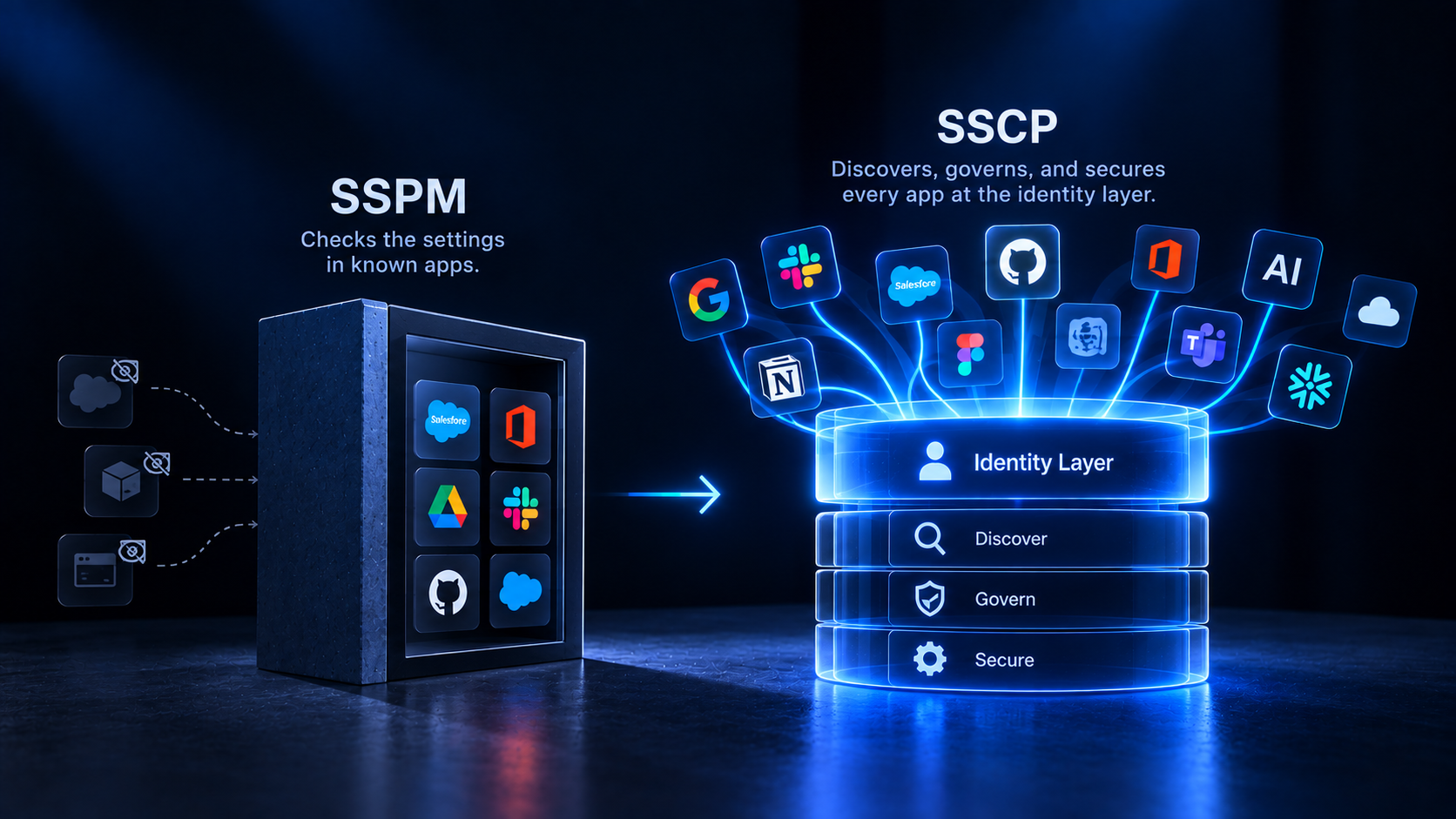
That is why AI governance increasingly overlaps with SaaS security and identity security. The same users, non-human identities, permissions, applications, and integrations often sit underneath all three.
Security teams therefore need more than platform specific telemetry. They need to understand how that telemetry fits into the rest of the environment.
Native platform data provides important depth.
Enterprise context provides meaning.
An activity event is more useful when a security team understands the identity behind it. An agent becomes more relevant when its permissions and connected applications are visible. A configuration issue becomes easier to prioritize when it can be assessed alongside the rest of the organization's SaaS and AI posture.
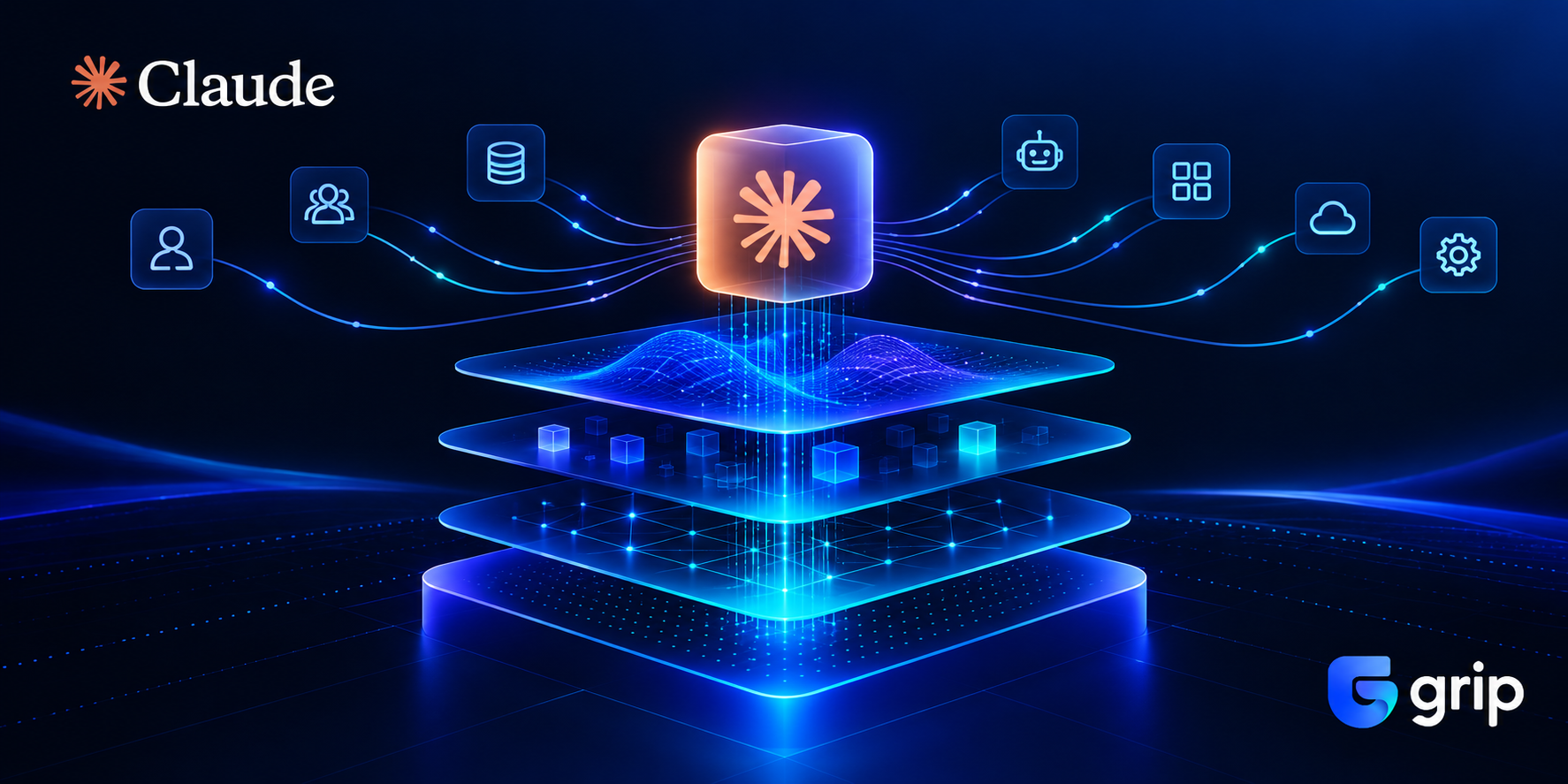
Grip already integrates with Claude's Compliance API to bring supported Claude security and activity information into that larger context.
The integration helps organizations understand Claude within the broader AI + SaaS estate, alongside the identities, agents, applications, configurations, and access relationships that shape enterprise risk.
Grip's role is not to change or control Claude's behavior. The value comes from visibility, assessment, context, and governance around how AI is deployed and used across the enterprise.
Grip's integration with Claude's Compliance API already exists.
The importance of the September 29 milestone is that it reflects continued progress in the governance infrastructure surrounding enterprise AI.
That progress matters because AI adoption is not slowing down. Organizations are adding more tools, more agents, more integrations, and more AI enabled capabilities inside the SaaS applications they already use.
Security teams need the governance layer to advance at the same pace.
As Claude continues to mature its enterprise governance capabilities, Grip continues to improve the way organizations discover AI usage, assess posture, understand identity and agent activity, and operationalize governance across their AI + SaaS environment.
That is the broader story behind the milestone.
The market is moving beyond the question of whether AI belongs in the enterprise. Security teams now need to determine how to govern it at scale.
Traditional governance processes were often built around scheduled assessments.
Teams reviewed systems, documented findings, collected evidence, and repeated the process later.
That approach becomes less effective when the environment changes every day.
New applications appear. Permissions change. Agents are created. Credentials are issued. AI functionality is added to existing SaaS tools. Business users introduce new workflows without waiting for the next formal review cycle.
Governance needs to keep pace with that rate of change.
Programmatic access to activity and compliance data creates a foundation for more continuous oversight. Security platforms can use those signals to help teams identify change, assess risk, and route findings into existing security workflows.
This moves governance closer to how modern security teams already operate.
AI introduces new risks, but much of the underlying security problem is familiar.
Identity still matters.
Access still matters.
Configuration still matters.
Application context still matters.
The difference is that AI introduces new actors and new forms of activity into an environment that was already difficult to govern.
Agents add nonhuman access. Embedded AI changes application behavior. AI services create new integrations and trust relationships. Business data moves through workflows that security teams need to understand with more precision.
Treating AI as a separate security silo makes that environment harder to manage.
A more practical approach is to understand AI + SaaS as a connected security domain where applications, users, agents, permissions, configurations, and activity all contribute to enterprise risk.
The next phase of enterprise AI will be defined by more than better models and new use cases.
It will also be defined by the quality of the governance infrastructure that forms around them.
Claude's Compliance API reflects that transition. It gives organizations a stronger foundation for understanding activity and supporting oversight within supported Claude environments.
Grip's integration helps place those signals into a broader enterprise context.
That combination is increasingly important because AI governance needs both depth and breadth. Security teams need detailed insight into important platforms, and they also need a unified view across the wider AI + SaaS estate.
As enterprise AI becomes more deeply embedded in business operations, governance will increasingly become part of the infrastructure required to scale it responsibly.
Grip will continue expanding the visibility and controls security teams need to manage that environment.
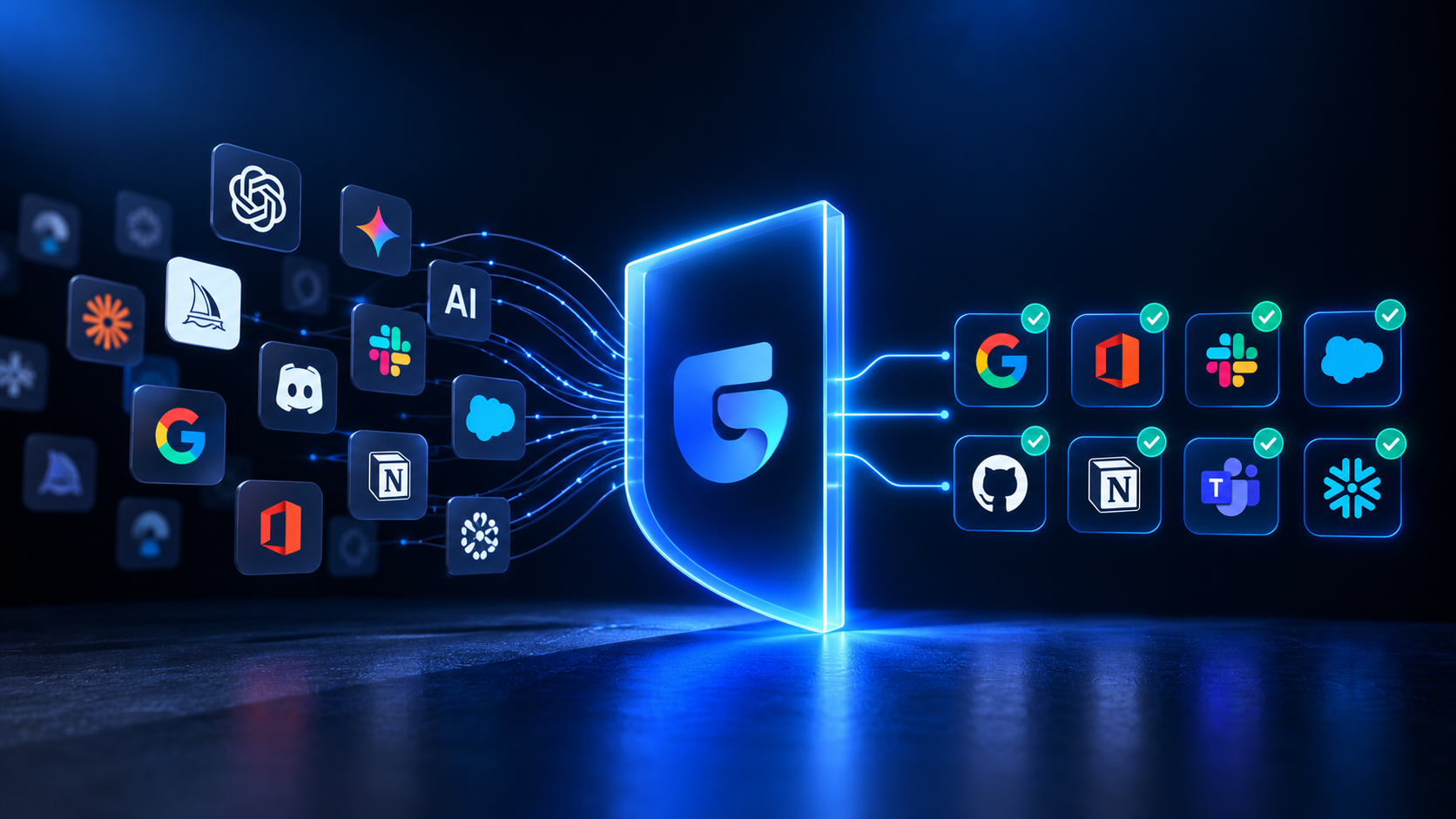
Grip helps organizations discover AI and SaaS applications, understand the users and agents connected to them, assess security posture, and operationalize governance across the environment.
See how Grip Security helps security teams build a unified view of AI + SaaS risk, identity, access, and activity.
AI Governance & Compliance

AI Security & Shadow AI
SaaS Security & SSPM