Claude Compliance API and Grip Security: Bringing AI Governance, Visibility, and Security to Claude Environments

Jun 12, 2026

blue polygon icon

Learn how Grip Security uses the Claude Compliance API to discover AI agents, monitor Claude activity, assess security posture, and strengthen AI governance.

Link to Linkedin
This webinar will cover:
In this webinar:
See More
See more
Fill out the form and watch webinar
Oops! Something went wrong while submitting the form.
Register now and save your seat!
Registration successful!
Webinar link will be sent to your email soon
Oops! Something went wrong while submitting the form.
In this webinar:
See More
See more

Everyone is talking about Claude, and for good reason.

Claude, powered by Anthropic, has quickly become one of the most widely adopted AI platforms in the enterprise. has quickly become one of the most widely adopted AI platforms in the enterprise. Employees use it to generate content, analyze data, write code, and automate tasks. Developers are building AI-powered workflows. Organizations are deploying AI agents connected to business systems. MCP servers are expanding what AI can access and accomplish.

The productivity gains are real.

But so is the risk.

As Claude adoption accelerates, security teams are being asked a new set of questions:

Who is using Claude? What data is being shared? Which AI agents have access to business systems? How many Claude environments exist? What happens if an API key is compromised? Are security controls configured correctly?

These questions are driving a new category of AI governance requirements, and they are exactly why Grip Security has integrated with the Claude Compliance API.

The integration gives organizations visibility into Claude usage, users, agents, prompts, configurations, and activity. More importantly, it transforms that data into actionable insights across discovery, posture management, AI governance, and threat detection.

Key Takeaways

  • Grip Security now integrates with the Claude Compliance API to provide visibility into Claude users, tenants, agents, MCP servers, API keys, and activity.
  • Security teams can discover shadow Claude environments, unmanaged accounts, and AI agents operating outside traditional governance processes.
  • Continuous posture assessments help identify authentication gaps, excessive permissions, risky integrations, and configuration weaknesses.
  • Organizations gain visibility into prompts, conversations, and AI activity to support governance, compliance, and risk management initiatives.
  • AI-specific threat detection helps identify suspicious activity, policy violations, credential abuse, and unauthorized agent behavior.
  • Security findings can be operationalized through remediation workflows, ticketing systems, and existing security processes.

Visibility First: Understanding Your Claude Environment

Every successful security program starts with visibility.

Organizations cannot govern what they cannot see, and many security teams are discovering that Claude environments expand far beyond officially approved deployments. What begins as a sanctioned AI initiative often evolves into a complex ecosystem of corporate accounts, personal accounts, unmanaged workspaces, AI agents, MCP servers, desktop applications, browser sessions, and administrative API keys operating outside traditional IT oversight.

Through the Claude Compliance API, Grip delivers centralized visibility into how Claude is being adopted and used across the organization. Security teams can discover every Claude user, including managed accounts, unmanaged accounts, and personal accounts being used for business purposes. This provides an accurate picture of AI adoption rather than relying solely on approved deployments and self reported usage.

Grip also helps identify unmanaged Claude tenants that exist outside established IT governance processes. Similar to Shadow SaaS, these unmanaged environments can create significant security, compliance, and operational risks when sensitive business data is shared without visibility or oversight.

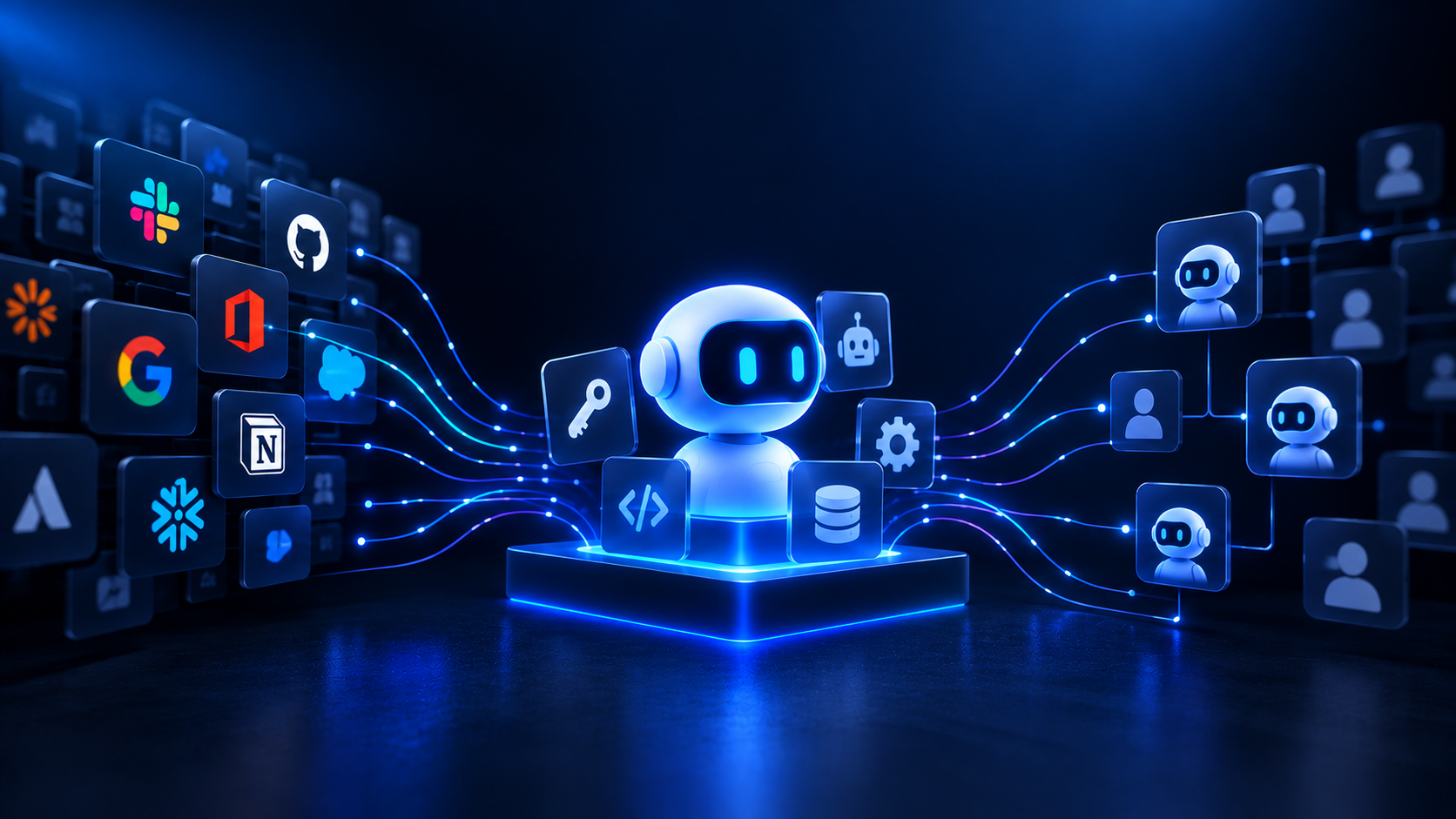
Beyond users and tenants, Grip inventories the entire Claude ecosystem. Security teams gain visibility into desktop installations, browser based activity, connected MCP servers, AI agents, administrative API keys, and other non human identities that interact with Claude. As organizations increasingly embrace agentic AI, understanding which agents exist, what systems they can access, and how they operate becomes just as important as understanding employee usage.

Visualizing AI Agent Exposure Across SaaS Environments
Grip maps AI agents, connected applications, non-human identities, and access relationships to help security teams understand blast radius, permissions, and downstream risk.

Administrative API keys and machine identities introduce another layer of risk. These credentials often maintain persistent access to critical systems and may operate without direct human supervision. Grip helps organizations identify and track these assets, providing visibility into potential exposure points before they become security incidents.

Visibility extends beyond who is using Claude to how Claude is being used. Grip surfaces prompts, conversations, chats, and usage activity, giving security and governance teams the context needed to understand employee and agent interactions with AI. This enables organizations to identify risky prompts, investigate potential policy violations, monitor sensitive data exposure, and evaluate whether AI usage aligns with internal governance requirements.

As regulatory scrutiny around AI continues to increase, organizations need more than an inventory of users and accounts. They need visibility into the interactions taking place inside AI platforms. By combining discovery of users, tenants, agents, integrations, and AI activity into a single view, Grip helps organizations establish the foundation for effective AI governance, compliance, and risk management across their entire Claude environment.

Continuously Assessing Claude Security Posture

Misconfigurations remain one of the leading causes of security incidents across cloud and SaaS environments, and AI platforms are no different.

As Claude deployments grow, organizations need a reliable way to evaluate security controls and identify weaknesses before they become security events.

Grip leverages data from the Claude Compliance API to continuously assess Claude security posture and compare configurations against security best practices. This includes evaluating identity and access management controls, authentication configurations, API key management practices, third-party integrations, and data security settings.

Continuous Claude Security Posture Assessment
Grip continuously evaluates Claude configurations, authentication controls, administrative settings, and API key hygiene to identify risks before they become security incidents.

Security teams can identify weaknesses such as SSO gaps, MFA bypass opportunities, poor password hygiene, and risky authentication configurations that may increase exposure.

The Grip platform also evaluates agent configurations, helping organizations identify misconfigured AI agents that may have excessive permissions or inappropriate access to sensitive resources.

System prompts represent another increasingly important area of review. As organizations deploy AI agents at scale, prompt configurations effectively become operational controls. Reviewing and auditing these prompts helps reduce the risk of unintended behavior or unauthorized actions.

Role and permission hygiene is also continuously monitored. Security teams can identify excessive privileges, unauthorized access patterns, and configuration drift that may develop over time as environments evolve.

Rather than relying on periodic reviews, organizations gain ongoing visibility into the health of their Claude environments and can prioritize remediation based on actual risk.

Detecting AI-Specific Threats

The AI attack surface continues to evolve rapidly.

Many organizations are already familiar with risks associated with compromised credentials, insider threats, and unauthorized access. AI introduces new variations of these challenges while adding entirely new categories of exposure.

Grip helps organizations identify suspicious activity and potential security risks within Claude environments by analyzing activity collected through the Compliance API.

Usage anomaly detection helps identify unusual behavior patterns that may indicate misuse, compromise, or policy violations. Unexpected activity spikes, abnormal usage patterns, or unusual access behavior can all serve as early warning indicators.

Prompt monitoring provides additional context by helping organizations identify policy violations and risky interactions occurring within Claude. Security teams can investigate prompts that may involve sensitive information, unauthorized activities, or behavior inconsistent with organizational guidelines.

Monitoring AI Activity and Sensitive Data Exposure
Grip helps organizations identify sensitive information shared with AI systems, investigate risky prompts, and monitor AI interactions for governance and security purposes.

The platform also detects suspicious activities that commonly indicate elevated risk, including bulk exports, credential sharing, unauthorized agent execution, and brute-force login attempts.

Operationalizing AI Security

One of the biggest challenges facing security teams today is scale.

AI adoption is accelerating faster than most organizations can add security resources. Teams are being asked to govern new technologies while continuing to manage cloud security, SaaS security, identity security, and traditional security operations.

The answer is not another dashboard.

The answer is operationalizing security findings.

Grip enables organizations to transform Claude findings into actionable workflows. Security teams can route issues to application owners, generate remediation tasks, create ITSM tickets, and track resolution progress directly from the platform.

This reduces manual effort while helping organizations scale AI governance programs without significantly increasing operational overhead.

The result is a practical approach to AI security that balances innovation with risk management.

Related Reading

Bringing Claude Governance into a Single Platform

The Claude Compliance API provides valuable visibility into Claude environments. Grip extends that value by transforming raw telemetry into actionable security and governance outcomes.

Organizations gain visibility into every Claude user, tenant, AI agent, MCP server, and administrative API key. They can continuously assess security posture, monitor AI interactions, detect emerging threats, and operationalize remediation through existing security workflows.

As Claude adoption continues to expand, security teams need more than visibility alone.

They need context, governance, and control.

By combining the Claude Compliance API with Grip's AI + SaaS Security Platform, organizations can confidently embrace AI innovation while maintaining the visibility and oversight required to secure it.

Because the future of AI governance starts with understanding exactly what your AI environment can see, access, and do.

The complete SaaS identity risk management solution.​

Uncover and secure shadow SaaS and rogue cloud accounts.
Prioritize SaaS risks for SSO integration.
Address SaaS identity risks promptly with 
policy-driven automation.
Consolidate redundant apps and unused licenses to lower SaaS costs.
Leverage your existing tools to include shadow SaaS.​

See Grip, the leading SaaS security platform, live:​