Sep 14, 2026
CSPM vs SSPM vs AISPM: The Modern Security Posture Guide


Compare CSPM, SSPM, and AISPM: architectural differences, key blind spots, and how identity security bridges cloud, SaaS, and AI environments.

Grip Security

Sep 14, 2026
Compare CSPM, SSPM, and AISPM: architectural differences, key blind spots, and how identity security bridges cloud, SaaS, and AI environments.
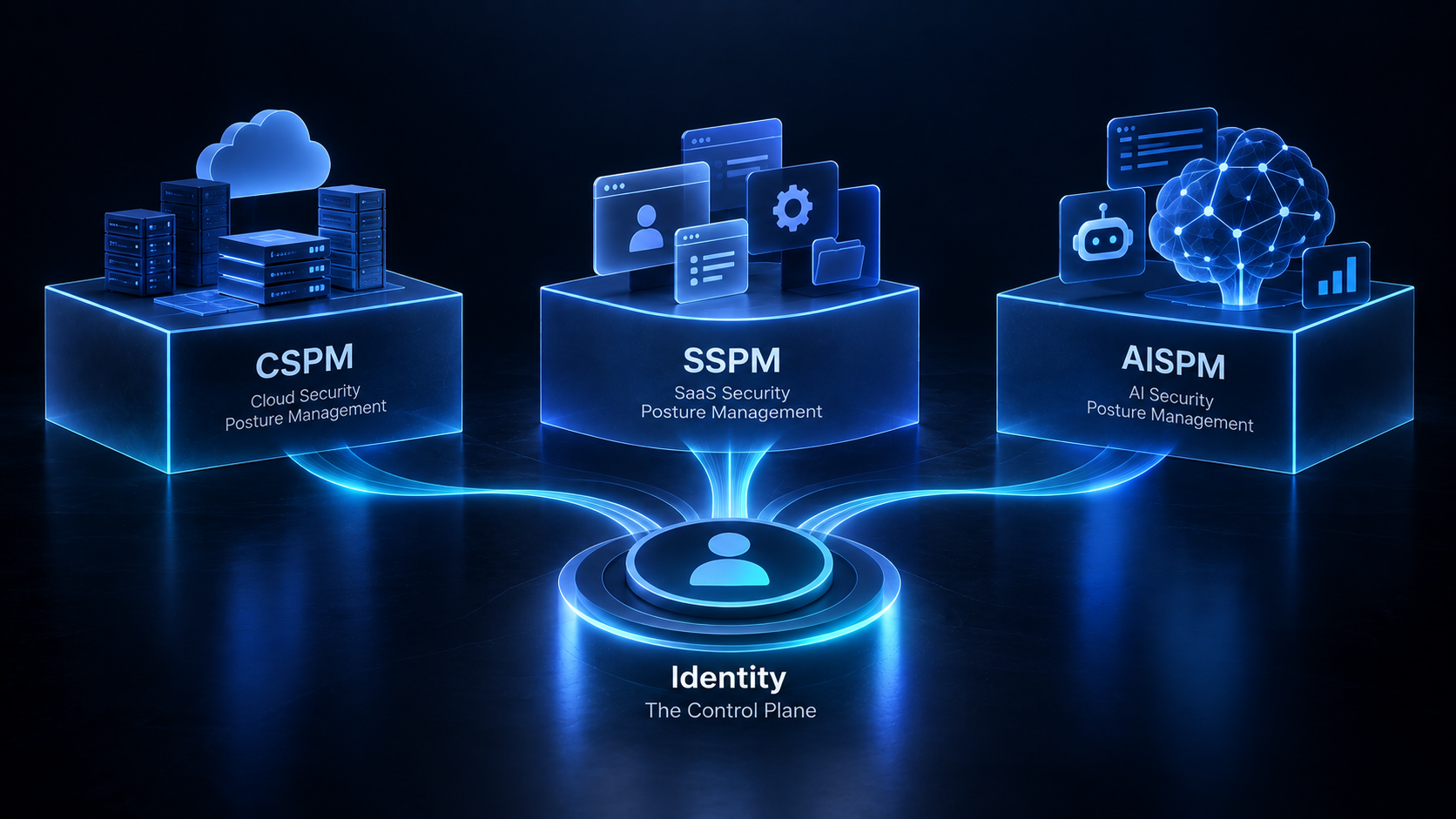
As enterprise technology architectures evolve from centralized cloud infrastructure to decentralized SaaS applications and autonomous AI agents, security posture management has fractured into three distinct disciplines: CSPM (Cloud Security Posture Management), SSPM (SaaS Security Posture Management), and AISPM (AI Security Posture Management).
While CSPM secures foundational cloud infrastructure (IaaS/PaaS) and SSPM hardens business application configurations, AISPM emerges to safeguard AI models, training pipelines, and agentic workflows. However, deploying three siloed posture tools creates massive security blind spots at the intersection where users, automated agents, and SaaS platforms interact. An identity-centric security control plane is essential to unify access governance, eliminate Shadow AI, and protect non-human identities across all three domains.
CSPM focuses on securing the underlying cloud infrastructure hosted on hyperscalers such as AWS, Microsoft Azure, and Google Cloud Platform (GCP). It automates the detection of misconfigurations, open storage buckets, insecure VPC peering, network security group violations, and compliance drift against frameworks like CIS Benchmarks and NIST.
• Target Surface: Virtual machines, serverless functions, Kubernetes clusters, and cloud storage.
• Primary Metric: Infrastructure compliance and perimeter hardening.
• Key Blind Spot: CSPM has zero visibility into third-party business SaaS apps (e.g., Salesforce, Workday) and user-level identity sprawl.
SSPM focuses on hardening configuration settings, security baselines, and data-sharing controls within managed software-as-a-service applications. It continuously audits settings like MFA enforcement, session timeout thresholds, external file sharing policies, and administrative privilege assignments across sanctioned SaaS tenants.
• Target Surface: Sanctioned SaaS applications and tenant configuration settings.
• Primary Metric: Application-level configuration hygiene and user privilege right-sizing.
• Key Blind Spot: Traditional SSPM requires direct API connectors to sanctioned tenants, leaving unmanaged "shadow SaaS" and ad-hoc AI tools completely invisible.
AISPM is the emerging discipline designed to govern artificial intelligence models, data ingestion pipelines, and agentic tool-calling systems. It audits model access controls, identifies training data poisoning risks, detects prompt injection vulnerabilities, and ensures compliance with global AI governance regulations like the EU AI Act.
• Target Surface: Foundation models, vector databases, AI training datasets, and agentic frameworks.
• Primary Metric: AI safety compliance, data privacy guardrails, and model integrity.
• Key Blind Spot: AISPM inspects the AI model layer but frequently lacks context regarding the SaaS integrations and human/non-human credentials connecting those models to corporate data.
Understanding where each discipline fits in the modern security stack is crucial for eliminating coverage gaps:
• Infrastructure vs. Application vs. Model: CSPM protects the compute and storage substrate; SSPM governs business logic and tenant configurations; AISPM safeguards model parameters and reasoning loops.
• Visibility Horizons: CSPM sees cloud provider APIs; SSPM sees sanctioned SaaS tenant APIs; AISPM sees model endpoints and prompt logs.
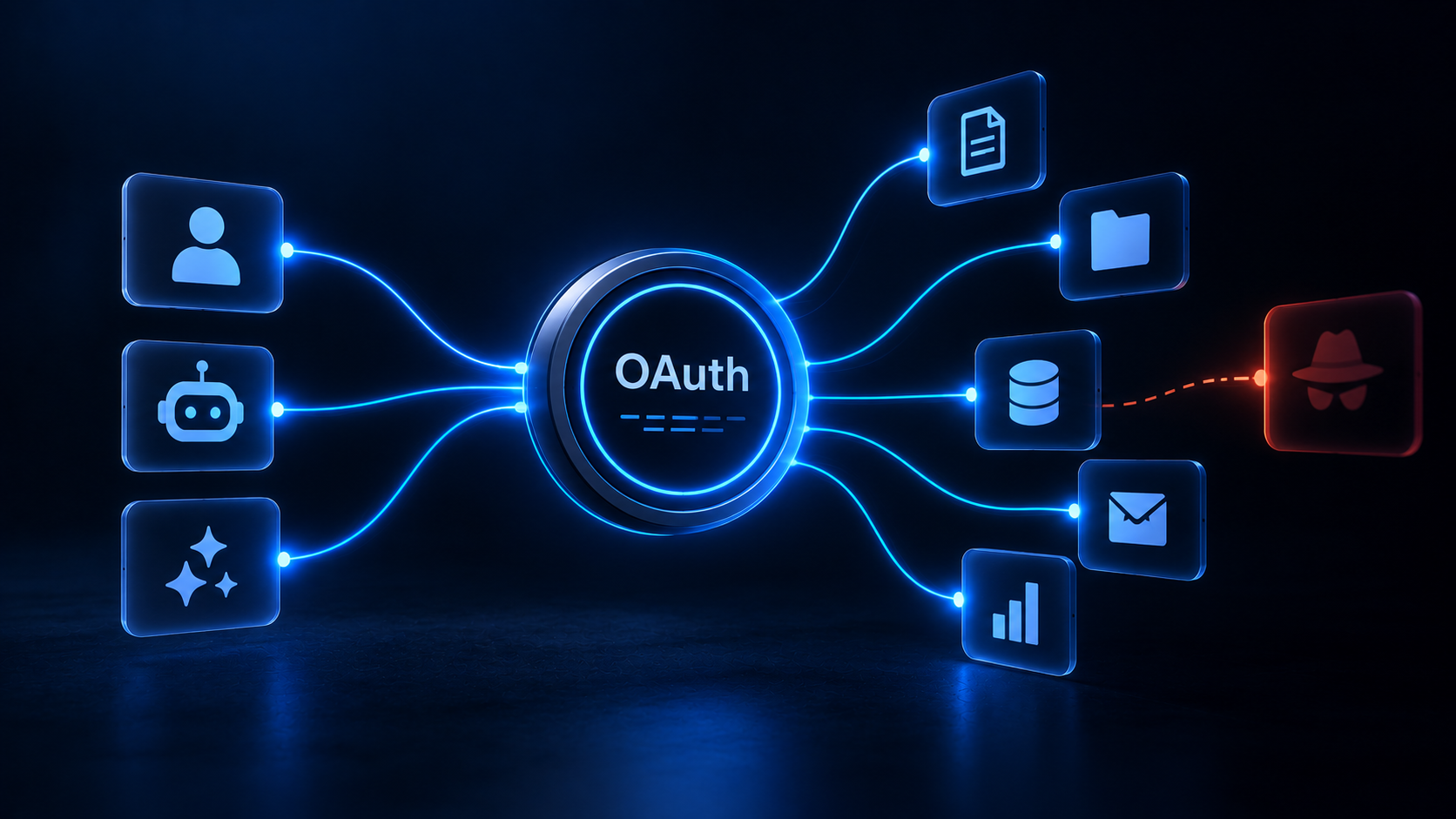
• The Common Vulnerability: None of these three point solutions natively tracks the sprawling mesh of OAuth tokens, browser extensions, and service accounts that bridge identities across all three layers.
Securing modern enterprise architecture requires recognizing that identity is the universal attack surface connecting infrastructure, SaaS, and AI.
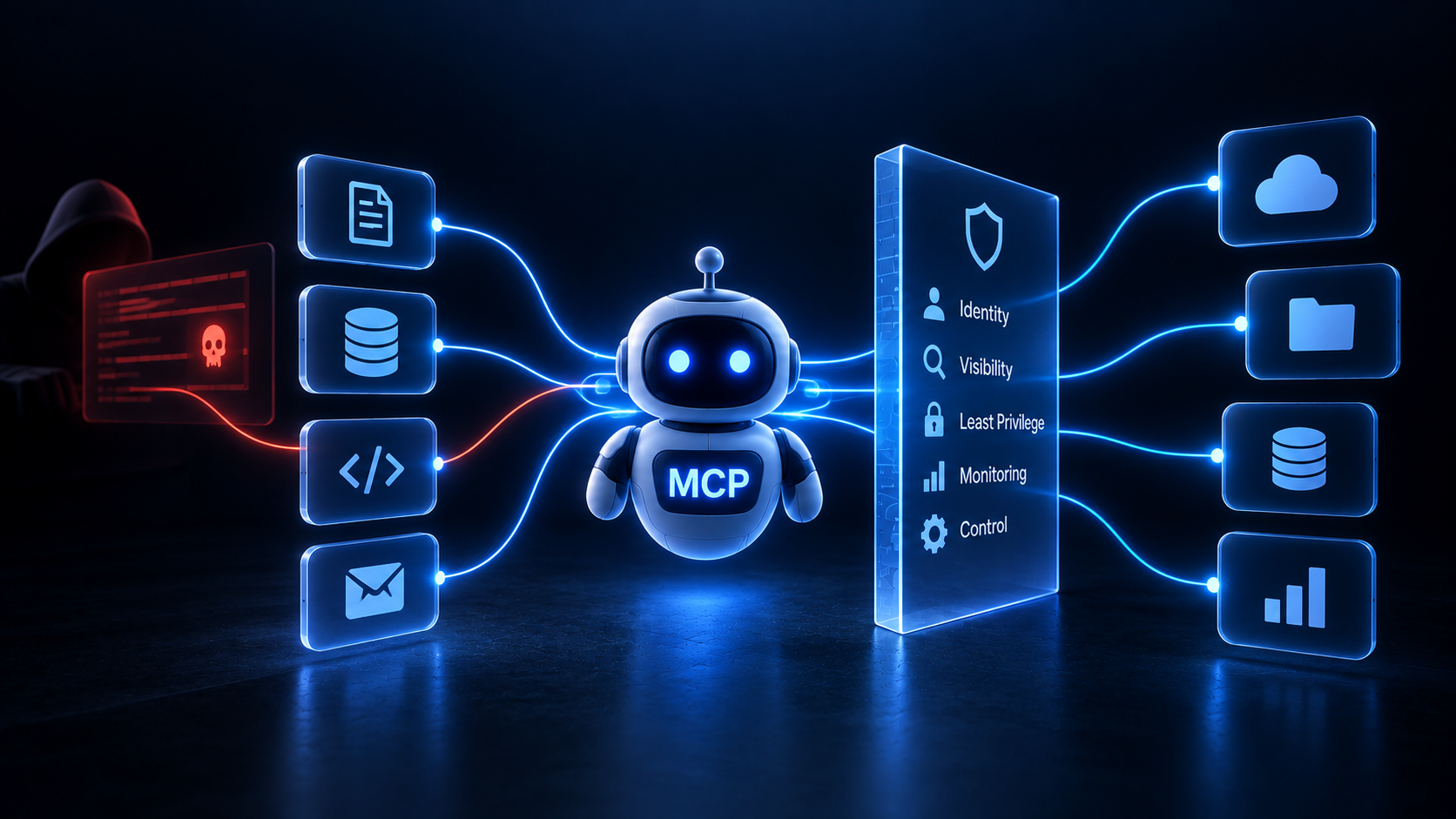
When an engineer deploys an AI agent to analyze customer telemetry stored in a cloud database, that interaction spans all three domains: the database lives in CSPM-monitored infrastructure, the business app is governed by SSPM, and the agent logic falls under AISPM. If the agent's OAuth token is compromised, point solutions trigger fragmented, disconnected alerts—or miss the lateral movement entirely.
By implementing an identity-first security control plane, organizations gain end-to-end visibility into who—and what—is accessing enterprise resources, transforming posture management from static audit checklists into dynamic access control.
SSPM manages and monitors security configurations within standard SaaS applications (like Salesforce, Microsoft 365, and Slack), whereas AISPM focuses on securing AI models, vector stores, prompt pipelines, and autonomous AI agents.
No. CSPM is architected specifically for cloud infrastructure environments (AWS, Azure, GCP). It cannot audit configuration settings inside third-party SaaS applications or monitor generative AI workflows.
Non-human identities (NHIs), such as API keys, service accounts, and AI agent tokens, outnumber human employees significantly. Without continuous NHI governance, posture management tools leave critical access paths unprotected.
Start with comprehensive discovery of all SaaS and AI applications and their associated identity relationships, ensuring complete visibility across both sanctioned and shadow environments.

Fill out the form and watch webinar's video.