Aug 5, 2026
AI Access Control Explained: How to Govern Human and Non-Human Access


Learn how AI access control governs human and non-human identities, AI agents, permissions, OAuth access, and least privilege across SaaS.

Aug 5, 2026
Learn how AI access control governs human and non-human identities, AI agents, permissions, OAuth access, and least privilege across SaaS.
AI access control is the practice of governing what human and non-human identities can access, what actions they can perform, and how that access changes over time across AI-enabled SaaS environments.
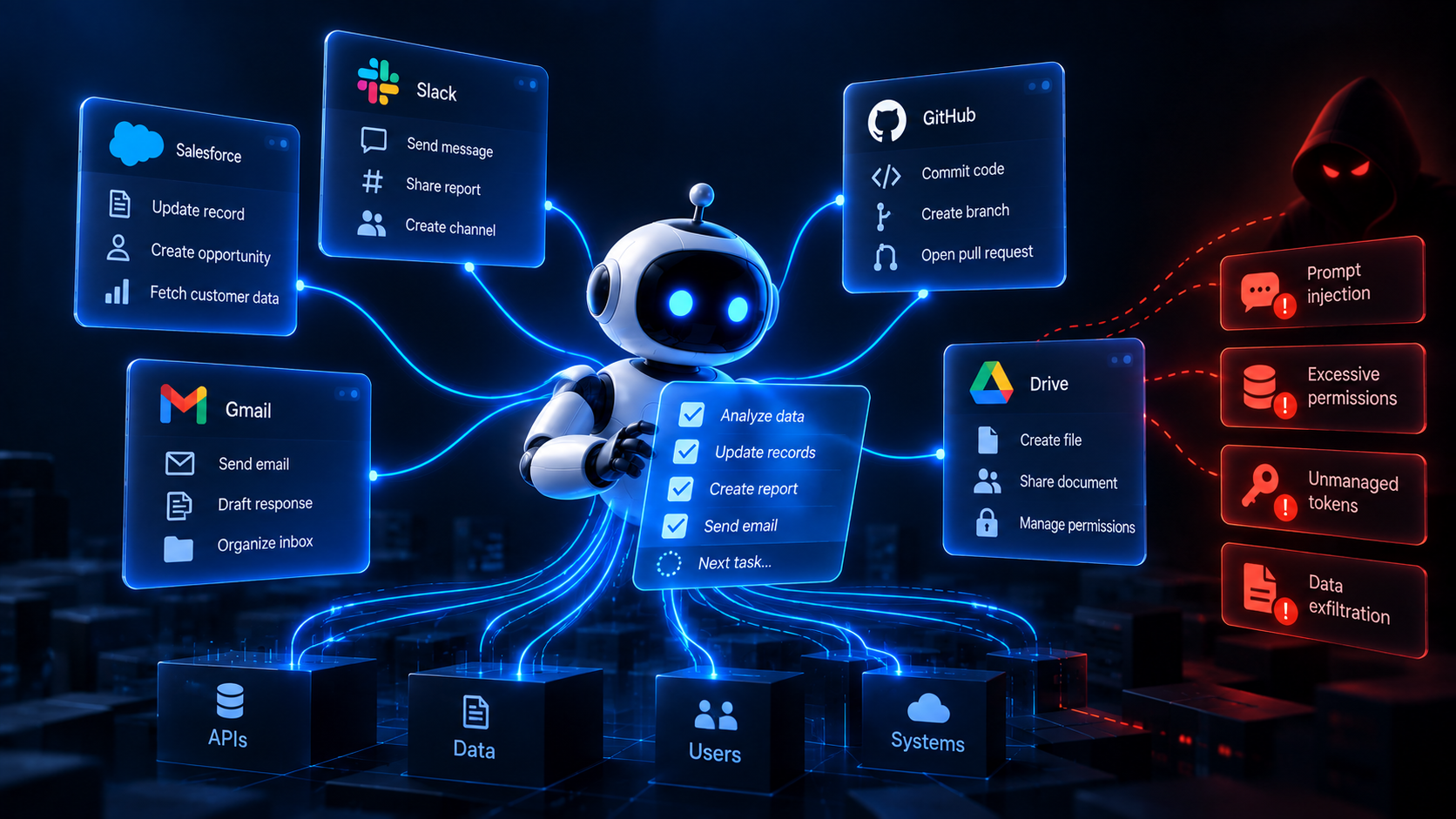
As AI becomes embedded across enterprise applications, access is no longer exercised only by employees. AI agents, service accounts, OAuth-connected applications, APIs, automation workflows, and other non-human identities can access data and perform actions on behalf of users or systems.
Effective AI access control extends traditional identity and access management by giving security teams visibility into these relationships and the ability to continuously govern them. Organizations need to know who or what has access, what that access enables, whether the level of privilege is appropriate, and when access should be changed or revoked.
AI access control is the process of governing which human and non-human identities can access AI-enabled applications and data, what actions those identities can perform, and how those privileges are managed throughout their lifecycle.
It answers six fundamental questions:
Traditional identity and access management provides an important foundation for answering these questions. AI expands the scope.
An employee may authenticate through an identity provider and access an approved SaaS application. That application may also contain embedded AI functionality, connect to other applications through OAuth, invoke an AI agent, or rely on service accounts and API identities operating behind the scenes.
Each relationship creates another path through which an identity can access data or execute an action.
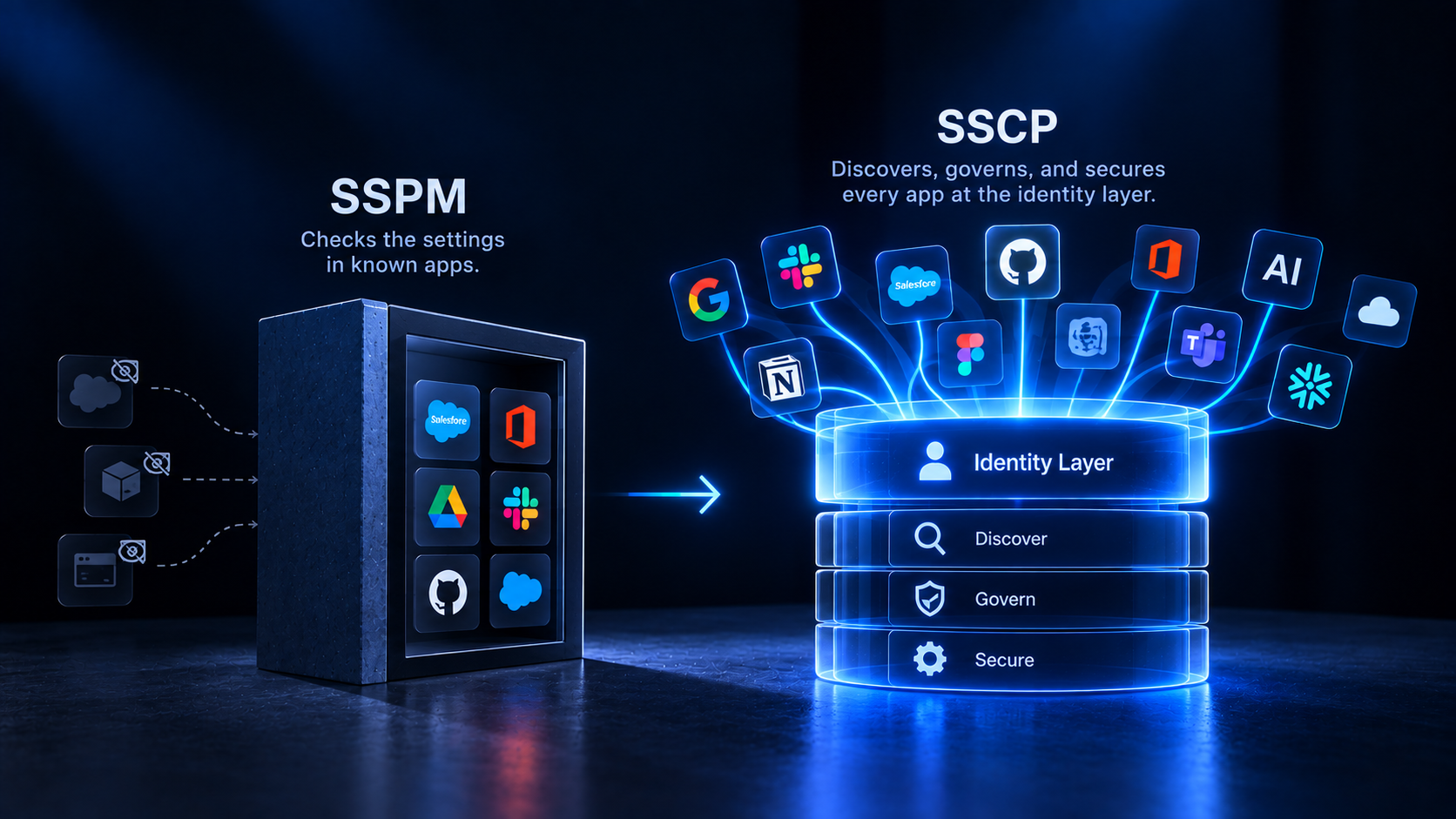
This makes identity a critical control plane for AI risk. Security teams cannot effectively govern AI based only on whether an application is approved. They also need to understand the identities, permissions, integrations, and access relationships that determine what AI can actually do.
Traditional access-control models were largely designed around environments where people were the primary actors.
A user joined an organization, received an identity, was provisioned into applications based on their role, authenticated interactively, and eventually had access removed when they changed roles or left the company.
Those principles remain essential. The challenge is that modern SaaS environments now contain many more ways to establish and exercise access.
AI capabilities may be embedded directly inside applications employees already use. Users can authorize applications through OAuth without going through centralized provisioning. SaaS applications communicate through APIs. Service accounts support automated processes. AI agents can perform tasks across multiple systems.
As a result, access may exist even when there is no employee actively logging in.
An OAuth token can remain valid. A service account can continue operating. An AI agent can execute a workflow. An integration can continue moving information between applications.
Traditional IAM is not obsolete. It simply does not always provide complete visibility into every access relationship created across SaaS and AI environments.
Security teams therefore need to extend access governance beyond the human user and evaluate the broader identity ecosystem surrounding that user.
Human and non-human identities can both receive permissions and interact with enterprise systems, but their operational characteristics differ.
Human identities typically have recognizable lifecycle events. Employees join, change roles, and leave. They authenticate interactively, have organizational ownership, and are usually covered by established onboarding and offboarding processes.
Non-human identities can behave differently.
AI agents, service accounts, API identities, OAuth-connected applications, and automation workflows may authenticate through tokens, secrets, certificates, or delegated permissions. They can operate continuously without interactive authentication and may persist long after their original business purpose changes.
Ownership can also become unclear. An employee might create an integration for a project, authorize it to access SaaS data, and then change roles. The integration may remain active even though nobody is actively reviewing whether it still needs those permissions.
The scale of this shift is becoming measurable.
Grip's 2026 Mid-Year AI Exposure Update found one AI agent for every 17 identities across observed enterprise environments. This "Rule of 17" illustrates why access-control strategies can no longer focus exclusively on employees.
The distinction is less about whether an identity is human or machine and more about understanding how each identity receives access, exercises privileges, changes over time, and ultimately gets decommissioned.
AI access risk often appears in the relationships between identities, applications, integrations, permissions, and data.
Several patterns deserve particular attention.
AI agents and other NHIs may receive broader permissions than their tasks require. An agent that needs to read a limited dataset, for example, may be granted access to modify records or reach additional applications.
The more autonomous an AI system becomes, the more consequential excessive permissions can be.
OAuth enables applications to access resources on behalf of users without sharing their passwords. Those grants can also establish persistent access to SaaS data.
Risk increases when applications request broad scopes, accumulate additional permissions, or retain access after their original purpose has disappeared.
Tokens allow applications, integrations, and agents to operate without requiring a user to authenticate for every action.
That persistence is operationally useful, but it can also allow access relationships to survive longer than expected if token lifecycle and revocation are not effectively governed.
A non-human identity may continue to exist after a project ends, an employee changes roles, or an application is no longer actively used.
Without clear ownership and lifecycle controls, these identities can become orphaned while retaining valid access.
An AI agent may operate using permissions granted by or delegated from a human user.
If the user has broad access, the agent may effectively inherit a similarly large operating surface. That makes the user's permission footprint relevant to the agent's risk.
Modern SaaS environments are highly interconnected. One application can access another through OAuth, APIs, integrations, or automated workflows.
An AI-enabled application therefore does not need direct access to every sensitive system to create risk. Existing SaaS-to-SaaS relationships can provide indirect paths to data and actions.
Access changes continuously. Users change roles, integrations evolve, application capabilities expand, and AI features are added to existing products.
A permission that was appropriate when granted may become excessive months later.
This matters because AI itself is becoming difficult to separate from the broader SaaS estate. Grip's 2026 observations found detectable AI functionality in 54% of enterprise applications, while users were exposed to an average of 33.5 AI-enabled applications per identity.
AI access control therefore cannot be reduced to controlling a small collection of dedicated AI tools. It increasingly requires understanding access throughout the SaaS environment.
Organizations do not need an entirely new access-control philosophy for AI. They need to extend proven identity principles across a broader and more dynamic set of actors.
A practical approach can be organized into five steps.
Identify the identities and relationships that can create access.
This includes human users, AI agents, service accounts, API identities, OAuth-connected applications, SaaS applications, and integrations.
Visibility must come first. An organization cannot govern an identity or access path it does not know exists.
Map identities to the applications, permissions, integrations, and data they can reach.
Security teams should understand not simply that an AI agent exists, but who owns it, why it exists, which credentials or grants it uses, and what actions those permissions enable.
Context turns an inventory into an access model.
Apply least privilege to both humans and machines.
AI agents and other NHIs should receive only the permissions required to perform their intended functions. Broad scopes, unused access, unnecessary integrations, and excessive privileges should be reduced.
Approved AI should not automatically mean unrestricted AI.
Continuously evaluate access as the environment changes.
New applications appear. AI functionality is added to existing SaaS. OAuth grants change. Tokens persist. Employees move between roles. Agents gain new capabilities.
Access governance needs to account for this change rather than relying exclusively on point-in-time reviews.
When access no longer matches business need or policy, organizations need a way to act.
That can include revoking stale OAuth grants, reducing excessive scopes, disabling dormant accounts, rotating or revoking credentials, removing orphaned NHIs, and adjusting privileges.
The objective is straightforward: discover access, understand its context, limit unnecessary privilege, monitor change, and remediate risk.
AI governance establishes the policies and boundaries for how an organization expects AI to be used.
Access control determines whether many of those policies can actually be enforced.
A governance policy might state that an AI agent should access only approved applications or that sensitive business data should not be available to unauthorized AI tools. Enforcing those policies requires knowing which identities exist, what applications they connect to, what permissions they hold, and what data those permissions expose.
This creates a direct relationship between visibility, identity, and governance.
Governance defines acceptable AI use. Access control translates those policies into permissions and boundaries. Continuous monitoring helps keep access aligned as the environment changes.
Without visibility into access, AI governance risks becoming a policy exercise disconnected from how AI actually operates.
Security leaders evaluating AI access should be able to answer five questions:
If these questions cannot be answered consistently, the organization likely has an access visibility problem before it has an access-control problem.
As AI becomes more autonomous, access control can no longer focus exclusively on employees.
AI agents, OAuth-connected applications, service accounts, API identities, and automated workflows can all hold permissions, access data, and execute actions across SaaS environments.
Organizations therefore need to understand who or what can act, what it can access, what it can do, and whether that access should still exist.
The underlying security principles remain familiar: visibility, ownership, least privilege, lifecycle management, and remediation. What has changed is the number and variety of identities to which those principles must apply.
AI access control extends those principles across both humans and machines, helping organizations turn AI governance into continuously enforceable access decisions.
AI access control is the practice of governing what human and non-human identities can access across AI-enabled environments, what actions they can perform, how much privilege they receive, and when that access should be changed or revoked.
Traditional IAM primarily governs human identities and centrally managed access. AI access control extends those principles to AI agents, service accounts, OAuth-connected applications, API identities, and other NHIs that can independently access applications and data.
Organizations should discover AI agents, identify their owners and business purposes, map their permissions and accessible data, apply least privilege, monitor access continuously, and revoke or reduce permissions when they are no longer required.
Least privilege for AI agents means giving an agent only the applications, data, permissions, and actions necessary to perform its intended task. Those privileges should also be reviewed as the agent's purpose, capabilities, and surrounding SaaS environment change.