Aug 31, 2026
AI Agent Security: A Guide to Autonomous Access


Learn how AI agents create new identity and access risks, what determines their blast radius, and how security teams can govern autonomous access.

Aug 31, 2026
Learn how AI agents create new identity and access risks, what determines their blast radius, and how security teams can govern autonomous access.
An AI agent is a software system that can pursue an objective, interact with applications or tools, retrieve information, execute workflows, and take actions with varying degrees of autonomy.
That last capability matters most for security.
An AI assistant that summarizes a document creates one type of risk. An agent that can retrieve the document, update a CRM record, send information through a collaboration platform, trigger a workflow, or connect to another application creates a different security problem.
The difference is authorized action.
Once AI can act within enterprise systems, securing the model alone is insufficient. Organizations also need to secure the identities and access relationships that allow the agent to operate.
Enterprise security has long been built around a basic assumption: access enables action.
A user authenticates. The application determines what that identity is permitted to access. Permissions determine which records, files, workflows, and administrative functions the user can interact with.
AI agents increasingly enter that same chain.
An agent might be authorized to read data from one application, modify records in another, trigger a workflow in a third, and send the resulting information somewhere else. Depending on its permissions, it may be able to perform those actions without requiring a person to approve every step.
That means the potential impact of an AI agent cannot be understood by evaluating the AI model alone.
Security teams need to understand the access surrounding it.
An agent with permission to read a narrow set of non-sensitive information presents a very different risk than an agent with broad access to customer records, cloud storage, business communications, and administrative workflows.
The more autonomy an agent has, the more important authorization becomes.
For CISOs, one question should therefore sit at the center of AI agent security:
What is this agent authorized to do?
Answering it requires visibility into identity, permissions, integrations, data access, and the actions those permissions enable.
To act across enterprise systems, AI agents need a way to authenticate.
Depending on the environment and architecture, that access may be enabled through:
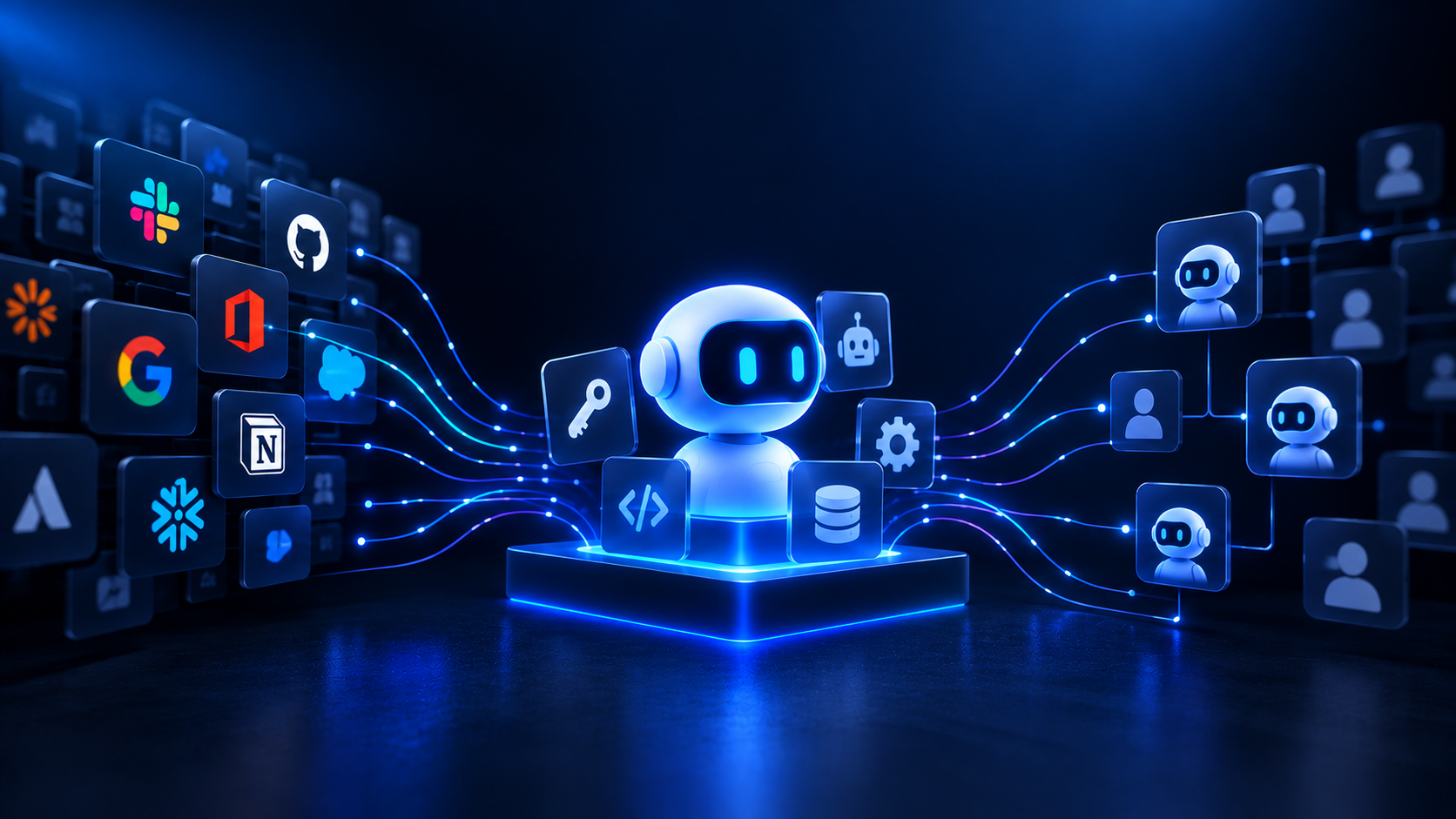
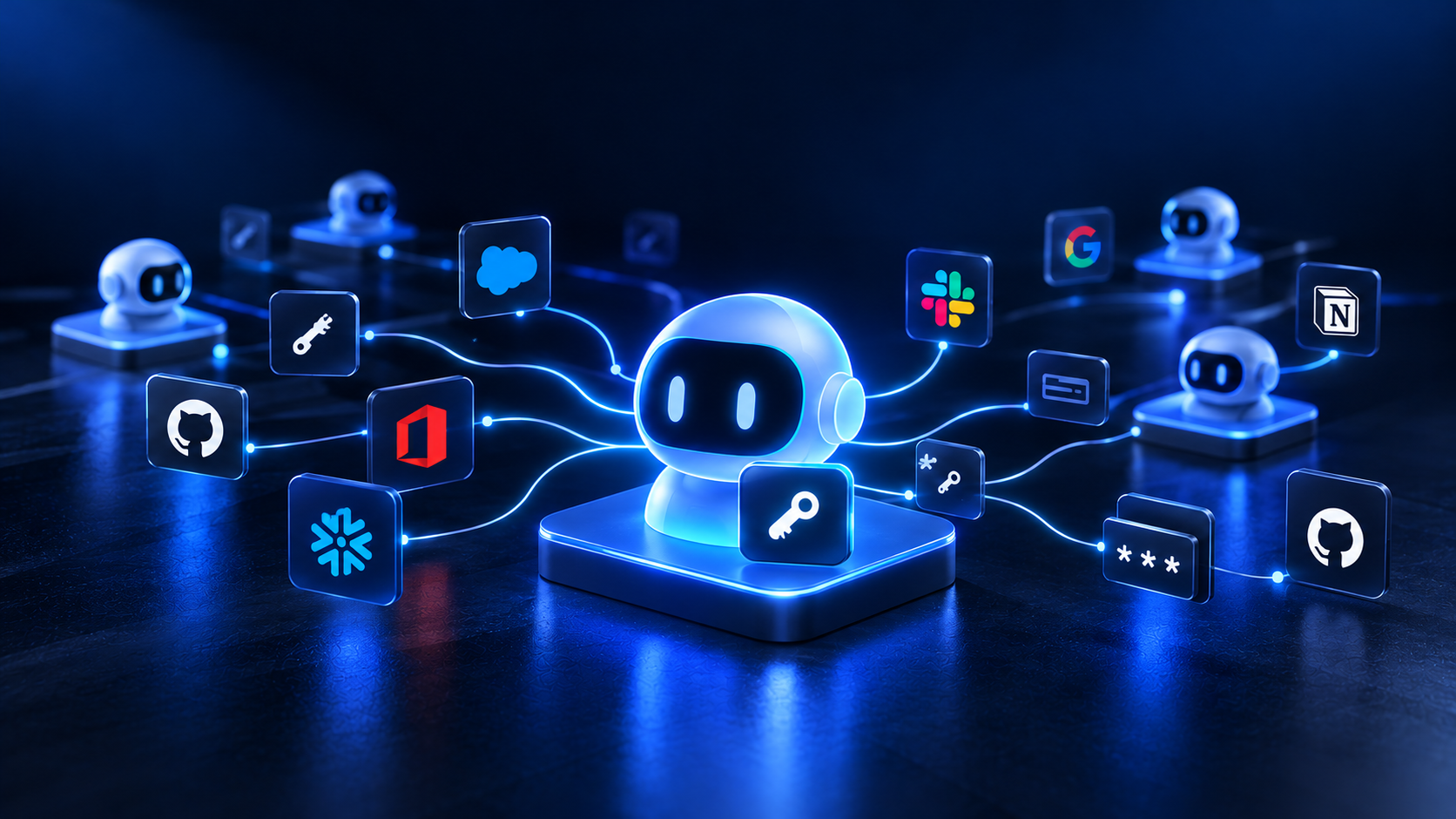
These mechanisms allow an agent to interact with enterprise applications without behaving like a traditional human user. In practice, that means AI agents increasingly become part of the organization's non-human identity population.
Grip's 2026 Mid-Year AI Exposure Data illustrates how quickly that population is emerging. Across analyzed environments, Grip observed approximately one AI agent for every 17 identities, a benchmark we call the Rule of 17.
That ratio has an important security implication.
AI agents are no longer an edge case that security teams can manage individually. They represent a growing identity class with their own access, credentials, permissions, ownership, and lifecycle requirements.
As the population grows, organizations need to answer the same fundamental questions they ask about other identities: Who owns this identity? Why does it exist? What can it access? Does it still need that access? And can the access be removed when its purpose changes?
For autonomous identities, those questions become even more important because the identity can act without waiting for a human to initiate every interaction.
AI agent security risk is often discussed in terms of what the underlying model might generate or how someone might manipulate it. Those risks matter, but enterprise agents introduce another security layer: what happens when an agent uses legitimate access in ways that create unintended consequences.
Several access paths deserve particular attention.
An agent may receive broader permissions than its business purpose requires.
If an agent only needs to retrieve specific information but can also modify, delete, export, or share that information, unnecessary permissions increase its potential impact.
Least privilege therefore applies to AI agents just as it does to human and other non-human identities.
OAuth grants, tokens, service accounts, and other credentials can remain active long after the original business need changes.
An agent may be abandoned while its underlying access persists.
This creates a lifecycle problem: removing or discontinuing an AI agent does not necessarily remove every credential, permission, or integration that enabled it.
Every AI agent should have an identifiable human owner and documented business purpose.
Without ownership, security teams may know an agent exists without knowing who can approve changes, validate its permissions, or determine whether it is still necessary.
An autonomous identity without accountable ownership is difficult to govern.
AI agents can operate across multiple enterprise applications.
An agent might retrieve information from cloud storage, process it, update another business system, and trigger a downstream workflow. Each connection can extend the agent's effective reach.
The result is an interconnected access path rather than a single application permission.
Agents change over time.
New capabilities may be added. Workflows may expand. Additional applications may be connected. Credentials and permissions can accumulate without older access being removed.
Eventually, the agent's access may no longer reflect its original purpose.
An AI agent does not necessarily need to bypass a security control to expose sensitive information. It may already be authorized to retrieve it.
Customer information, internal documents, communications, financial records, and other sensitive data can become accessible through existing permissions.
That makes authorization context critical. Security teams need to understand not only that an agent can access an application, but what information and actions that access makes available.
A useful way for CISOs to evaluate agent risk is to consider its potential blast radius.
An AI agent's blast radius is determined by the combination of:
Identity + Permissions + Connected Applications + Accessible Data + Authorized Actions
Each factor changes what an agent could potentially affect.
Two organizations could deploy agents using similar underlying AI capabilities and face dramatically different security exposure. One agent might have read-only access to a narrow dataset. Another might have persistent credentials spanning multiple applications with permission to read sensitive data, modify records, and trigger workflows.
The model may be similar. The blast radius is not.
For AI agents, risk follows access. The question is not simply how capable the AI is, but how much enterprise authority those capabilities can exercise.
Securing AI agents requires controls that follow the agent from discovery through access management and remediation.
Identify AI agents operating across the environment.
Security teams cannot govern agents they do not know exist. Discovery should establish an inventory of agents and the enterprise systems they interact with.
Every agent should have an identifiable human owner and documented business purpose.
Ownership establishes accountability for approving access, reviewing changes, and determining when the agent should be modified or retired.
Understand the applications, permissions, integrations, credentials, and data available to each agent.
This creates the context required to assess actual risk rather than treating every AI agent as equally sensitive.
Limit each agent to the minimum access required for its intended function.
Read access should not become write access by default. Access to one dataset should not automatically expand to an entire application. Administrative permissions should require clear justification.
Track the OAuth grants, API tokens, service accounts, application identities, and other machine credentials that enable autonomous access.
Credentials should have identifiable ownership, appropriate scope, and a lifecycle tied to the agent's business purpose.
Agent environments are dynamic.
Monitor changes to permissions, ownership, integrations, credentials, applications, and other access relationships so that security controls can keep pace with the environment.
Remove excessive permissions, revoke stale credentials, disconnect unnecessary integrations, and retire dormant or unowned agents.
Visibility is the prerequisite. Risk reduction requires the ability to act on what security teams discover.
AI governance establishes what an organization expects from its AI environment. AI agent security helps turn those expectations into enforceable controls.
Governance policies might require that every agent have a human owner, prohibit certain categories of sensitive data access, define acceptable applications, establish least-privilege standards, or require credentials to be revoked when an agent is retired. Effective AI access control requires organizations to continuously connect identity, permissions, and authorized actions.
Those policies matter only if organizations can determine whether agents comply with them and correct access when they do not.
This creates a natural progression:
AI Risk → Identity → Governance → Continuous Control
Organizations first need to understand where AI risk exists. Identity provides the context to understand who or what has access. Governance defines what should be allowed. Continuous controls help ensure the actual environment continues to reflect those policies.
AI governance becomes operational when policy can change what an agent is actually allowed to access and do.
The next challenge is determining how to turn AI governance policy into enforceable controls as identities and access change.”
Security leaders do not need to begin with the mechanics of every agent architecture. They can start with a small set of access questions:
If an organization cannot answer these questions, it does not yet have the context required to effectively govern autonomous access.
AI agents change enterprise security because they combine intelligence with authorized action.
They can access applications, retrieve data, execute workflows, and act across connected enterprise systems. As they become a larger part of the identity population, organizations need to govern them with the same foundational principles applied to other privileged identities while accounting for their autonomy, persistence, and machine-to-machine access.
That starts with knowing which agents exist, who owns them, how they authenticate, what they can access, and what they are allowed to do.
From there, organizations can apply least privilege, govern credentials, monitor access changes, and continuously remediate unnecessary exposure.
The future of AI agent security will not depend solely on controlling what AI can generate. It will depend on continuously controlling the enterprise authority AI is allowed to exercise.
AI agent security is the practice of controlling how autonomous AI agents authenticate, which applications and data they can access, what actions they can perform, and how their identities, permissions, credentials, and lifecycle are governed.
AI agents can function as non-human identities when they authenticate to enterprise systems using mechanisms such as OAuth grants, API tokens, service accounts, application identities, or other machine credentials. Treating agents as identities helps organizations manage their ownership, access, permissions, and lifecycle.
Major AI agent security risks include excessive permissions, persistent credentials, unclear ownership, sensitive data access, permission drift, and interconnected access across multiple applications. These risks can increase the potential blast radius of autonomous actions.
Organizations should discover AI agents, assign human ownership, map their access, apply least privilege, govern credentials, continuously monitor permissions and integrations, and revoke stale or unnecessary access.