Sep 22, 2026
What is SSPM? The 2026 SaaS Security Buyer's Guide


An in-depth guide covering SSPM core architecture, comparison of legacy scanners vs. identity-first platforms, and 7 key evaluation criteria.

Grip Security

Sep 22, 2026
An in-depth guide covering SSPM core architecture, comparison of legacy scanners vs. identity-first platforms, and 7 key evaluation criteria.
SaaS applications now constitute the primary operational infrastructure for modern enterprises, hosting critical intellectual property, customer records, and financial systems. However, decentralized adoption, unvetted OAuth integrations, and the rapid influx of generative AI tools have fragmented enterprise attack surfaces. Traditional security tools - including Cloud Access Security Brokers (CASBs) and Cloud Security Posture Management (CSPM) - were not architected for the velocity or decentralized identity architecture of modern SaaS.
SaaS Security Posture Management (SSPM) has emerged as the essential security discipline to solve this challenge. By continuously auditing configurations, monitoring permissions, uncovering shadow applications, and governing non-human identities (NHIs), an effective SSPM eliminates security blind spots before threat actors exploit them. This 2026 Buyer's Guide breaks down the core architecture of modern SSPM platforms, evaluates legacy configuration scanners against next-generation identity-first control planes, and outlines the critical capabilities security leaders must prioritize during evaluation.
• Configuration vs. Identity: Legacy SSPM scanners audit static settings in a handful of sanctioned apps, leaving unmanaged SaaS, browser extensions, and shadow AI tools undetected.
• Non-Human Identity Sprawl: The majority of enterprise SaaS access now occurs through machine identities, API tokens, and OAuth permissions that bypass traditional IAM controls.
• Continuous Remediation vs. Alert Fatigue: First-generation tools generate massive ticket backlogs; modern platforms require automated drift detection and 1-click remediation.
• Identity-First Control Plane: Grip discovers SaaS apps and governs access at the identity layer without requiring complex API connectors for every application.
SaaS Security Posture Management (SSPM) is an automated cybersecurity technology that continuously monitors, analyzes, and remediates security risks across an organization's Software-as-a-Service (SaaS) application estate. While software providers maintain the underlying cloud infrastructure (the cloud security layer), enterprise customers remain strictly responsible for user identities, access entitlements, third-party integrations, and configuration settings under the Shared Responsibility Model.
In practice, modern SSPM solutions deliver four foundational functions:
• Continuous Misconfiguration Auditing: Automatically scanning sanctioned SaaS platforms (such as Microsoft 365, Google Workspace, Salesforce, Slack, and GitHub) against established security frameworks like CIS Benchmarks, NIST 800-53, and ISO 27001 to flag permissive sharing settings, disabled multi-factor authentication (MFA), and public data exposure.
• Identity and Entitlement Governance: Mapping human users, external contractors, and privileged administrators to identify over-privileged accounts, dormant access, and privilege creep across enterprise software.
• Non-Human Identity & OAuth Governance: Auditing machine-to-machine connections, service accounts, and third-party marketplace integrations to uncover hidden supply chain vulnerabilities.
• Continuous Compliance Reporting: Maintaining an audit-ready trail of security configurations to satisfy compliance mandates including SOC 2, HIPAA, GDPR, and FedRAMP.
Enterprise security stacks were historically engineered around networks and centralized infrastructure. As business units adopted thousands of decentralized cloud applications, legacy security categories revealed fundamental visibility gaps.
Cloud Access Security Brokers (CASBs) were introduced to police cloud traffic by routing requests through forward or reverse proxies. While effective for simple data loss prevention (DLP) across known endpoints, network proxies suffer from structural blind spots:
• Off-Network and Mobile Access: Modern remote employees frequently access cloud tools directly from unmanaged devices or external networks, bypassing inline network gateways entirely.
• Encrypted Cloud-to-Cloud Traffic: CASBs cannot inspect native API integrations, background webhooks, or direct OAuth connections established between two SaaS providers.
• Performance Bottlenecks: Forcing enterprise-wide cloud traffic through proxy gateways degrades network latency and user experience, incentivizing employees to seek workarounds.
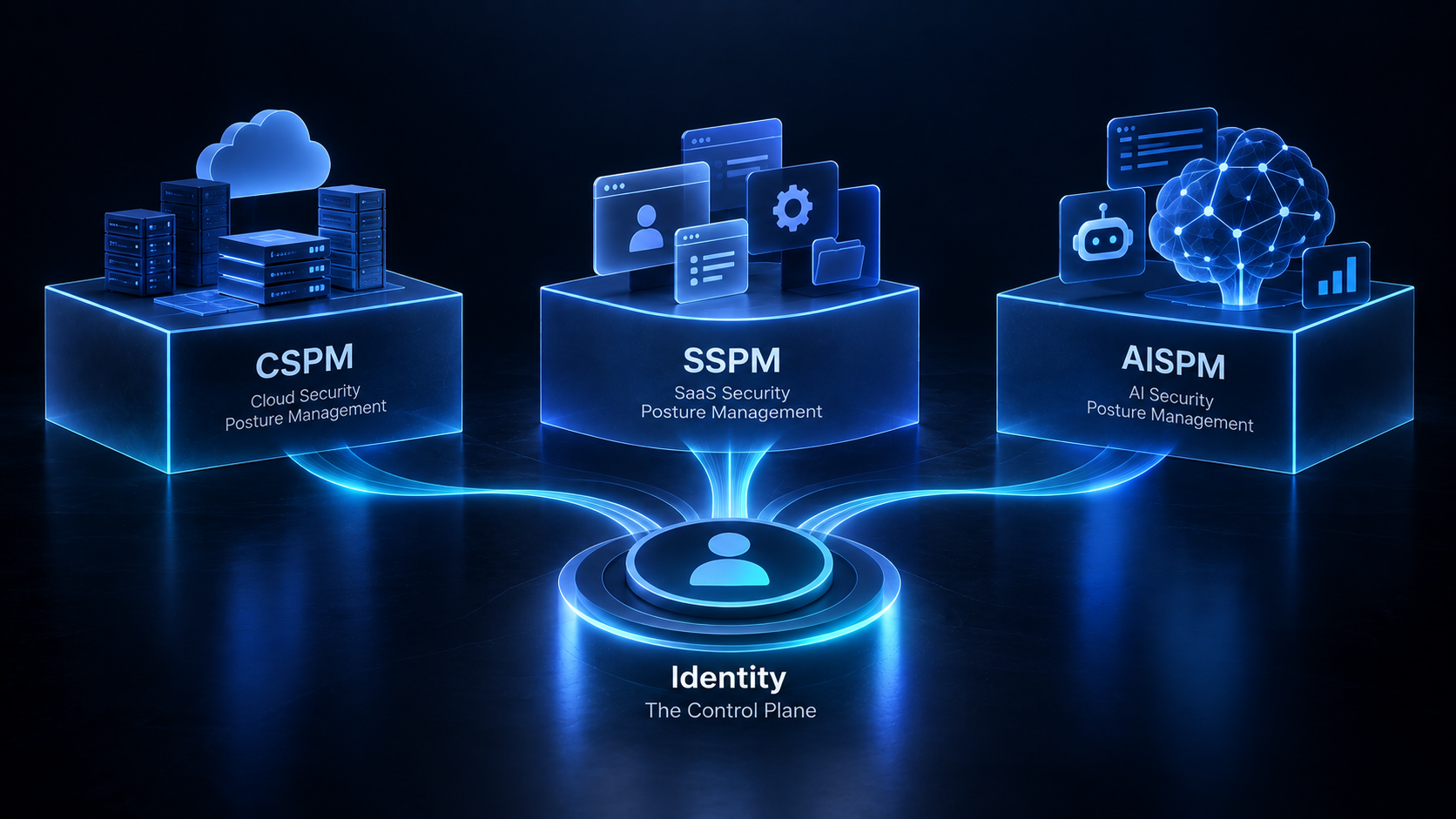
Cloud Security Posture Management (CSPM) secures infrastructure-as-a-service (IaaS) and platform-as-a-service (PaaS) environments such as AWS, Microsoft Azure, and Google Cloud Platform. CSPM inspects virtual machines, S3 buckets, and Kubernetes clusters. However, it possesses zero visibility into business SaaS applications like Workday, ServiceNow, or Hubspot, where corporate data actually resides.
Today's SaaS security incidents rarely stem from software vulnerabilities within the vendor's code. Instead, attackers exploit compromised credentials, session hijacking, unvetted browser extensions, and excessive permissions. The rapid proliferation of Shadow AI adoption - where employees connect corporate accounts to unvetted LLM tools and automated agents - has expanded this attack surface exponentially.
Evaluating SSPM solutions? See how Grip's identity-first control plane discovers unmanaged SaaS, governs non-human identities, and automates remediation. Book a Demo →
When selecting an SSPM platform for the 2026 enterprise landscape, security teams must look beyond simple configuration checklists. An enterprise-grade solution must span four interconnected pillars:
First-generation tools require security teams to manually input API credentials for each application they wish to monitor. This creates a severe visibility gap: security teams cannot protect applications they do not know exist. A modern platform must provide 100% automated discovery of all SaaS applications, AI assistants, and browser plugins in use across the company without requiring manual agent deployment or network proxies.
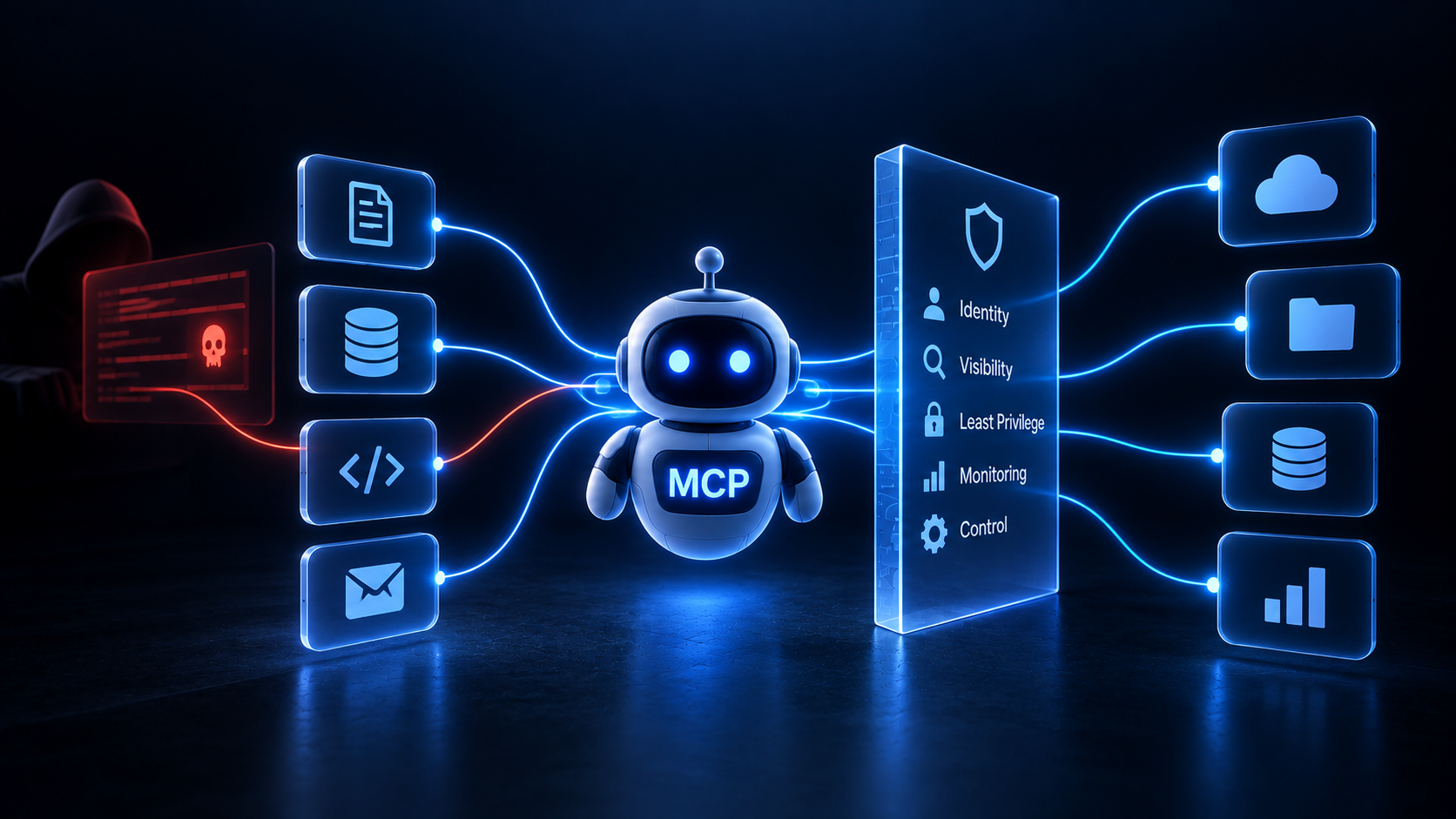
Modern applications do not operate in isolation. Employees routinely grant OAuth scopes to third-party tools, plugins, and AI agents. If an integrated third-party tool is compromised, attackers can leverage those persistent tokens to exfiltrate data from core systems. Comprehensive SSPM must inventory all machine tokens, map app-to-app access, and enforce governance across the entire OAuth supply chain and AI agent security fabric.
SaaS configurations change constantly. An administrator troubleshooting an issue might temporarily disable MFA or make a file repository public, creating security drift. Modern SSPM continuously monitors configuration baselines, correlates risk severity with user context, and provides automated or 1-click remediation workflows to eliminate exposure immediately.
Posture management without active threat detection leaves organizations vulnerable to active attacks. Next-generation SSPM converges posture audits with Identity Threat Detection and Response (ITDR), detecting real-time credential abuse, impossible travel anomalies, session token theft, and offboarding gaps across the entire application estate.
The SaaS security market is undergoing a major architectural transition. When evaluating vendors (such as legacy scanners like AppOmni or Adaptive Shield following its CrowdStrike acquisition), security architects must recognize the distinction between point-solution posture scanners and identity-first control planes:
• Legacy Configuration Scanners: Primarily focused on deep API auditing for 10 - 20 sanctioned enterprise applications. While they provide detailed configuration checklists for major platforms like Salesforce and M365, they remain blind to shadow applications, unmanaged AI tools, and the long tail of SaaS where over 80% of business apps reside. Furthermore, deploying and maintaining separate API connectors introduces significant operational friction.
• Identity-First SaaS Control Planes: Recognize that identity - both human and non-human - represents the actual perimeter of cloud software. By anchoring posture management directly to user identities, credentials, and authentication events, solutions like Grip deliver universal visibility across thousands of SaaS applications on day one, seamlessly combining shadow IT discovery, non-human identity management, and automated policy enforcement.
Before committing to an SSPM vendor, request technical validation on these seven foundational criteria:
1. Discovery Scope: Does the platform discover unmanaged shadow SaaS and AI tools automatically, or does it only monitor apps where an administrator manually provisions an API connector?
2. Time to Visibility: How long does it take to achieve complete inventory visibility across our entire enterprise SaaS ecosystem?
3. Non-Human Identity Coverage: Can the platform detect and govern API keys, service accounts, and OAuth app-to-app permissions granted by employees?
4. Remediation Depth: Does the solution provide direct, automated remediation (such as revoking tokens or isolating compromised accounts), or does it merely generate alert tickets?
5. Architecture & Friction: Does the deployment require installing endpoint agents, routing traffic through proxy gateways, or managing complex CASB rules?
6. Offboarding Verification: Can the platform verify that offboarded employees have lost access to all SaaS accounts, including unmanaged and password-based apps?
7. AI Governance Readiness: How does the solution identify, classify, and secure employee interactions with unvetted generative AI applications?
SSPM focuses on the security configurations, user permissions, and identity risks within software-as-a-service (SaaS) applications. CASB acts as a network gatekeeper monitoring data in transit between users and cloud services, while CSPM audits underlying infrastructure-as-a-service (IaaS) environments like AWS, Azure, and GCP.
Legacy SSPMs cannot detect shadow SaaS because they only monitor applications that are manually connected via API. Next-generation, identity-centric SSPMs discover all SaaS applications and generative AI tools automatically by monitoring authentication flows and enterprise identity relationships.
Legacy tools require dedicated API integrations for every supported app, limiting coverage to a few dozen major platforms. Modern identity-first control planes do not require per-app API tokens to discover applications and enforce identity boundaries, enabling coverage across thousands of SaaS services.
An identity-first SSPM continuously catalogs API tokens, service accounts, and OAuth integrations. It maps which human users granted permissions to each third-party application, analyzes scope risks, and enables security teams to revoke unneeded or high-risk machine access automatically.
With legacy API-dependent tools, connecting and configuring enterprise applications can take weeks to months. An identity-first SaaS control plane delivers full visibility into your application inventory, shadow AI usage, and identity risks within minutes of initial setup.
As modern organizations accelerate SaaS and AI adoption, securing the application layer has become synonymous with securing identity. Modern enterprise risk requires moving beyond static configuration audits to establish continuous governance over identities, permissions, external access, and emerging AI threats. Discover how Grip's AI Security and identity-first control plane automate SaaS posture management across your entire organization. Book a Demo today.