Obsidian Security Alternatives: Top 5 Tools in 2026


Looking for Obsidian Security alternatives? Compare top SaaS ITDR platforms in 2026, from passive log monitoring to automated identity control planes.

Looking for Obsidian Security alternatives? Compare top SaaS ITDR platforms in 2026, from passive log monitoring to automated identity control planes.
As enterprise software landscapes expand beyond core productivity suites into thousands of unmanaged applications, machine accounts, and autonomous AI agents, security teams are finding that legacy SaaS monitoring tools leave critical visibility gaps. Obsidian Security helped pioneer SaaS User and Entity Behavior Analytics (UEBA) and Identity Threat Detection and Response (ITDR). However, modern enterprise CISOs and identity architects are actively evaluating Obsidian Security alternatives that can scale beyond API-tethered logs to deliver real-time control, shadow SaaS discovery, and automated threat mitigation.
In this guide, we analyze the architectural trade-offs of Obsidian Security, explore why organizations outgrow passive SaaS monitoring, and compare the top five Obsidian Security alternatives for 2026 across threat detection, non-human identity (NHI) governance, and automated remediation.
• The Detection Without Control Bottleneck: Obsidian excels at analyzing activity telemetry across sanctioned enterprise SaaS applications via API, but relies on downstream integrations (SIEM, SOAR, or ticketing) to take action, creating remediation lag during active identity compromises.
• Blindness to Shadow SaaS and Shadow AI: API-dependent architectures only protect the 30–50 applications an enterprise explicitly configures. They remain completely blind to the hundreds of unmanaged apps and generative AI agents adopted directly by business units.
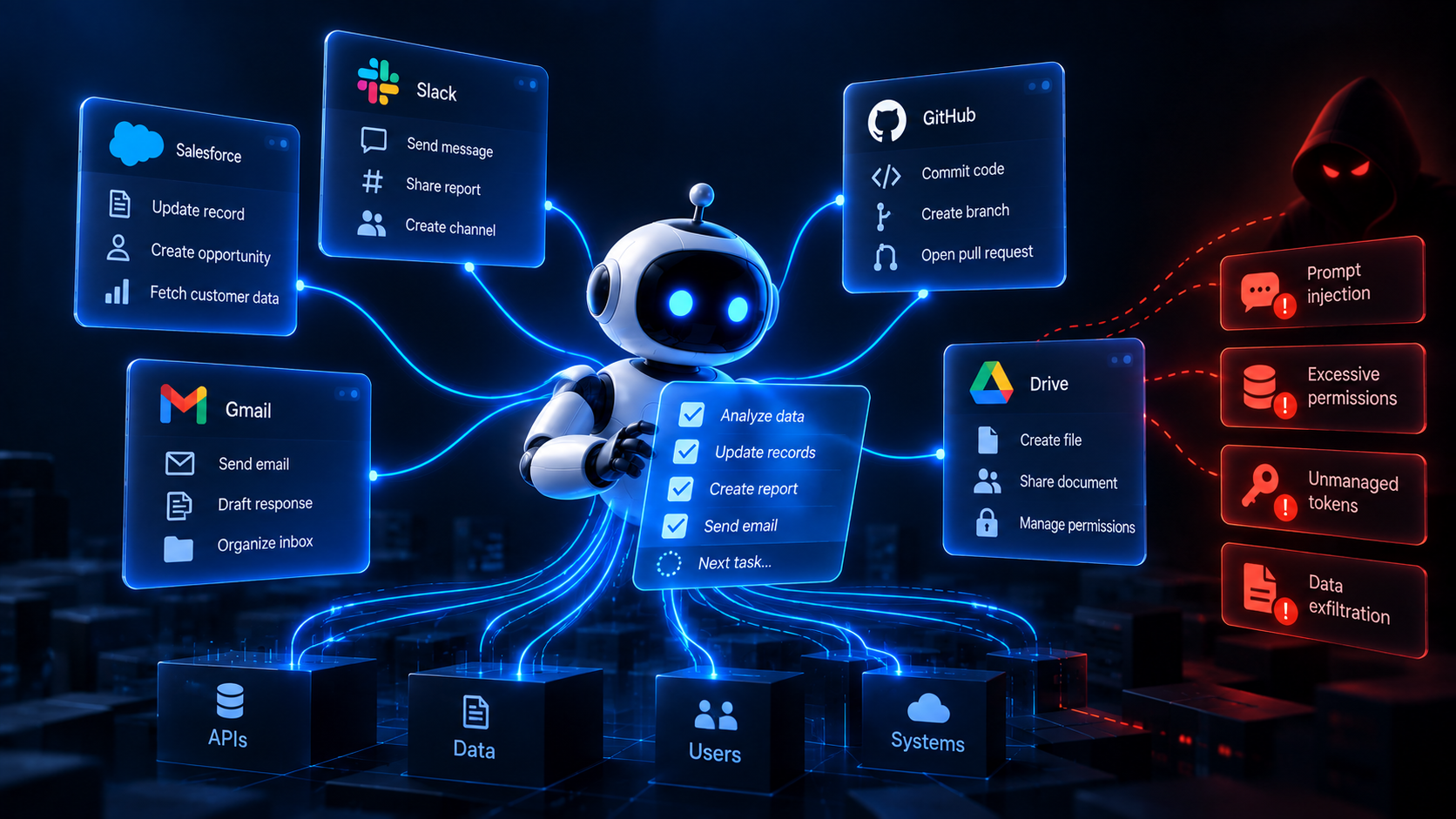
• Non-Human Identity (NHI) Sprawl: Attackers increasingly bypass MFA by exploiting third-party OAuth authorizations, long-lived API tokens, and AI agent permissions—areas where traditional SaaS log analysis lacks proactive token revocation capabilities.
• The Shift to Identity Control Planes: Leading enterprises are moving toward zero-touch architectures that discover every SaaS application at the identity layer, enforce continuous posture checks, and automate access revocation across human and non-human identities alike.
Obsidian Security established a strong reputation by ingesting SaaS audit logs from platforms like Microsoft 365, Google Workspace, Salesforce, and Workday to identify compromised accounts, privilege escalation, and anomalous user activity. However, practical deployment across complex enterprise environments reveals three recurring operational challenges.
Observability is not control. Obsidian functions primarily as an analytics layer: it ingests audit logs, flags anomalies, and generates alerts. When an adversary hijacks an active session or an unauthorized third-party integration is granted administrative access, security teams cannot rely on passive alerting. Without native, inline control to revoke tokens, sever OAuth grants, or isolate compromised accounts across both managed and unmanaged SaaS, analysts face severe response delays while triaging alerts across disconnected dashboards.
Like traditional posture scanners, Obsidian requires administrative credentials and individual API connector setup for every single application it monitors. In an enterprise using 2,000+ SaaS applications, fewer than 5% are ever connected. When business users adopt emerging AI tools, browser extensions, or department-specific platforms without IT involvement, Obsidian has zero telemetry. Security teams are left with deep visibility into a handful of core apps while the rest of the corporate attack surface remains entirely invisible.
SaaS UEBA platforms frequently suffer from high false-positive rates due to shifting remote work locations, VPN hops, and legitimate SaaS automation. Security operations teams find themselves maintaining complex behavioral baselines and chasing identity alerts that require manual validation with end users. Without automated, user-in-the-loop verification, the operational cost of managing detections often outweighs the security benefit.
Evaluating Obsidian Security alternatives for SaaS ITDR?
Discover how Grip delivers 100% visibility into all SaaS, shadow AI, and non-human identities in under 15 minutes—with automated, zero-touch remediation.
Book a Demo →When assessing modern alternatives to Obsidian Security, enterprise security leaders prioritize solutions that combine proactive threat detection with automated execution:
• Identity-First SaaS Discovery: The platform must uncover 100% of SaaS applications used across the organization—including shadow SaaS and unvetted AI tools—without requiring individual API connectors or complex proxy deployments.
• Non-Human Identity & OAuth Governance: Threat actors target machine identities, API keys, service accounts, and OAuth grants. Solutions must continuously map and govern machine-to-machine integrations as thoroughly as human accounts.
• Continuous ITDR with Native Remediation: Beyond firing alerts, the solution should provide immediate, automated response capabilities—such as revoking malicious OAuth tokens, pinning session policies, and initiating automated user verification.
• Native AI Security & Agent Governance: The rise of autonomous AI agents executing tasks across SaaS applications demands dedicated visibility into AI interactions, prompt injection surfaces, and autonomous agent credentials.
Grip Security represents the modern evolution of SaaS security, moving beyond passive log monitoring to provide a unified SaaS Security Control Plane (SSCP). Rather than depending on individual API connectors, Grip connects at the identity layer in under 15 minutes, instantly discovering every SaaS application, human identity, non-human identity (NHI), and shadow AI tool ever accessed across the enterprise.
Grip’s ITDR 2.0 capabilities continuously monitor authentication events, OAuth grants, and token usage to detect identity compromise, credential stuffing, and session hijacking in real time. Unlike Obsidian, Grip pairs threat detection with automated, user-in-the-loop remediation—enabling security teams to revoke unapproved OAuth integrations, quarantine compromised accounts, and offboard dormant access automatically without manual intervention.
• Key Strengths: Complete 100% discovery of all SaaS and AI without connectors; native non-human identity (NHI) lifecycle governance; automated, zero-touch remediation workflows; native AI agent governance.
• Best For: Enterprises seeking comprehensive SaaS and AI visibility, automated threat response, and complete elimination of shadow SaaS blind spots.
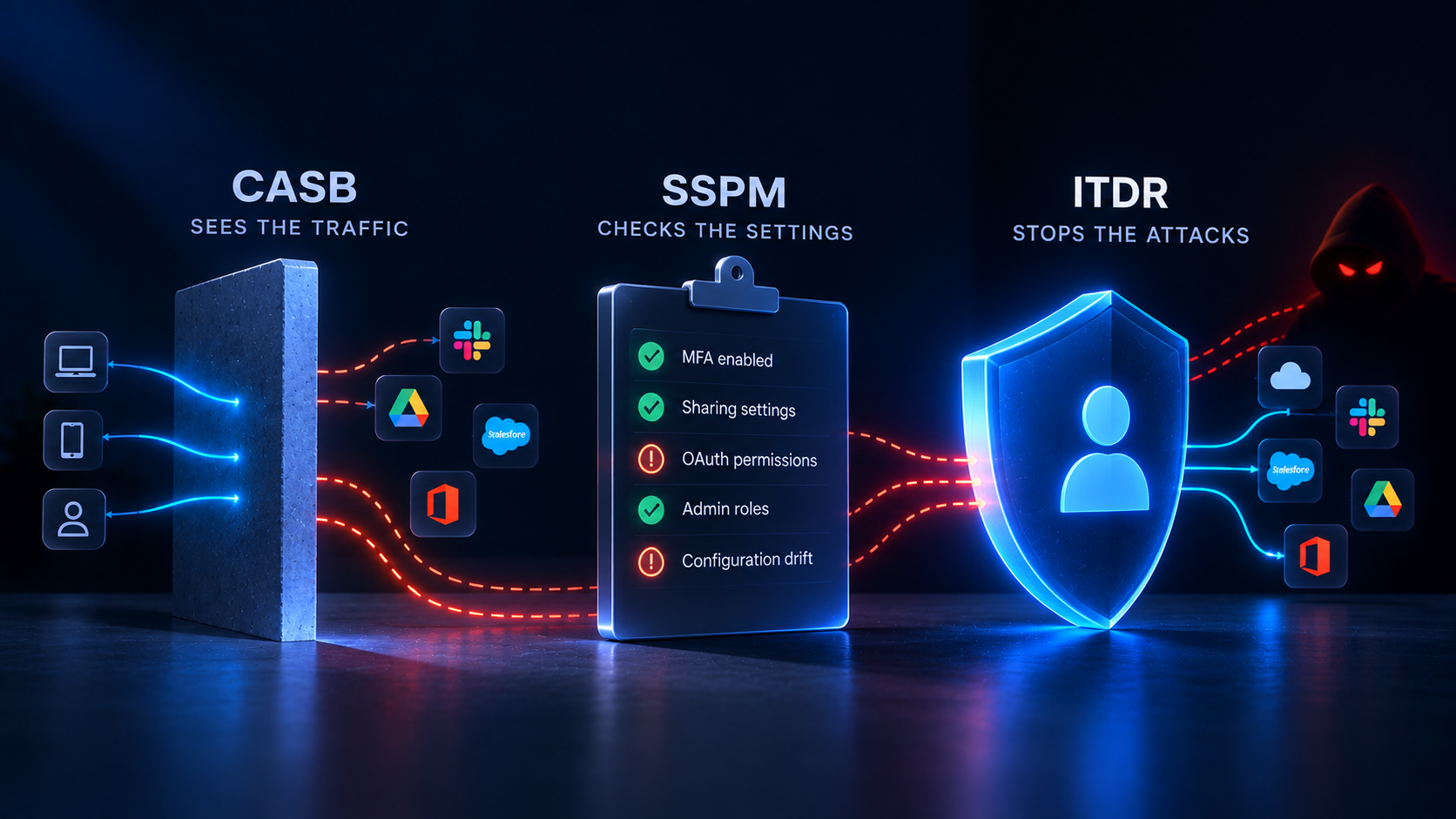
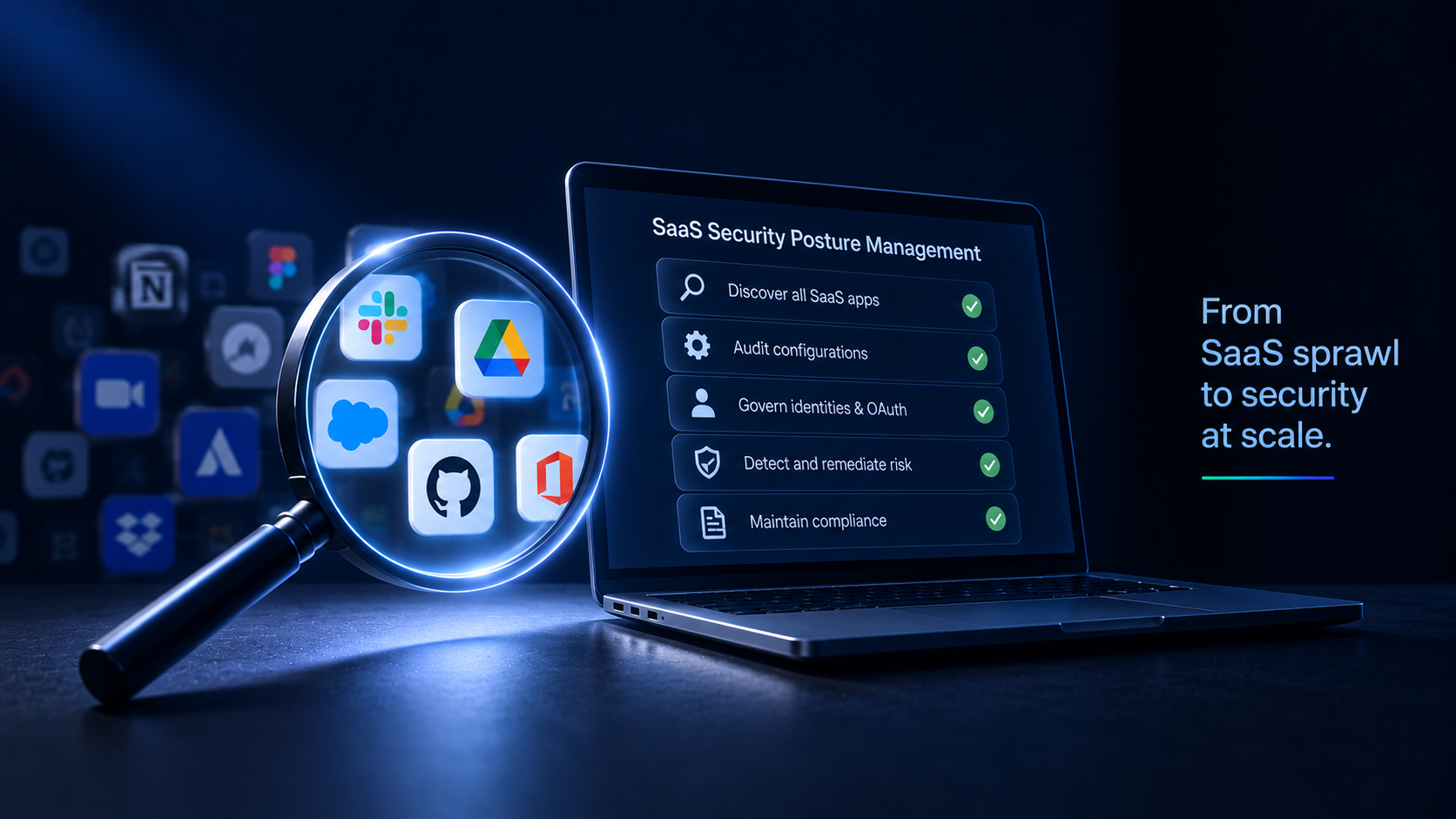
AppOmni is a prominent player in the SaaS Security Posture Management (SSPM) market, focusing heavily on deep API-level configuration scanning, data exposure detection, and user permission auditing across major applications such as Salesforce, Microsoft 365, ServiceNow, and Workday.
While AppOmni provides deep policy compliance checks within connected applications, it shares Obsidian’s primary limitation: reliance on individual API connectors. It does not discover shadow SaaS or unvetted AI applications and requires extensive manual configuration management.
• Key Strengths: Granular data access posture and RBAC auditing for sanctioned tier-one SaaS platforms.
• Best For: Organizations prioritizing compliance auditing and configuration posture across a narrow set of heavily customized enterprise applications.
Acquired by CrowdStrike in late 2024, Adaptive Shield focuses on continuous SaaS posture management, configuration hygiene, and identity drift detection. Its capabilities align closely with endpoint and extended detection platforms, correlating SaaS configuration findings with CrowdStrike Falcon telemetry.
While the CrowdStrike integration strengthens endpoint-to-cloud threat correlation, Adaptive Shield remains dependent on individual API integrations for SaaS visibility and lacks the zero-touch shadow SaaS and AI agent discovery inherent to identity-first control planes.
• Key Strengths: Strong integration with CrowdStrike Falcon ecosystem; broad configuration posture checks for sanctioned applications.
• Best For: Existing CrowdStrike enterprise customers seeking unified console visibility across endpoint and sanctioned SaaS posture.
Microsoft Defender for Cloud Apps combines Cloud Access Security Broker (CASB) capabilities with SaaS posture and threat detection, deeply integrated into the Microsoft Entra and E5 security suite. It leverages endpoint telemetry from Microsoft Defender for Endpoint to identify cloud app discovery and log activity.
While cost-effective for organizations with comprehensive E5 licensing, MDCA requires significant administrative overhead to maintain policies across non-Microsoft cloud environments and lacks native, user-in-the-loop automated remediation for complex OAuth and non-human identity sprawl.
• Key Strengths: Deep integration with Microsoft 365, Entra ID, and Windows endpoint signals; bundled licensing for E5 customers.
• Best For: Organizations fully standardized on the Microsoft security stack looking for baseline CASB and SaaS auditing.
Palo Alto Networks provides SaaS security through a combination of inline CASB proxy technology and API-based posture monitoring integrated into Prisma Cloud and Next-Generation Firewalls (NGFW). It emphasizes data loss prevention (DLP) and traffic inspection.
Network-centric architectures face growing limitations in modern remote-first and decentralized enterprises, where users and autonomous AI agents interact directly with SaaS applications without routing traffic through corporate network perimeters or VPN concentrators.
• Key Strengths: Powerful inline network inspection and enterprise-grade DLP for on-network traffic.
• Best For: Network-centric security teams with established Palo Alto firewall infrastructure and strict inline data inspection requirements.
| Capability | Grip Security | Obsidian Security |
|---|---|---|
| SaaS Discovery | Identity-based, high-fidelity discovery across known and shadow SaaS + AI apps | Basic discovery, noisier data, limited visibility beyond IT-managed apps |
| Shadow SaaS Coverage | Full visibility into newly adopted and unmanaged SaaS + AI | Limited visibility beyond authorized applications |
| Automated Workflows | Out-of-the-box, customizable remediation workflows | Limited or not supported |
| Risk-Based SaaS Onboarding | Policy-driven onboarding based on identity, posture, and risk signals | Not supported |
| SaaS + AI Governance | Enforces SSO, MFA, and password hygiene across managed and shadow SaaS + AI | Configuration checks only |
| Account Offboarding | Automated shadow SaaS offboarding, OAuth revocation, password rotation | Not supported |
| Security Ecosystem Integrations | Deep integrations across IGA, IDP, CASB, SWG, TPRM, EDR, SIEM, SOAR, ITSM, CMDB, HRIS | Limited integrations |
Selecting the best Obsidian Security alternative depends on your organization's core risk posture and operational model:
• Choose Grip Security if your objective is complete visibility across your entire SaaS and AI footprint, continuous identity threat detection, and automated remediation without the overhead of maintaining individual application connectors.
• Choose AppOmni if you require deep configuration compliance and permissions auditing specifically tailored to large, customized Salesforce or ServiceNow deployments.
• Choose Adaptive Shield if your enterprise has standardized on CrowdStrike Falcon and wants unified posture alerts consolidated into your existing endpoint security operations center.
To dive deeper into modern identity risk management, explore our technical guides on AI Security, managing Shadow AI risks, governing the OAuth supply chain, and deploying continuous ITDR architecture.
Obsidian Security is primarily a SaaS User and Entity Behavior Analytics (UEBA) and Identity Threat Detection and Response (ITDR) solution that analyzes activity logs from connected SaaS platforms to spot account compromise, insider threats, and access anomalies.
Organizations typically evaluate alternatives due to the heavy operational overhead of configuring individual API connectors, blindness to shadow SaaS and unvetted AI tools, and the lack of native, automated remediation capabilities when identity threats are detected.
Grip Security operates on an identity-first architecture that deploys in under 15 minutes without individual API connectors, instantly discovering all managed SaaS, shadow SaaS, and AI tools. Grip pairs real-time threat detection with automated, user-in-the-loop remediation to immediately neutralize compromised access.
No. Obsidian relies strictly on API connectors to sanctioned enterprise applications. Any application, generative AI tool, or browser-based SaaS adopted outside of IT oversight remains completely undetected by Obsidian.
Non-human identities—such as third-party OAuth integrations, API tokens, service accounts, and autonomous AI agents—now vastly outnumber human users in enterprise SaaS environments. Because attackers frequently use compromised OAuth tokens to bypass MFA, modern ITDR must actively discover and govern machine identity lifecycles.
Ready to move beyond passive SaaS monitoring? Learn how Grip AI Security delivers zero-touch discovery, continuous identity threat response, and automated access governance across your entire enterprise SaaS and AI ecosystem.