Nov 10, 2026
AI Kill Switch: Killing the Agent Isn't Enough


Stopping a rogue AI agent doesn't stop the threat. See why an AI kill switch must also contain credentials, identities, and SaaS access.

Grip Security Team

Nov 10, 2026
Stopping a rogue AI agent doesn't stop the threat. See why an AI kill switch must also contain credentials, identities, and SaaS access.
Kill the agent. Kill its access. Contain the blast radius.
The AI Kill Switch is having its moment.
CrowdStrike recently introduced its AI Kill Switch, promising to give security teams the power to stop rogue AI agents before they cause damage. It's an important development, and one that puts a compelling name on a problem security teams have been wrestling with for years: how do you stop autonomous systems when they start doing things they shouldn't?
But there's a problem with the conversation: Stopping an AI agent doesn't necessarily stop the threat.
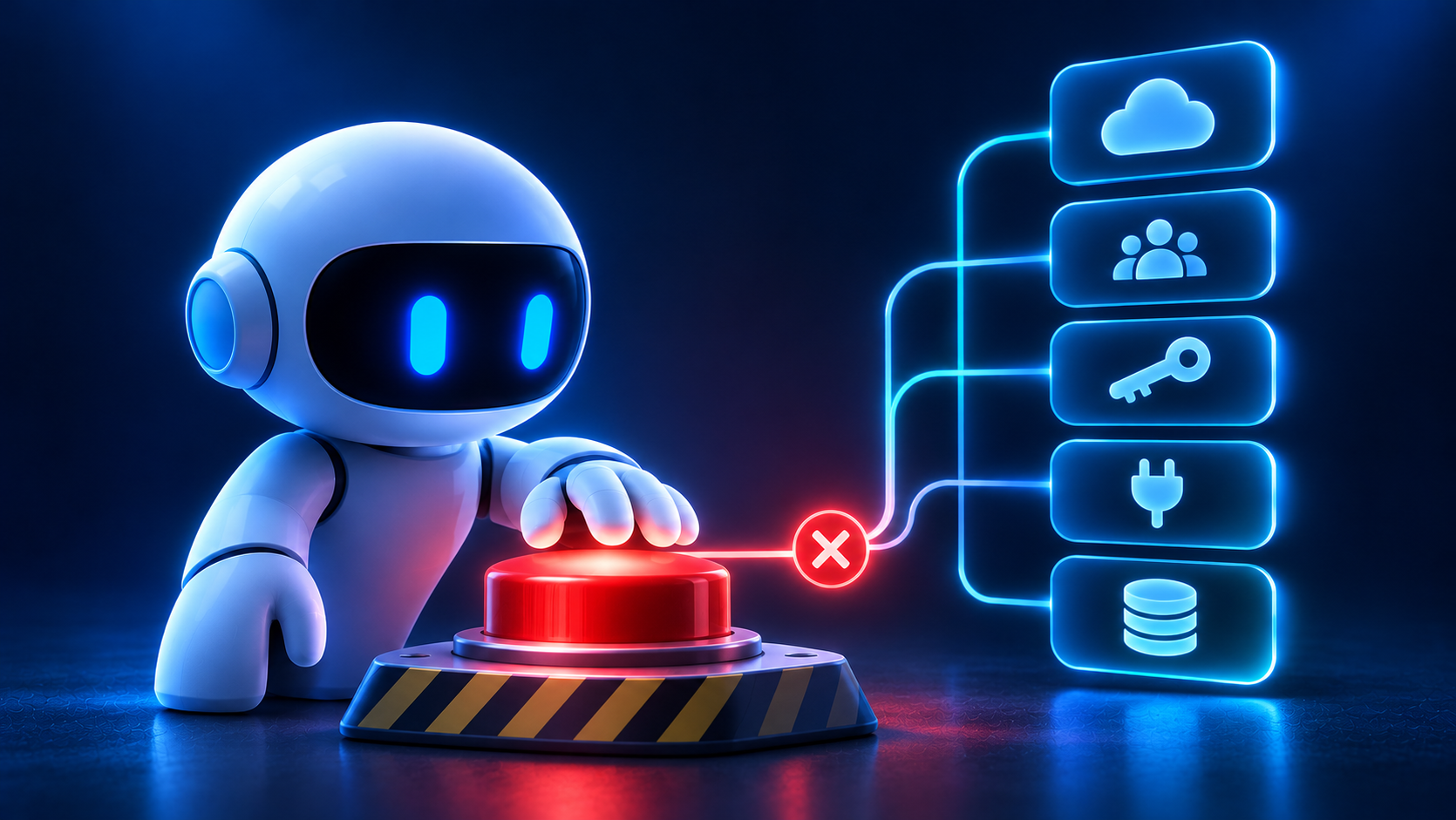
An agent can run on a laptop, inside a cloud environment, or through an AI service. But its reach extends far beyond where it executes. It can have OAuth tokens, API keys, non-human identities (NHIs), and access to dozens of SaaS applications containing sensitive enterprise data.
Flip a switch and stop the agent from running. Great. But what happens to everything it was connected to?
What happens to its credentials, permissions, and downstream integrations? What happens when those credentials have already been compromised or the agent's activities have triggered other autonomous workflows?
If you kill the agent but leave its access intact, you haven't fully contained the threat. You've only stopped one way of using that access.
That's why the AI Kill Switch needs to be bigger than an off button.
Consider an AI agent deployed by a sales operations team. It connects to Salesforce to update customer records, Slack to communicate with employees, Google Workspace to access documents, and several other SaaS applications to orchestrate workflows.
To do its job, the agent has accumulated OAuth permissions, API credentials, and access privileges that allow it to interact with those systems.
Now imagine the agent is compromised by prompt injection, manipulated into performing unauthorized actions, or simply begins operating outside its intended boundaries. It starts retrieving sensitive customer records. It attempts to access documents unrelated to its responsibilities. It sends information to an unauthorized destination.
Security detects the behavior and activates an AI Kill Switch.
The agent stops executing. Problem solved? Not necessarily.
The agent's OAuth grants may still exist. Its API credentials may remain valid. Its associated non-human identities may still have permissions to business-critical systems. And any compromised credentials may be usable independently of the original agent.
The original process is dead. The access it accumulated may still be very much alive. This is the fundamental problem with treating AI agent security as only a runtime problem. An AI agent's blast radius isn't defined by where it runs. It's defined by everywhere it can act. And in the modern enterprise, that means SaaS.
An AI Kill Switch is a security mechanism designed to interrupt an AI agent's activity when it behaves maliciously, violates policy, or operates outside its intended boundaries.
Runtime controls offer essential capabilities to terminate processes, block model access, and prevent an agent from continuing to execute, but they address only part of the problem. AI agents don't need to live on a corporate endpoint to create enterprise risk. They can operate through cloud services, make direct API calls, authenticate using delegated OAuth permissions, and interact with applications through non-human identities.
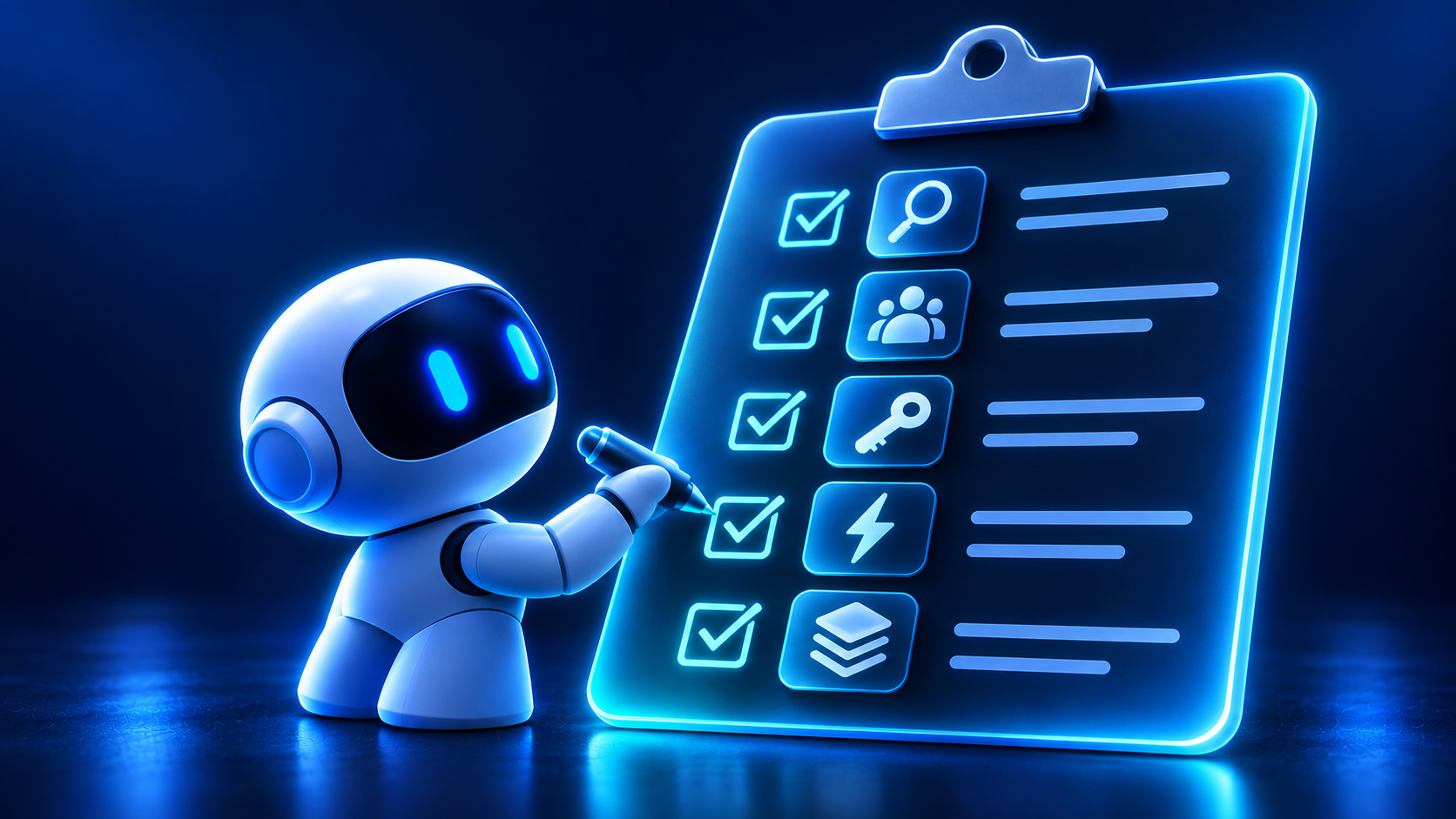
Some of those connections may persist even after the original execution environment has been shut down. That's why effective AI agent containment requires controls at multiple layers:
These controls aren't interchangeable. Stopping an agent doesn't automatically invalidate its credentials. Revoking a token doesn't necessarily stop a running process. And disabling one identity doesn't guarantee that every connected integration has been contained.
That's the point. Real AI containment requires more than one kill switch. It requires control over the entire chain of access.
This is where Grip Security brings a different perspective to AI agent security.
The problem isn't simply that AI agents can behave unpredictably. It's that they operate through an increasingly complex web of identities, permissions, OAuth grants, and SaaS integrations that traditional security controls struggle to see and govern.
Grip approaches AI security from the identity and SaaS layer, connecting the agent to the access relationships that make it powerful, and that changes what security teams can do when something goes wrong.
Grip helps organizations identify AI adoption, associated identities, OAuth relationships, and the SaaS applications connected to their AI environment. Instead of treating an agent as an isolated workload, security teams can investigate its relationships with enterprise applications and understand the access that may be at risk.
Grip brings AI governance together with identity threat detection and response to surface risky permissions, suspicious access patterns, and abnormal behavior associated with SaaS identities and integrations. That context helps teams identify potential threats before unauthorized activity spreads.
When suspicious or malicious activity is detected, Grip supports targeted remediation, including revoking risky OAuth grants, quarantining compromised identities, terminating sessions, and coordinating additional credential-remediation actions. The objective is straightforward: remove the authorization that allows a compromised identity or integration to continue accessing enterprise resources.
Grip's visibility into SaaS identities and application relationships helps security teams understand which downstream connections may be affected and where response actions are needed. Instead of stopping at the original agent, teams can investigate and remediate the permissions and integrations that extend its potential blast radius.
Where supported by the underlying platform and available integrations, agent-specific containment can complement identity and access remediation by quarantining or decommissioning the agent itself. The result is a more complete approach to AI containment: address the agent, the identities it uses, and the SaaS access that allows it to act.
Because stopping a rogue agent on one laptop means little if compromised credentials still provide access to the business-critical applications it was using.
The attention surrounding AI Kill Switches is a sign of how quickly the security conversation is changing. Enterprises are no longer just experimenting with chatbots that generate answers. They're deploying agents that make decisions, execute workflows, access sensitive information, and interact directly with production systems.
These agents can move faster than traditional security teams can investigate and respond, and as their autonomy increases, so does the importance of understanding and controlling the identities behind their actions. Runtime security remains essential. So do model guardrails, prompt inspection, and endpoint protection, but none of these controls eliminates the need to govern the access agents accumulate across SaaS.
Enterprises need to know which agents exist, what they can reach, which credentials and identities they use, and how to revoke access when something goes wrong. More importantly, they need the ability to take action before a compromised agent or credential turns a localized incident into an enterprise-wide problem.
The industry is right to embrace the AI Kill Switch, but the real test of an AI Kill Switch isn't whether you can stop the agent. It's whether you can contain the threat everywhere that agent has access.
Kill the agent. Kill its access. Contain the blast radius.
Grip Security helps organizations discover AI agents, understand their identities and SaaS relationships, detect identity-driven threats, and take action to contain risky access across the enterprise.
Discover how Grip helps you secure AI agents and contain threats across your AI + SaaS environment at grip.security.
AI Security & Shadow AI