Feb 26, 2026
OpenClaw Is Local. The Risk Is Programmatic.


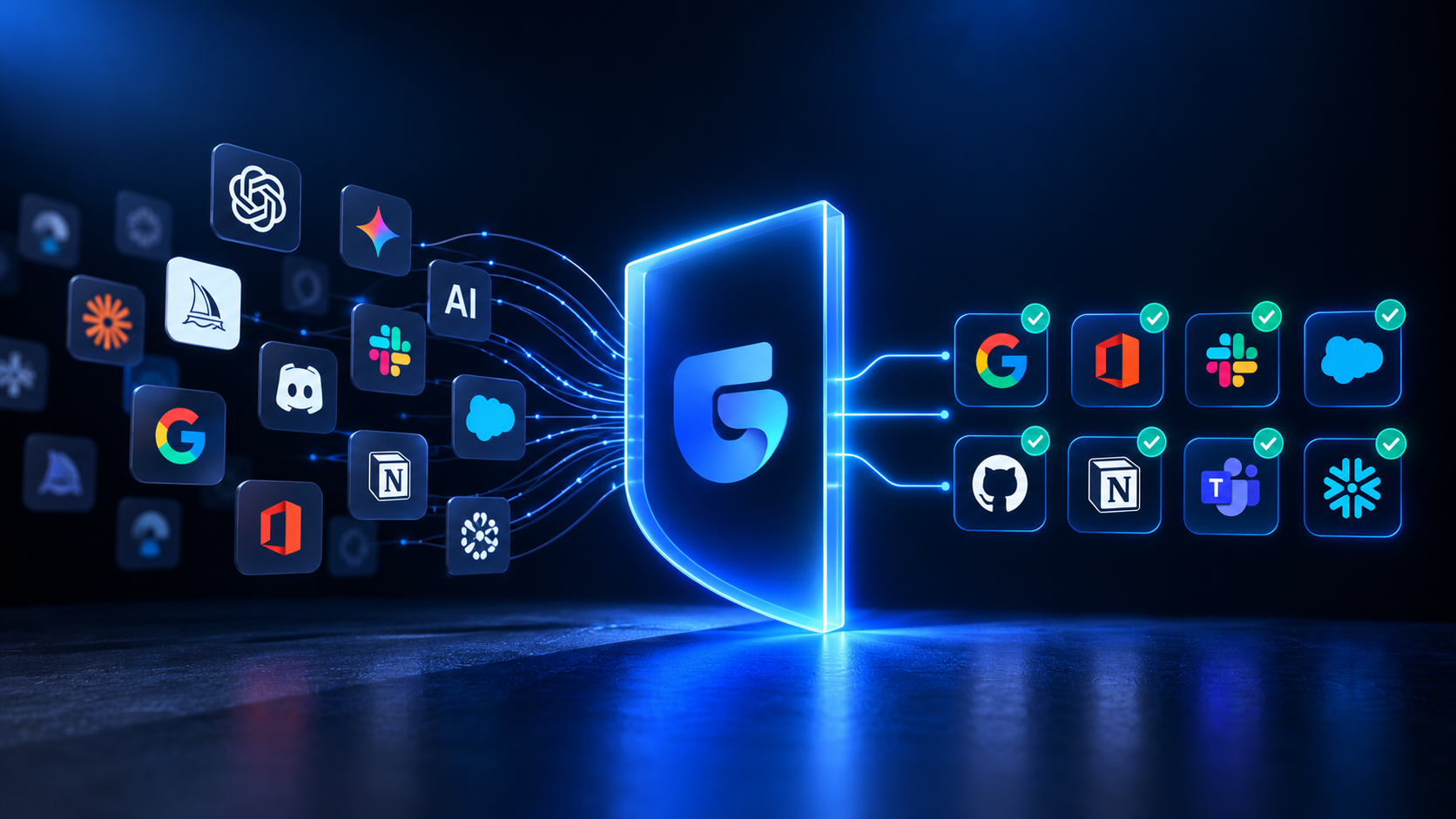
OpenClaw runs locally, but the risk lives in SaaS. Learn how OAuth grants, API tokens, and AI agent integrations create identity-based exposure across Slack, Salesforce, and more.

Feb 26, 2026
OpenClaw runs locally, but the risk lives in SaaS. Learn how OAuth grants, API tokens, and AI agent integrations create identity-based exposure across Slack, Salesforce, and more.
OpenClaw runs on an employee’s machine.
But the access it creates lives inside Slack, Salesforce, Google Workspace, GitHub, and other business-critical SaaS applications.
This is not primarily a malware story. It is an identity story.
For organizations evaluating AI agent security, the real risk isn’t where the agent runs. It’s what the agent can access, retrieve and alter once connected to business tools.
When an employee connects OpenClaw to Slack, Salesforce, Google Workspace, GitHub, or other platforms, the flow looks completely legitimate.
The user signs in. Permissions are granted. A token is issued.
From that moment forward, OpenClaw can interact programmatically within the scopes approved. There is no exploit. No vulnerability. No malicious payload required.
Just API-level access issued through a standard OAuth flow.
Depending on the scopes granted, that may include:
The AI agent is local. The identities it creates are not.
Recent research identified hundreds of malicious skills published in the OpenClaw ecosystem marketplace.
That matters.
Malicious extensions can introduce endpoint compromise and credential theft. Those risks are real and require detection.
But focusing only on malware misses the bigger issue.
Even without malicious skills, OpenClaw creates:
...inside your SaaS platforms.
If those identities are over-permissioned or persistent, the exposure exists regardless of malware. Uninstalling the tool does not revoke the access.
That is the core problem.
The Salesloft breach.The Gainsight incident. The Google–Salesforce compromise.
In each case, attackers did not need to exploit infrastructure.
They leveraged valid SaaS access:
The lesson was clear: SaaS identity is the perimeter.
OpenClaw does not just use your SaaS identity layer. It multiplies it.
OpenClaw does not behave like ransomware.
OAuth approvals happen inside SaaS interfaces. API calls use legitimate endpoints. Service accounts do not log in interactively.
That means:
Many organizations still lack continuous visibility into:
Without identity governance, exposure persists quietly.
This is where AI governance must extend beyond endpoint detection and into SaaS identity control.
Yes, you need to know where OpenClaw is running. AI agents with execution capability cannot operate in the dark. Endpoint visibility still matters.
That is why Grip built Claw Gripper, a lightweight utility designed to help customers identify OpenClaw installations across managed devices and tie those findings directly to SaaS identity exposure.
Claw Gripper connects the laptop to the login.
When OpenClaw is found on a device, security teams can immediately see which user is associated and move to review the access created inside SaaS platforms.
Because uninstalling OpenClaw does not revoke the OAuth grants it created.
Deleting a folder does not rotate the API tokens it issued.
The endpoint is where you discover the agent.
SaaS is where you contain the blast radius.
Claw Gripper helps you find the agent.
Grip helps you govern the access.
Endpoint discovery is reactive. The real control point is your SaaS posture.
If your core SaaS assets are not hardened, AI agents simply amplify existing gaps.
You must secure:
This is where SaaS Security Posture Management and identity governance become critical.
Grip continuously detects and governs:
Because once a token exists, it can access regulated data, export sensitive records, and move laterally across platforms.
OpenClaw is not inherently malicious. It is programmatic. AI agents with execution capability rapidly create and consume identity inside SaaS platforms.
Every OAuth grant extends the trust boundary. Every API token expands the attack surface. Every automation identity introduces persistence.
The question is not whether employees will use AI agents.
They will.
The question is whether the identities those agents create are visible, governed, and continuously reviewed.
ClawHub malware shows attackers are already targeting the ecosystem.
But even without malicious code, unmanaged SaaS identity exposure is enough to create material risk.
OpenClaw runs locally.
The blast radius lives in Slack, Salesforce, Google Workspace, and every other SaaS platform your business depends on.
If you are not governing your SaaS identity layer, you are not governing AI.
Author: Yaki Gorbulsky, Product Manager at Grip Security
AI Security & Shadow AI

AI Governance & Compliance
AI Security & Shadow AI