Sep 2, 2026
AI Governance and SaaS Security Belong in the Same Conversation


Learn why AI governance and SaaS security must work together, and why identity is the foundation for securing AI access, permissions, and risk.

Sep 2, 2026
Learn why AI governance and SaaS security must work together, and why identity is the foundation for securing AI access, permissions, and risk.
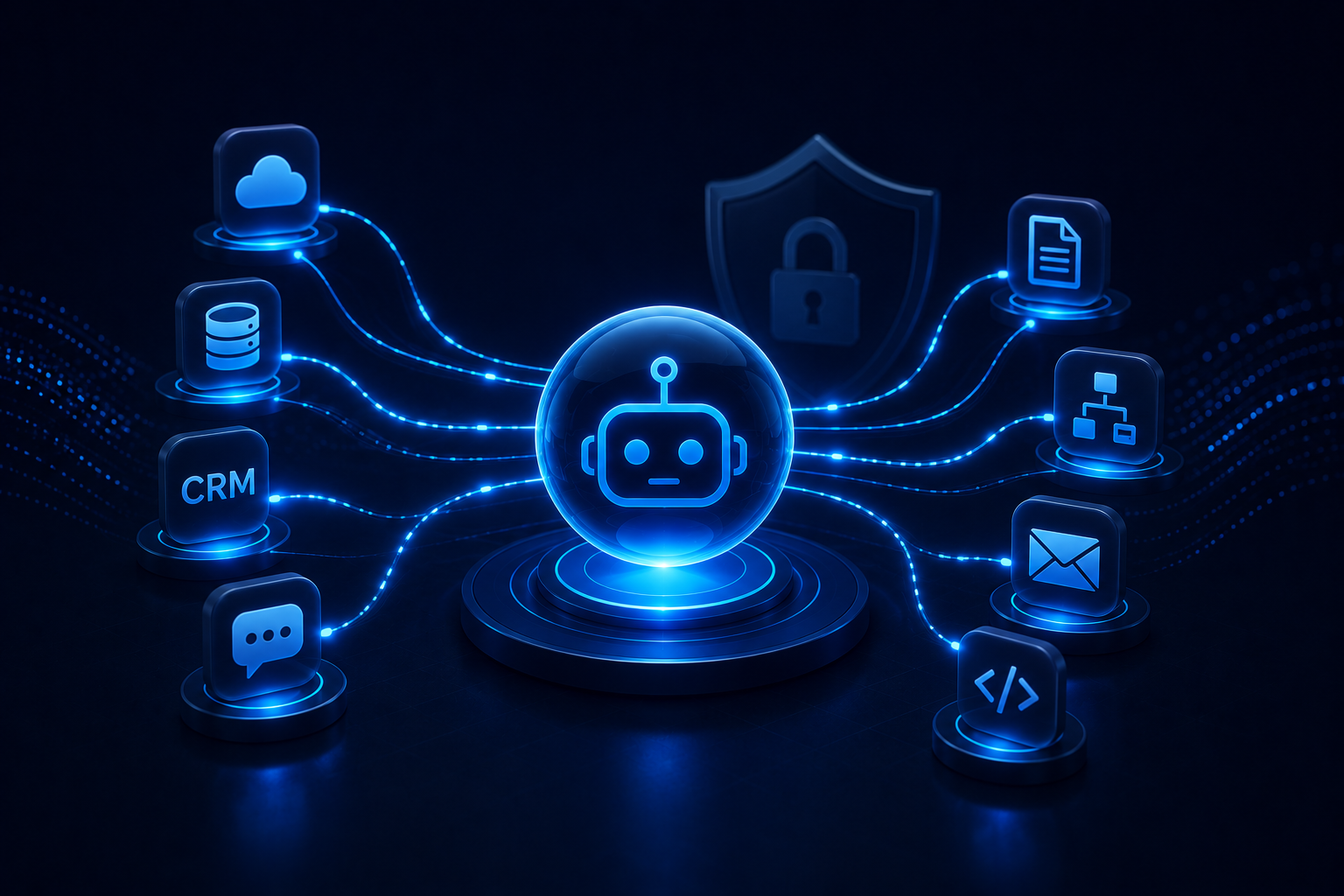
An employee connects an AI assistant to a shared drive. A business team enables a copilot inside an application it already uses. An agent gets permission to retrieve customer information and update records.
Each decision can help people work faster. Each also creates questions about access, ownership, and accountability. Who approved the connection? What information can it reach? Who will notice if its permissions change?
At Grip, these questions shape how we think about the future of enterprise security. They are also why AI governance and SaaS security belong in the same conversation.
We’re pleased to be included in KuppingerCole’s 2026 Leadership Compass for SaaS Security & AI Governance: https://www.kuppingercole.com/research/lc81081/saas-security-and-ai-governance
Grip’s vision is to help organizations confidently adopt, govern, and secure AI at enterprise scale. That starts with understanding how AI connects to the business.
An application inventory tells you which tools exist. It cannot, by itself, explain whether an agent should have access to customer records or whether an employee’s new integration exposes confidential documents. Those decisions depend on identity, permissions, ownership, and the relationships between systems.
That is what we mean when we say Identity Is the Control Plane. Identity helps determine what people and agents can access, which actions they can take, and where security teams can intervene.
As models, agents, and applications evolve, the need to understand and govern access will remain.
Our identity-driven approach connects users, agents, applications, permissions, and data so security teams can make those decisions with context. We believe that foundation is essential to making AI adoption sustainable.
The first phase of AI security helped organizations discover AI. The next phase is about controlling it.
Finding an unfamiliar assistant is a useful beginning. The work continues with identifying its owner, understanding its access, deciding whether that use is appropriate, and responding when something changes.
Consider two employees using the same AI tool. One uses it to edit public marketing copy. The other connects it to confidential customer documents. The application name is identical, but the governance decisions are different.
Security teams need a repeatable way to make those decisions without manually investigating every connection. Our goal is to help them move from awareness to action while giving employees room to use AI productively.
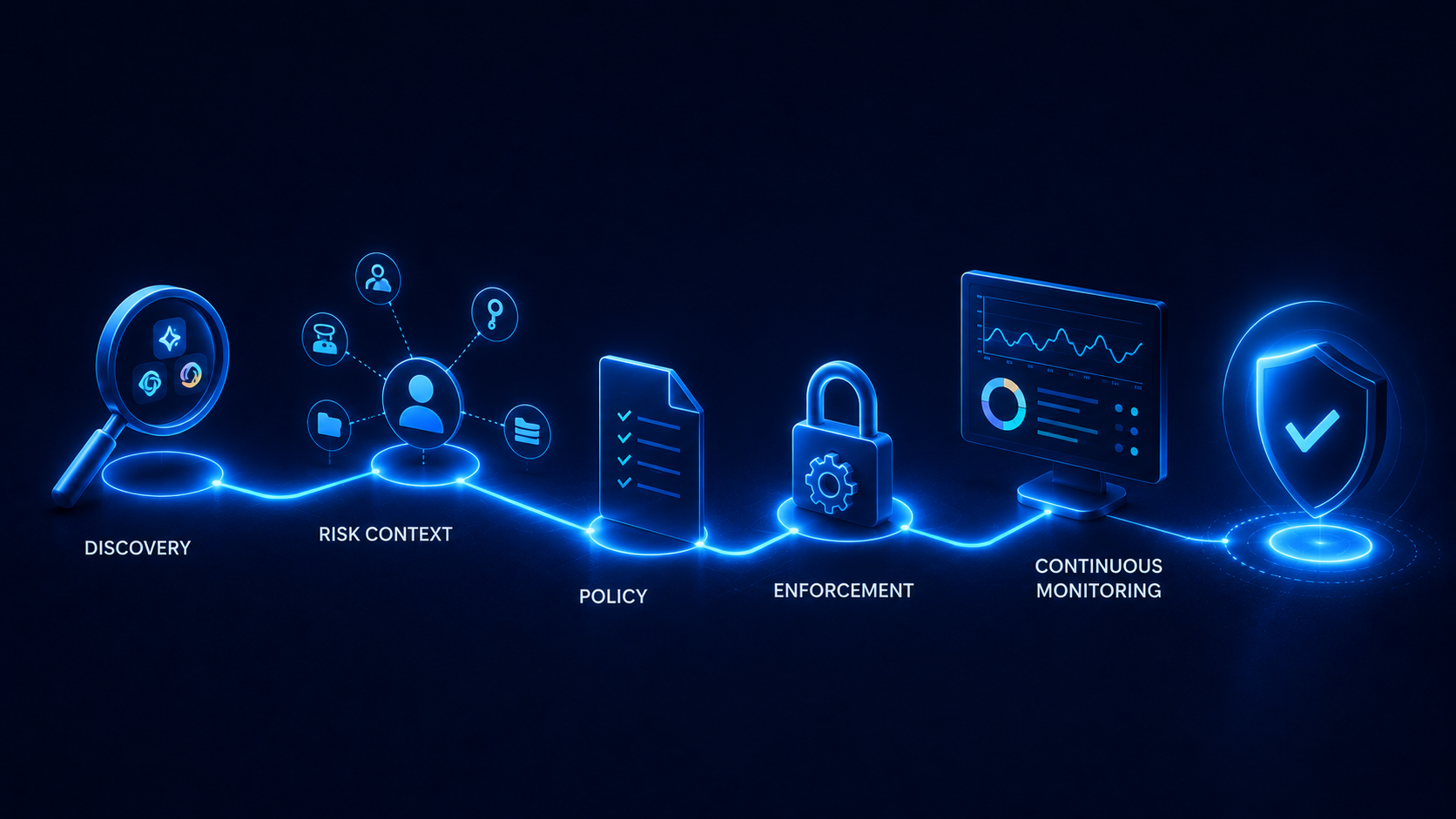
We organize that approach around four capabilities:
Together, they form an ongoing operational cycle for securing SaaS and AI.
Know where AI exists, who is using it, and what it can access. Then use that understanding to establish ownership, distinguish approved use from activity that needs attention, and apply policy as adoption changes.
For us, discovery should lead to a decision. An inventory becomes more useful when teams can connect each application or agent to a responsible owner and a clear governance process.
An approved application can still carry unnecessary risk. Configurations change, permissions accumulate, and new features introduce access that deserves review.
AI-SPM, alongside SaaS Security Posture Management, helps teams assess those conditions continuously. The objective is to identify weaknesses, prioritize changes, and maintain appropriate configurations and access as the environment evolves. Approval should begin an ongoing security process.
Teams also need to recognize when legitimate access is being misused. Understanding the identities, permissions, and applications involved helps turn suspicious activity into an investigation with a clear direction.
Our approach brings that context into detection and response so teams can understand potential exposure and take action. Depending on the situation, that may mean investigating an identity, revoking a connection, or initiating a remediation workflow.
Technology works best when teams have the expertise to put it into practice. Organizations need help setting priorities, defining acceptable use, assigning responsibilities, and adapting their programs as AI adoption expands.
Expert guidance is part of the Grip Mantra because progress depends on operational decisions as well as technical controls. The aim is a program that teams can run, measure, and improve.
As you evaluate SaaS security and AI governance offerings, consider the connections you cannot explain today, the permissions you cannot confidently review, and the responses that still require too much manual work.
Those are the problems we are building Grip to help solve.
We invite you to explore KuppingerCole’s 2026 Leadership Compass for SaaS Security & AI Governance <--TODO: ADD LINK--> as part of your evaluation. Grip Security is thrilled to be included, and one quick look will show you why.
Explore the report on KuppingerCole’s website →https://www.kuppingercole.com/research/lc81081/saas-security-and-ai-governance

Fill out the form and watch webinar's video.