
Cloud misconfigurations remain one of the leading causes of cloud breaches, yet most organizations lack full visibility into their cloud environments.
CSPM addresses this by continuously monitoring environments, identifying deviations, and helping teams fix issues before they escalate into breaches or compliance failures. This is especially critical as organizations scale, making it harder to detect and fix SaaS misconfigurations before risk accumulates.
Key takeaways:
Cloud security posture management matters because most cloud breaches stem from misconfigurations, not sophisticated attacks. And misconfigurations are not edge cases, but the primary cause of cloud security failures.
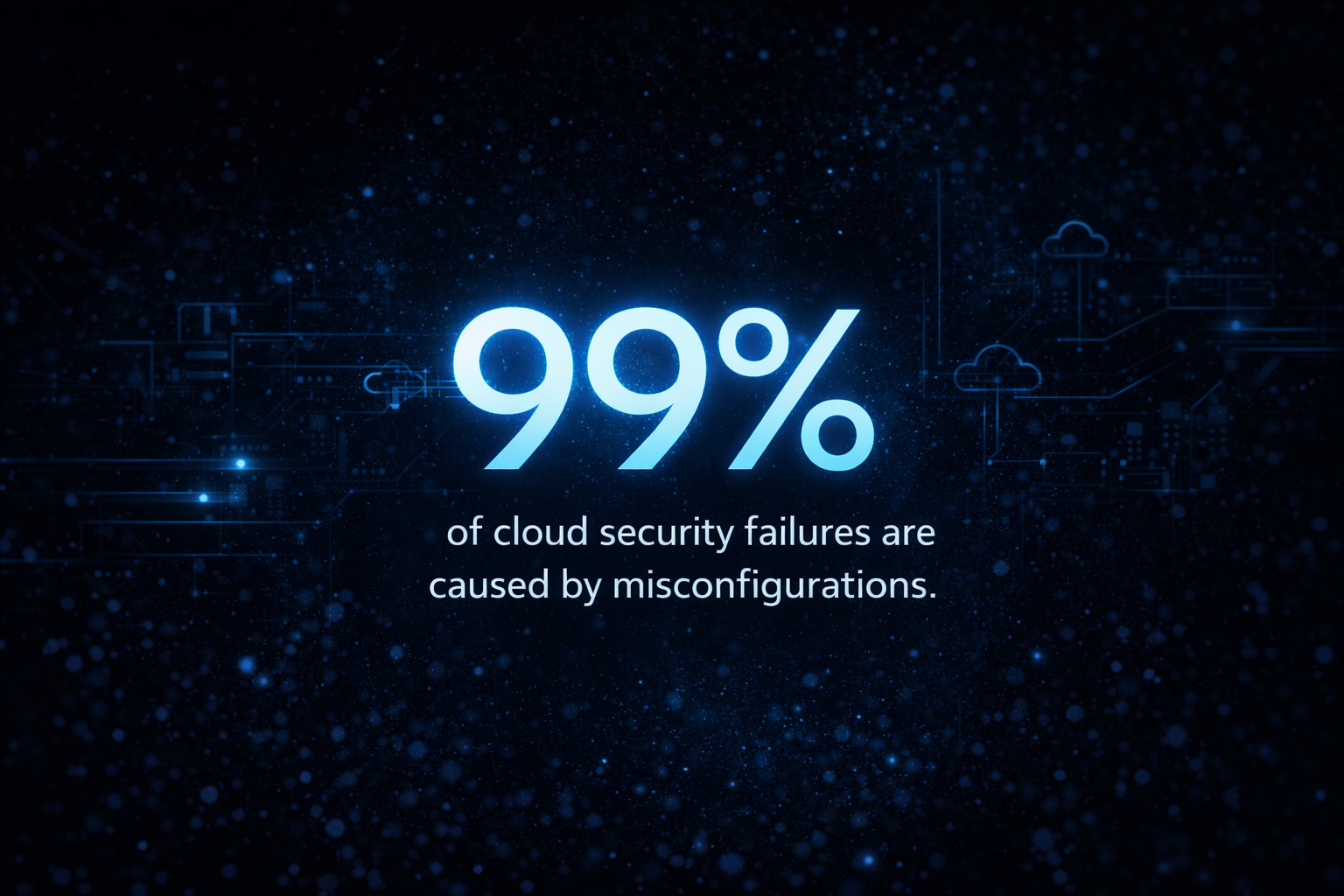
Organizations operate in complex multi-cloud environments where responsibility is shared between the cloud provider and the customer. While providers secure the infrastructure, customers are responsible for configurations, access controls, and data protection.
This gap leads to risk. Misconfigured storage buckets, excessive permissions, and exposed services are common—and often go undetected for months.
CSPM addresses this by continuously monitoring environments, identifying deviations from secure baselines, and helping teams fix issues before they escalate into breaches or compliance violations.
1. Discovery & Visibility
Continuously identifies all cloud assets across accounts, regions, and providers.
2. Risk Assessment
Evaluates configurations against benchmarks like CIS, NIST, and SOC 2.
3. Compliance Monitoring
Maps cloud environments to regulatory frameworks in real time.
4. Misconfiguration Detection
CSPM tools identify risks early and help teams fix cloud and SaaS misconfigurations before they escalate.
5. Automated Remediation
Guides or automates fixes to reduce time to resolution.
Unified Cloud Visibility
Gain a single view across AWS, Azure, GCP, and cloud services.
Reduced Alert Fatigue
Prioritized risks with alert management workflows.
Faster Remediation
Fix issues quickly with fast SaaS remediation capabilities.
Compliance Automation
Continuously track alignment with frameworks without manual audits.
Cloud security tools often overlap, but they solve different problems. CSPM focuses on infrastructure posture, while other tools address access, workloads, or SaaS risk. Understanding these differences is critical when building a complete security strategy.
CSPM vs. CASB
CASB controls access to cloud apps. CSPM identifies infrastructure misconfigurations and posture risk.
CSPM vs. CWPP
CWPP protects workloads at runtime. CSPM focuses on configuration, compliance, and exposure before runtime.
CSPM vs. SSPM
SSPM secures SaaS applications and identity risk. CSPM focuses on cloud infrastructure. Grip connects both.
SaaS Security Control Plane (SSCP)
Grip’s <a href="/[SSCP-URL]">SaaS Security Control Plane (SSCP)</a> extends posture management beyond infrastructure, unifying visibility and control across SaaS, identities, and integrations.
CSPM vs. CNAPP
CNAPP bundles multiple tools, including CSPM, into a broader platform. It does not inherently solve SaaS visibility or identity-driven risk.
No single tool provides complete coverage. CSPM secures infrastructure, but gaps remain across SaaS applications, identity, and shadow IT. Grip addresses this with a SaaS Security Control Plane (SSCP), extending posture management beyond infrastructure to unify visibility and control across SaaS, identities, and integrations.
Multi-cloud security management
Maintain consistent security posture across AWS, Azure, and GCP.
Misconfiguration detection
Identify exposed storage, overly permissive IAM roles, and risky settings.
Compliance enforcement
Continuously monitor alignment with SOC 2, HIPAA, and GDPR.
Shadow infrastructure visibility
Discover unmanaged or unknown cloud assets.
Traditional CSPM tools focus on infrastructure, but risk increasingly lives in SaaS applications and identity layers.
Grip extends cloud security posture management into SaaS environments, providing visibility into unmanaged apps, shadow IT, and identity-based risk. By combining SSPM and a SaaS Security Control Plane, Grip enables unified governance across both cloud infrastructure and SaaS.
See how Grip extends cloud security posture to every SaaS app.
What is a CSPM tool?
A CSPM tool monitors cloud environments for misconfigurations, compliance issues, and security risks, helping teams maintain a strong security posture.
What’s the difference between CSPM and SSPM?
CSPM focuses on cloud infrastructure, while SSPM focuses on SaaS application configurations and access risks.
How does CSPM help with compliance?
CSPM continuously maps configurations to frameworks like SOC 2, NIST, and CIS, reducing manual audit effort.
Who needs CSPM?
Any organization operating in AWS, Azure, or GCP—especially those managing multi-cloud environments.
Does CSPM support multi-cloud?
Yes, CSPM tools are designed to provide visibility and control across multiple cloud providers.


Gain complete visibility into unmanaged AI tools, autonomous agents, and hidden OAuth permissions before they expose enterprise data. Deploy in minutes with zero disruption.

 Book a Live Demo →