May 12, 2026
SSPM vs AI Security Platforms: What’s Changed


Learn the difference between SSPM and AI security platforms and why AI-driven environments require a new approach to identity and access control.

May 12, 2026
Learn the difference between SSPM and AI security platforms and why AI-driven environments require a new approach to identity and access control.
Security teams built their SaaS strategies for a world of human users and predictable application access. That world no longer exists.
AI is now embedded across SaaS environments at scale, introducing autonomous behavior, non-human identities, and dynamic integrations that traditional tools were never designed to handle. At the same time, AI-related attacks have surged by nearly 490% year over year, forcing security leaders to rethink how risk is defined and controlled.
SSPM platforms helped organizations understand SaaS exposure. But visibility alone does not address how AI systems access data, act on it, and propagate risk across environments. Which means security leaders are now rethinking how AI governance should work in these environments.
This is where AI security platforms emerge as a new category.
What you need to know
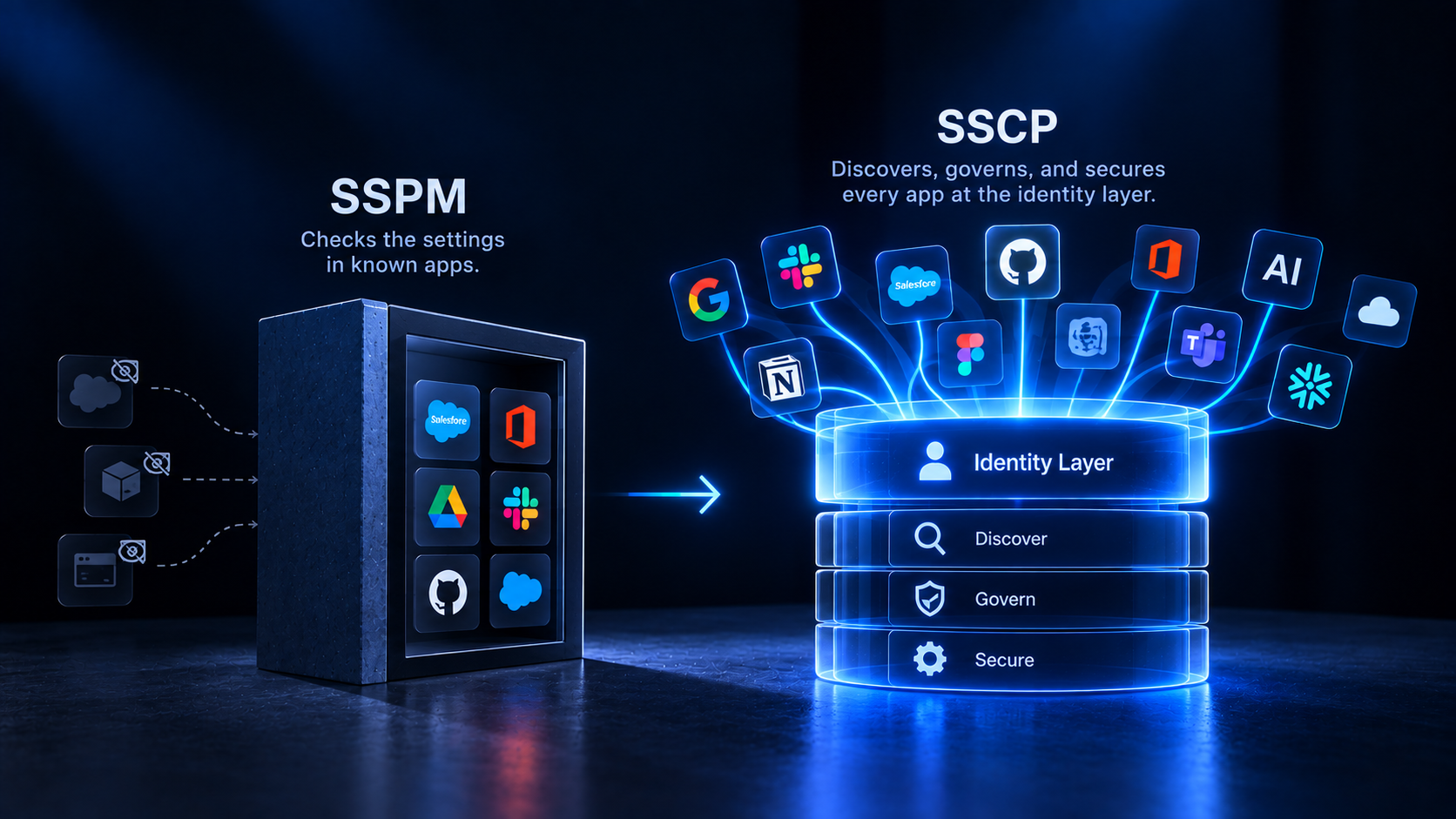
SSPM, or SaaS Security Posture Management, is designed to identify misconfigurations and enforce security best practices across SaaS applications.
It answers questions like:
SSPM became essential as enterprises expanded to thousands of SaaS applications. It brought much-needed visibility and standardization to SaaS security.
But SSPM operates on a key assumption: users are human and access is relatively static.
That assumption no longer holds.
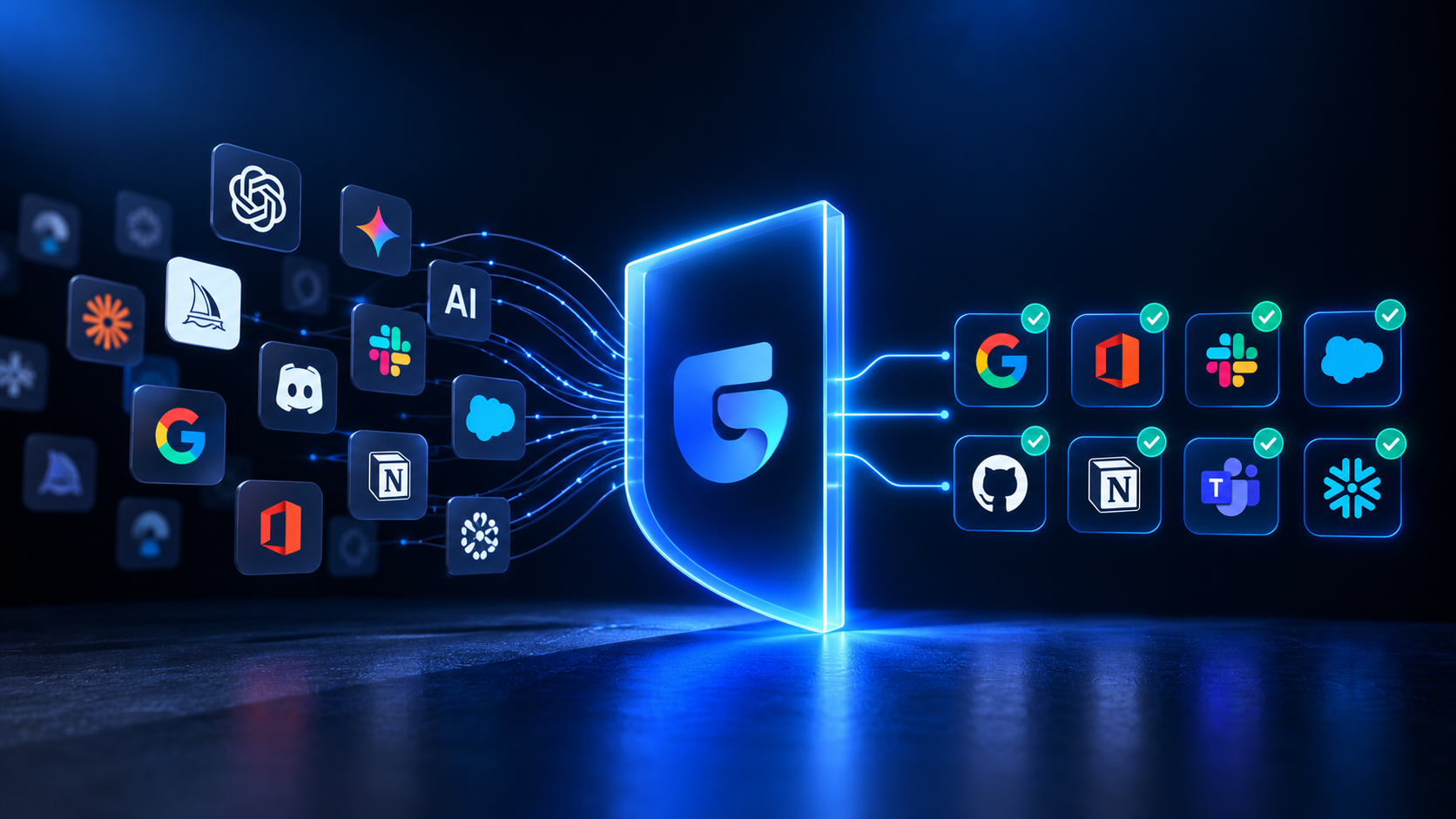
AI Security platforms are built for environments where access is dynamic, identities are both human and non-human, and applications are interconnected through APIs and OAuth.
They go beyond SaaS posture to address:
AI security platforms treat SaaS not as isolated apps, but as part of a connected system where AI can act, move, and create risk in real time.
Category-defining statement:
AI Security platforms are the control layer for identity-driven, AI-powered environments.
Simple mental model:
SSPM shows you where risk exists. AI Security controls how it behaves.
SSPM evaluates configuration states. AI operates dynamically.
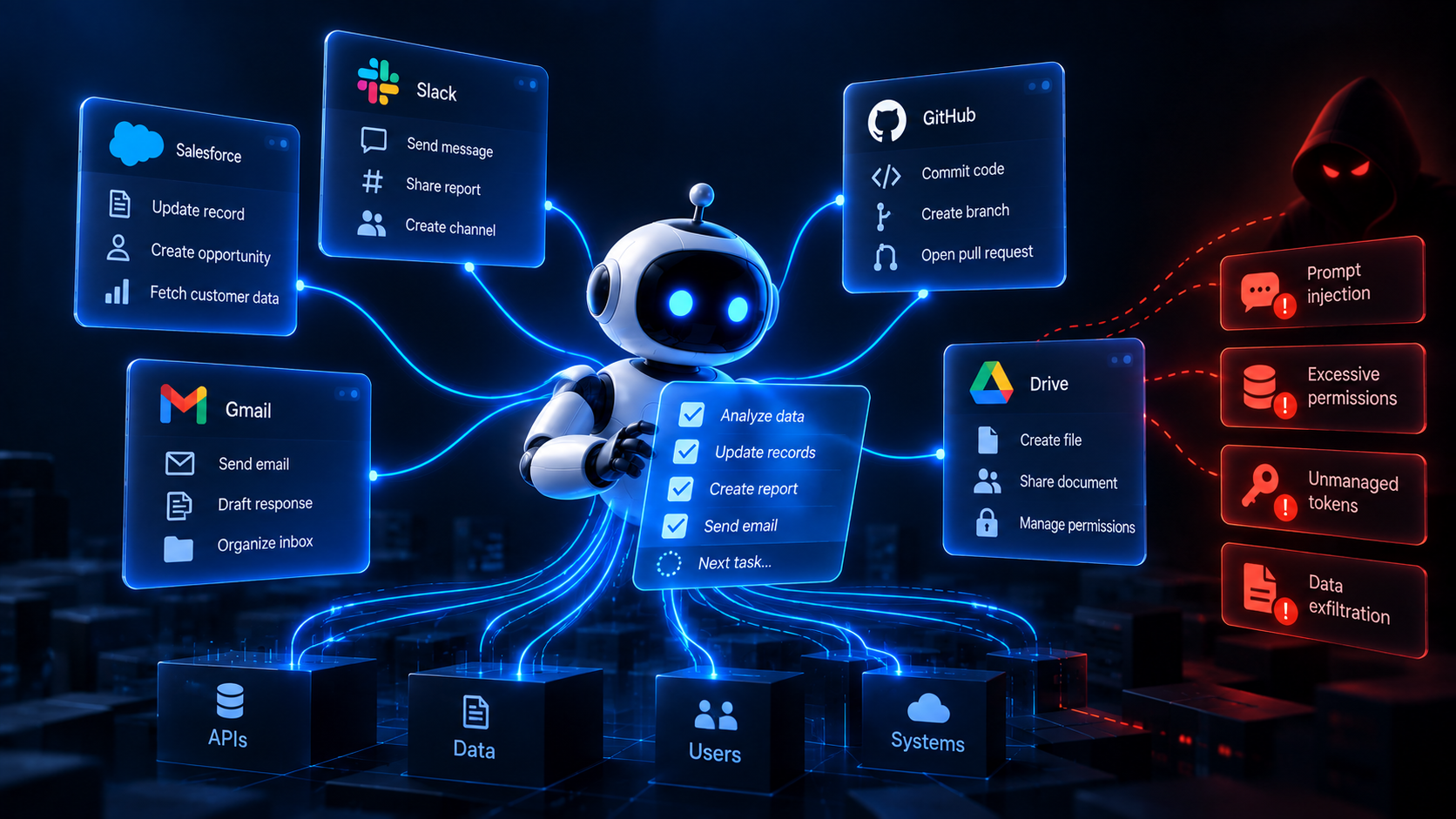
An AI agent can access data, trigger workflows, and create downstream risk in seconds. Static posture checks cannot keep up with this level of activity.
AI introduces non-human identities at scale. These include:
SSPM was not designed to track or govern these non-human identities.
Quotable insight:
“If you cannot see non-human identities, you cannot control AI risk.”
Enterprises now operate thousands of SaaS applications, many connected through OAuth and APIs. AI accelerates this sprawl through the rise of shadow AI, embedding itself across tools and workflows
Each integration becomes a potential attack path.
Quotable insight:
“AI risk does not live in apps. It lives in the connections between them.”
Nearly 80% of incidents now involve sensitive data. AI increases AI risk by accelerating how data is accessed and moved across systems.
SSPM can identify misconfigurations, but it cannot control how AI interacts with data in real time.
Security teams are no longer just managing applications. They are managing systems of identities, integrations, and autonomous behavior.
This shift has clear implications:
It requires a new approach to AI governance strategies that account for identity, access, and continuous control
SSPM is a foundation. AI Security is the next layer.
For a deeper look at governance strategies, see our guide to AI Governance.
AI Security platforms represent the evolution of SaaS security into identity-first, integration-aware control systems.
They are designed to:
Grip sits at this next layer.
It extends beyond SSPM to provide unified control across SaaS, identities, and AI-driven activity.
Explore how this works in practice:
/ai-security
SSPM is SaaS Security Posture Management. It helps organizations identify misconfigurations and enforce security policies across SaaS applications.
AI security focuses on controlling how AI systems access data, interact with applications, and create risk through automation, identities, and integrations.
Most organizations start with SSPM for visibility. As AI adoption grows, AI Security platforms become necessary to control identity, access, and behavior in real time.
SSPM focuses on configuration and posture. AI Security focuses on identity, access, integrations, and continuous control across dynamic environments.