Apr 25, 2026
AI Security vs AI Governance Explained


Understand the difference between AI security and AI governance and why both fail without identity and SaaS control.

Apr 25, 2026
Understand the difference between AI security and AI governance and why both fail without identity and SaaS control.
AI security and AI governance are often discussed as separate strategies. In practice, that separation is exactly what creates risk.
Organizations write policies for AI use. Security teams deploy controls. Meanwhile, AI spreads across SaaS environments through OAuth connections, browser sessions, and non-human identities that neither team fully owns.
AI-related attacks increased ~490% year over year, yet most programs still treat governance and security as parallel tracks instead of a single system.
That gap is where risk lives.
AI security focuses on protecting systems, data, and models from misuse, abuse, and compromise.
It typically includes:
AI security is execution-focused. It is about control, detection, and response.
But most AI security approaches stop at the model or API layer. They rarely extend into how AI is actually accessed across SaaS environments.
AI governance defines how AI should be used across the organization.
It typically includes:
A strong AI governance framework is intent-focused. It sets direction but does not enforce it.
In SaaS environments, governance often breaks because adoption is decentralized and happens faster than policies can keep up.
AI security and AI governance fail in the same place.
They fail at the layer where AI actually operates.
That layer includes:
Nearly 80% of AI-related incidents involve sensitive or regulated data, yet most organizations cannot trace how that data is accessed through AI tools.
Governance does not see it. Security does not fully control it.
This is the shared failure point and where AI risk begins to accumulate across the environment.
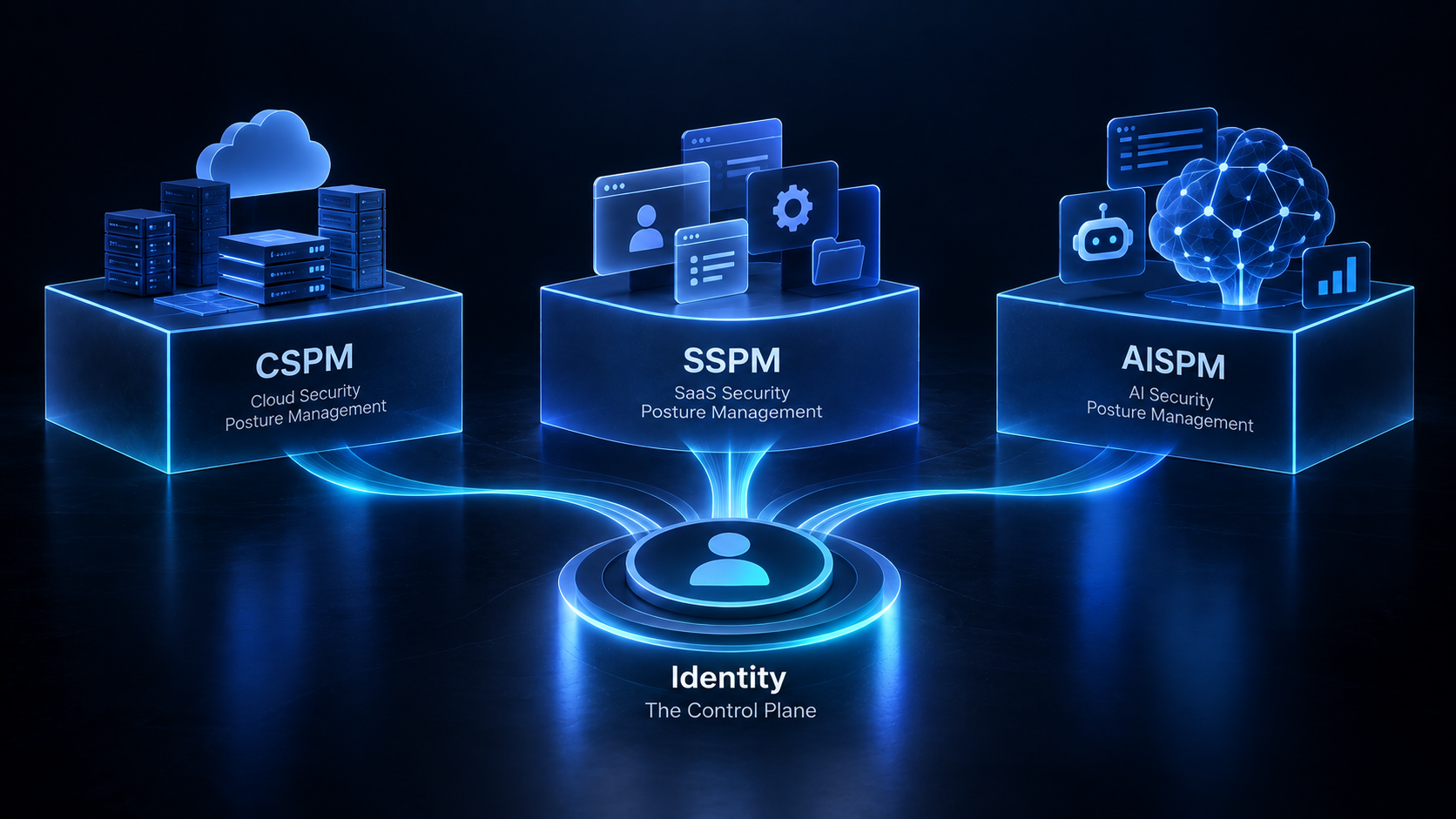
Most organizations think in two layers. Governance and security.
There are actually three.
AI governance defines intent. AI security enforces controls. Identity and SaaS determine reality.
This is the gap.
If non-human-identities and non-human access are not part of the model, both governance and security operate on assumptions instead of actual behavior.
This is why AI risk continues to expand even in organizations with mature programs.
For CISOs and security teams, this changes how AI strategy should be built.
Enterprises now operate across thousands of SaaS applications, many with embedded AI capabilities. Each connection, token, and integration expands the attack surface.
AI risk is not a model problem. It is an access problem.
To close the gap:
For a deeper breakdown of how this risk actually manifests, explore our guide to AI risk management and identity-driven exposure.
If AI governance and AI security remain separate initiatives, gaps will persist.
The goal is not better policies or more alerts.
The goal is alignment at the layer where AI operates.
That means building your AI program around identity, access, and SaaS enforcement.
Explore how to operationalize this approach in our AI security framework.
AI governance defines policies and rules for AI use. AI security enforces controls to protect systems and data. Both are necessary, but incomplete without identity-level enforcement.
Yes. Governance provides direction. Security provides execution. Without both, organizations either lack control or lack structure.
Governance is typically owned by risk, compliance, or legal teams. Security is owned by SecOps and security engineering. Both must align around shared visibility and control.
They separate governance and security, and ignore the identity and SaaS layer where AI risk actually exists.

Fill out the form and watch webinar's video.