Sep 19, 2025
How to Detect and Manage Shadow IT and Shadow AI in 2026


Learn how to detect shadow IT and eliminate unmanaged risks. Discover 5 steps security leaders use to manage shadow IT, strengthen policies, and protect SaaS applications.

Sep 19, 2025
Learn how to detect shadow IT and eliminate unmanaged risks. Discover 5 steps security leaders use to manage shadow IT, strengthen policies, and protect SaaS applications.
If you’re asking how to detect shadow IT, you’re already ahead.
Shadow IT (and its SaaS-centric cousin, shadow SaaS) grows because modern apps are easy to adopt and employees move fast. That’s not inherently bad; there are real productivity upsides, but unmanaged usage expands risk.
In 2026, shadow IT has expanded far beyond traditional cloud storage and unapproved collaboration tools into Shadow AI and autonomous agentic workflows. According to Grip Security research, enterprise organizations average over 23,021 applications operating outside IT oversight, and 91% of AI tools are unmanaged. Furthermore, with the Rule of 17 (~1 AI agent operating for every 17 corporate identities), employees are deploying autonomous software entities powered by non-human identities (NHIs) that operate with persistent data access.
Shadow IT is the use of systems, devices, software, applications, or services outside IT’s visibility or approval. In 2026, most shadow IT is shadow SaaS and unmanaged AI: accounts and API integrations employees create with a work email that never touch procurement or central IT.
Examples of modern shadow IT include:
Here is Grip’s battle-tested 5-step framework to transition from blind spots to automated governance:
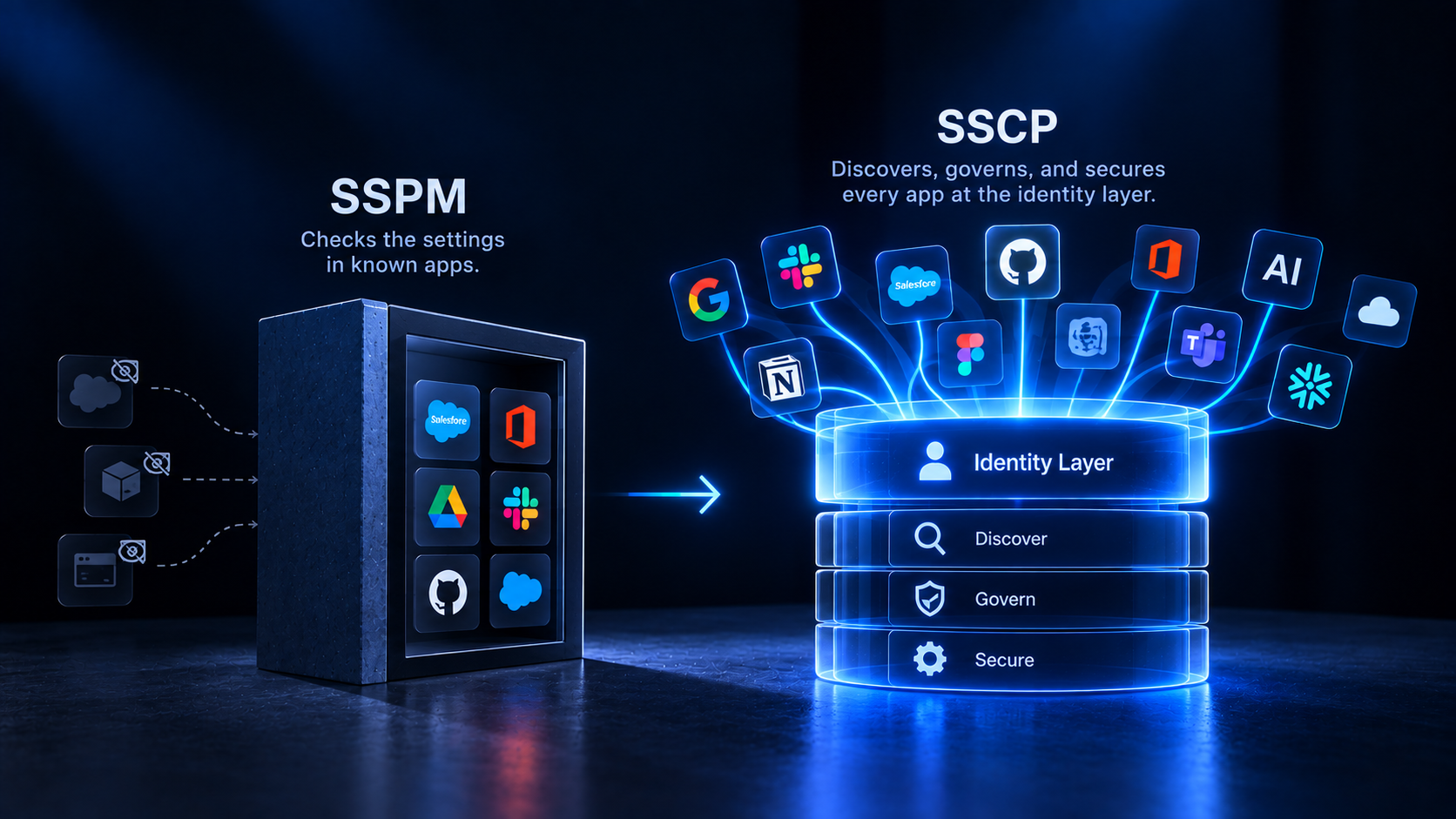
Traditional network proxies and CASBs miss the vast majority of SaaS activity because remote and mobile workers frequently bypass VPNs. Effective discovery requires analyzing identity creation events and authentication signals at the identity perimeter, providing real-time visibility into thousands of unsanctioned applications.
Discovery must connect apps to people and automated systems. Security teams must map: Who created the account? Who has active access? Are there long-lived OAuth tokens or API keys granting continuous background access?
Not all unsanctioned tools carry equal risk. Classify applications based on vendor security posture, certifications (SOC 2, ISO 2701), requested permission scopes, and the sensitivity of enterprise data being shared.
Blocking every unsanctioned app alienates business units and drives shadow usage deeper underground. Instead, use automated workflows to engage users at the moment of access—notifying them of corporate policies, validating business justification, or redirecting them to sanctioned corporate alternatives.
When software subscriptions lapse or employees leave the company, their associated accounts and OAuth grants frequently linger as dangerous zombie accounts. Implement automated lifecycle controls that revoke stale tokens, eliminate abandoned access, and maintain a pristine SaaS security posture.
See How Grip Discovers Shadow IT & AI in Minutes → Book a Demo
This article was originally published in July, 2022, and was substantively updated for accuracy and relevancy in 2026 to incorporate Shadow AI governance and automated control.
AI Governance & Compliance


AI Security & Shadow AI

SaaS Security & SSPM