Feb 11, 2026
Roses Are Red, AI Is Wild: What You Need to Know About AI’s Regulatory Mess


AI regulation doesn’t have to be romanticized or feared. Understand what matters in AI governance, compliance, and SaaS risk management.

Feb 11, 2026
AI regulation doesn’t have to be romanticized or feared. Understand what matters in AI governance, compliance, and SaaS risk management.
Every week brings a new framework, executive order, regional law, task force, or strongly worded guideline about how AI should be used (and what might happen if it isn’t).
If you’re feeling a little overwhelmed, you’re not alone. Most organizations are trying to map fast-moving AI capabilities onto regulatory structures that were never designed for systems that learn, adapt, and quietly spread across a highly integrated SaaS stack.
But this isn’t a panic post.
It’s a reality check.
Let’s talk about why AI regulation feels so chaotic, what actually matters right now, and how to think about compliance without pretending certainty exists where it, well, doesn’t.
Most regulatory regimes assume three things:
AI breaks all three.
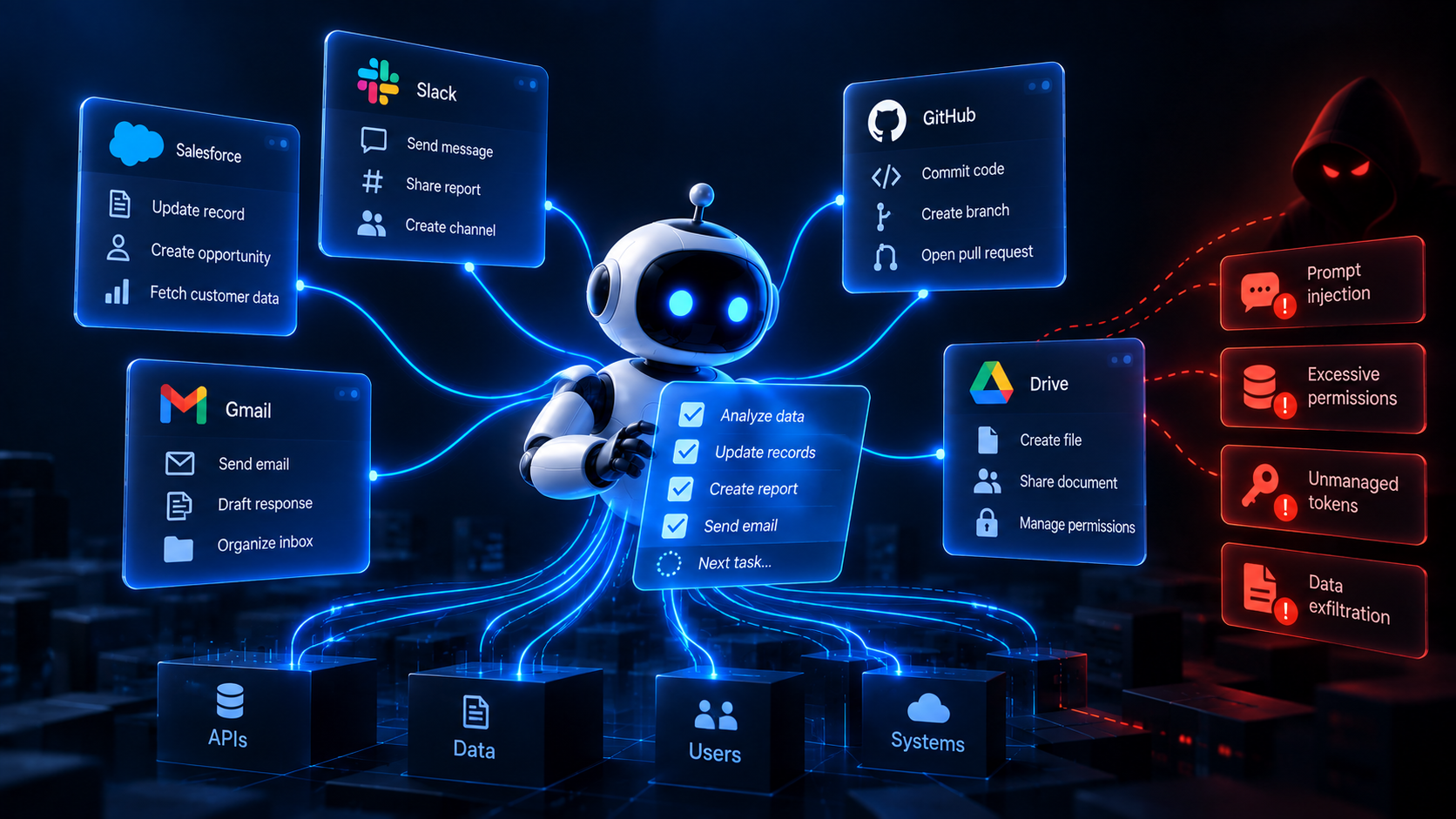
Modern AI doesn’t usually arrive as a single, clearly labeled system. As we’ve previously discussed, it shows up embedded inside tools you already use. It’s added via feature updates, browser extensions, integrations, and “helpful” defaults. Often without a formal decision, review, or announcement.
Regulators are trying to respond to this reality, but they’re doing so from very different angles.
Some focus on privacy and data protection.
Others emphasize risk classification and use cases.
Others still concentrate on transparency, accountability, and human oversight.
None of these approaches are wrong. They’re just incomplete on their own.
Here’s the uncomfortable truth most compliance conversations avoid: You can’t comply with rules if you can’t map to your environment.
Many organizations are being asked questions like:
And the honest answer is almost always: we’re not fully sure.
Not because teams are reckless, but because AI adoption rarely follows a centralized plan.
It follows productivity. A team solving a short-term problem. A feature enabled by default during a SaaS update. A browser extension added to save time. A one-off integration that never quite stayed one-off.
When AI enters this way, it doesn’t arrive as a single system to evaluate. It accumulates quietly across tools and workflows. That’s why regulatory guidance often feels abstract.
The missing step isn’t interpretation. It’s inventory.
Despite the headlines, most AI-related regulations and frameworks are not demanding flawless control.
They’re asking for:
In other words: show your work.
This is where many organizations get stuck; not because they disagree with the principles, but because their SaaS and AI environments evolved faster than their documentation.
Another source of confusion: not all AI is treated equally.
Most frameworks differentiate based on factors like:
That’s a good thing. It means using AI to summarize meeting notes is not the same as using it to screen job candidates or make financial decisions.
The challenge is proving you understand the difference inside your stack.
Something subtle but important is happening.
Regulatory conversations are moving away from “Which model are you using?” and toward:
This aligns much more closely with how AI actually creates risk in SaaS environments. Not as a single system, but as behavior layered onto existing tools and access paths.
If you’re trying to make sense of AI regulation without freezing progress, a few principles go a long way:
Regulators don’t expect you to predict the future. They expect you to show that you’re paying attention.
Many policy makers are learning a harsh truth — policy driven AI governance quickly stumbles. Why?
Because it's not based on what actually exists within an environment.
As mentioned, AI risk doesn’t live in abstract principles; it lives in SaaS applications, identities, permissions, and connections that already exist. And because AI is increasingly embedded inside everyday tools, governing it requires understanding how those tools interact, persist, and evolve over time.
Grip helps teams establish the visibility and control needed to govern AI in practice by answering the hardest regulatory questions first:
Not to slow adoption, but to make governance possible.
Because when you can see how AI shows up operationally, regulatory requirements stop feeling theoretical. They become manageable.
AI regulation feels chaotic because AI itself is decentralized, fast-moving, and often invisible once deployed.
The organizations that will handle this best aren’t the ones chasing every new rule. They’re the ones building durable awareness of how AI actually operates inside their business, and adjusting governance as reality changes.
Roses are red.
AI is wild.
And compliance, for now, is less about certainty and more about control.